



When a Round Coffee Table Doesn’t Work: 5 Situations
When not to use a round coffee table?
A round coffee table can be a smart, space-friendly choice, but it isn’t right for every room layout or lifestyle. Skip the round shape when it works against circulation, seating reach, or the overall geometry of the space.
1) When the room is long and narrow
In a “bowling alley” living room, a round table can look visually adrift and fail to support the length of the seating area. A rectangular or oval table typically tracks the room’s proportions better and provides more usable surface area along the long axis.
2) When you have a large sectional or U-shaped seating
Big sectionals often need a table with more reach to serve multiple seats. A round table may leave corner seats stretching, especially if the diameter isn’t generous. Consider a larger statement piece, a pair of nesting tables, or a multi-sided design that extends usable edges toward more seats.
3) When you need maximum tabletop “real estate”
If the coffee table is doing heavy lifting—remote controls, books, trays, game night, or frequent entertaining—a round top can feel limiting. Rectangular and square surfaces usually give cleaner zones for organizing items and placing trays without crowding the edges.
4) When traffic flow is already tight
Rounded edges help prevent bumps, but a round table still occupies floor space in the middle of the room. If walkways are narrow, any table may feel intrusive; in those cases, a slimmer profile, an open-base design, or even a smaller accent table might keep circulation clearer.
5) When your décor relies on crisp angles and symmetry
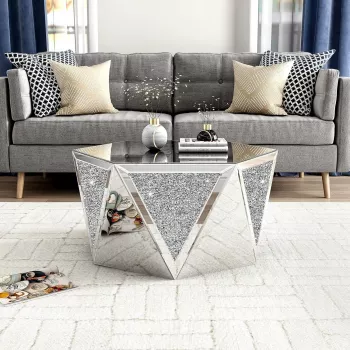
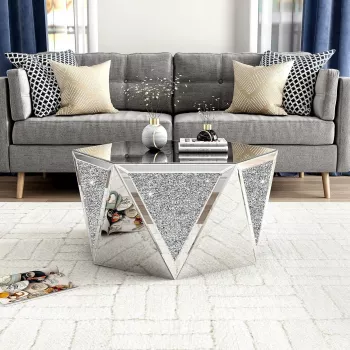
In highly linear, structured interiors—think sharp-lined sofas, grid-like shelving, or strong architectural trim—a round coffee table can feel like it’s fighting the room’s rhythm. If you still want softness, a faceted or geometric piece can bridge the gap while keeping an angular presence. For an example of a reflective, multi-sided option, see the styling ideas in this guide to a hexagon mirrored coffee table with crystal inlay.
FAQ
What size coffee table works best with a sectional?
Choose a table that allows most seats to reach it comfortably, often by going larger, using nesting tables, or selecting a shape that extends toward the chaise and corner areas. Leave enough clearance so people can walk around it without squeezing.









Leave a comment