



Declutter for Good: 20-Minute Plan + Digital Reset
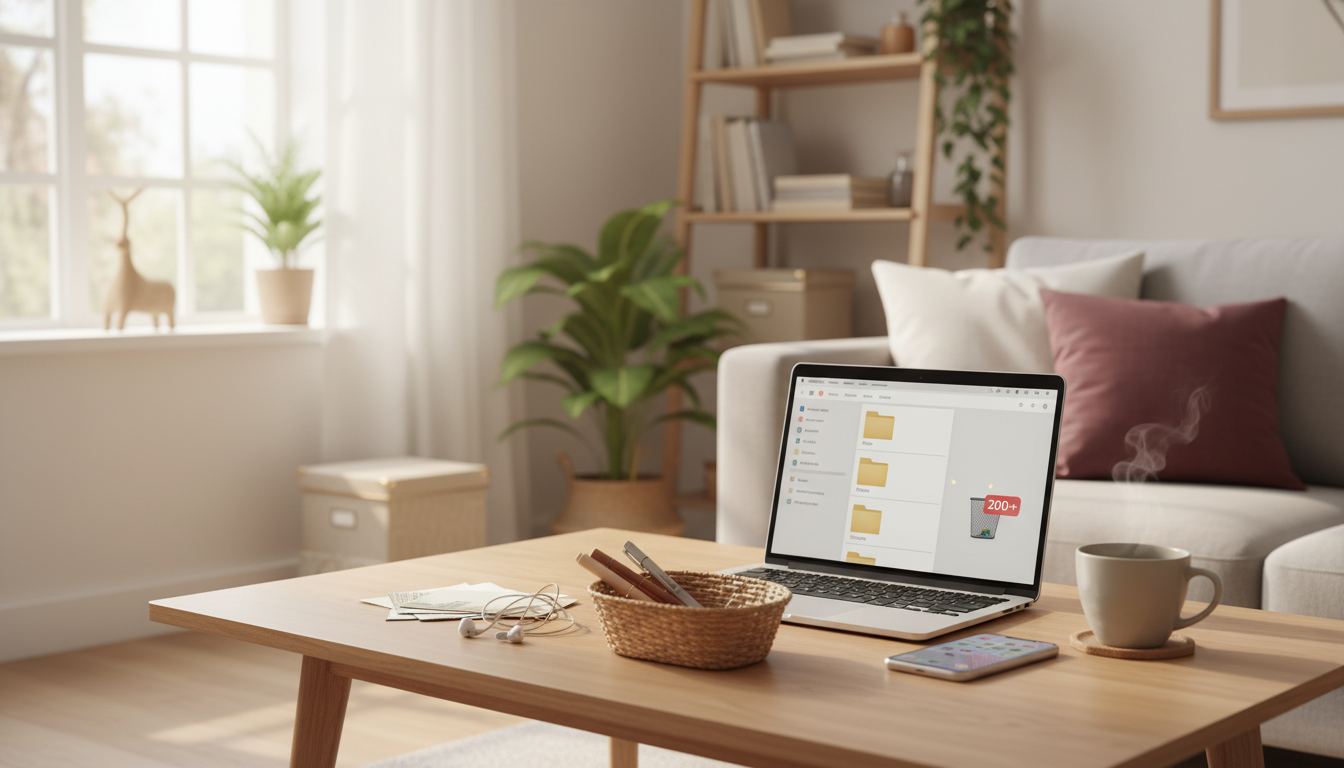
Clear Space, Clear Mind: Motivation That Lasts and a Decluttering Plan You’ll Actually Finish
Decluttering rarely stalls because you don’t own the right bins. It stalls when decision fatigue, perfectionism, and that heavy “where do I start?” feeling take over. A finished declutter is less about intensity and more about a plan you can repeat: a small reason to begin, a simple method you don’t have to reinvent, and maintenance habits that keep clutter from creeping back in. That includes digital clutter, too—the quiet kind that chips away at focus all day long.
Why decluttering feels so hard (and why it’s not a character flaw)
Clutter can look like a motivation problem, but it’s often a brain-and-systems problem.
- Decision fatigue: Every item asks a question—keep, donate, trash, relocate—and the mental energy cost adds up quickly. (The concept is widely discussed in psychology; see the APA Dictionary of Psychology.)
- Emotional friction: Guilt over money spent, nostalgia, and identity (“this is who I used to be”) can freeze progress even when the item isn’t useful.
- All-or-nothing thinking: Waiting for a perfect weekend or a perfect system turns decluttering into a “someday” project.
- Visibility bias: Many “messy” spaces are simply spaces without clear homes for the items—so they land wherever there’s room.
Stress can also make decision-making harder and reduce follow-through; chronic stress symptoms are well documented by the Mayo Clinic.
Find your motivation: a small, specific “why” beats a big vague goal
“I want a clutter-free house” is inspiring—and too big to act on today. A small, specific outcome is easier to start and easier to finish.
- Pick one concrete outcome: easier mornings, calmer evenings, fewer lost items, faster cleaning, better focus.
- Choose one pain-point zone: a kitchen counter, entryway, nightstand, one drawer—not the whole room.
- Use a time-based win: “15 minutes daily for 7 days” builds momentum without relying on mood.
- Reward the effort without adding stuff: a long shower, a walk, an episode of a show, or a guilt-free nap.
The 20-minute start: a low-resistance routine for immediate progress
A short session that ends on time creates trust: you’ll start again because you didn’t burn out last time. Keep it small enough that you can do it on a normal day.
| Minute | Action | Goal |
|---|---|---|
| 0–2 | Choose a single zone and place 4 containers nearby | Prevent wandering and scope creep |
| 2–12 | Quick sort: touch each item once and assign it | Reduce decision loops |
| 12–17 | Put “Keep Here” items back neatly; wipe the surface | Create visible calm |
| 17–20 | Take out trash; stage donations; place relocations in a small bin | Make the win real and measurable |
Use four containers: Keep Here, Relocate, Donate/Sell, and Trash/Recycle. Finish by taking a quick “reset photo.” It’s a simple way to reinforce progress—and it makes it easier to restore the space later.
A simple decision rule for almost everything
When you’re stuck, you need a rule that’s kind and firm—one that keeps you moving.
- Keep items that are used, loved, or genuinely needed for a near-term plan (with an actual date).
- Release items kept mainly for guilt, “someday,” or because replacing them feels emotionally expensive.
- Use the 20/20 test: if you can replace it in about 20 minutes for about $20 (adjust for budget), it’s often safe to let it go.
- Limit duplicates: keep the best one, plus a reasonable backup only if it’s truly needed; donate the rest.
Room-by-room strategy without the overwhelm
A plan beats motivation. Start where you’ll feel the payoff quickly, then build outward.
If you’re helping an older adult or organizing with aging-in-place in mind, the National Institute on Aging offers practical guidance for simplifying and staying safe at home.
Digital decluttering: the hidden clutter that drains focus
Maintain the calm: the weekly reset that prevents relapse
When motivation disappears: how to keep going anyway
A guided resource for staying consistent
If you want fewer choices to make each day, a structured guide can help you follow a repeatable routine for both home and digital clutter. Clear Space, Clear Mind: How to Find Motivation and Declutter Your Home for Good | Digital Decluttering Guide | How to Get Motivated to Declutter Your House is designed around small sessions, prompts, and checklists that reduce decision fatigue and make progress feel automatic over time.
For an intentional “refresh” after you’ve cleared the visual noise, choose upgrades that replace something you already own rather than adding more. For example, a single statement light can transform a dining area without multiplying objects: elegant-art-deco-inspired-crystal-branch-chandelier-for-dining-room. Or, if you’re replacing a worn accessory instead of accumulating extras, consider one durable everyday piece like Men’s Luxury Chronograph Quartz Watch with Leather Band & Waterproof Features.
FAQ
How do you get motivated to declutter when you feel overwhelmed?
Set a 10–20 minute timer, pick one micro-zone, and aim for a visible win like clearing a single surface. Stop exactly when the timer ends, then repeat daily for a week to build momentum.
What should you declutter first for the biggest impact?
Start with high-traffic, high-visibility areas like the entryway drop zone, kitchen counter, or bathroom sink area. Clear one surface completely before moving on to drawers or closets.
How can you declutter digitally without spending hours?
Turn off non-essential notifications and delete obvious junk first (screenshots, duplicates). Then do a weekly 10-minute routine: quick photo sweep, downloads folder cleanup, and a short unsubscribe pass.













Leave a comment