



Quick Calm: AI-Guided 5-Minute Checklist for Anxiety
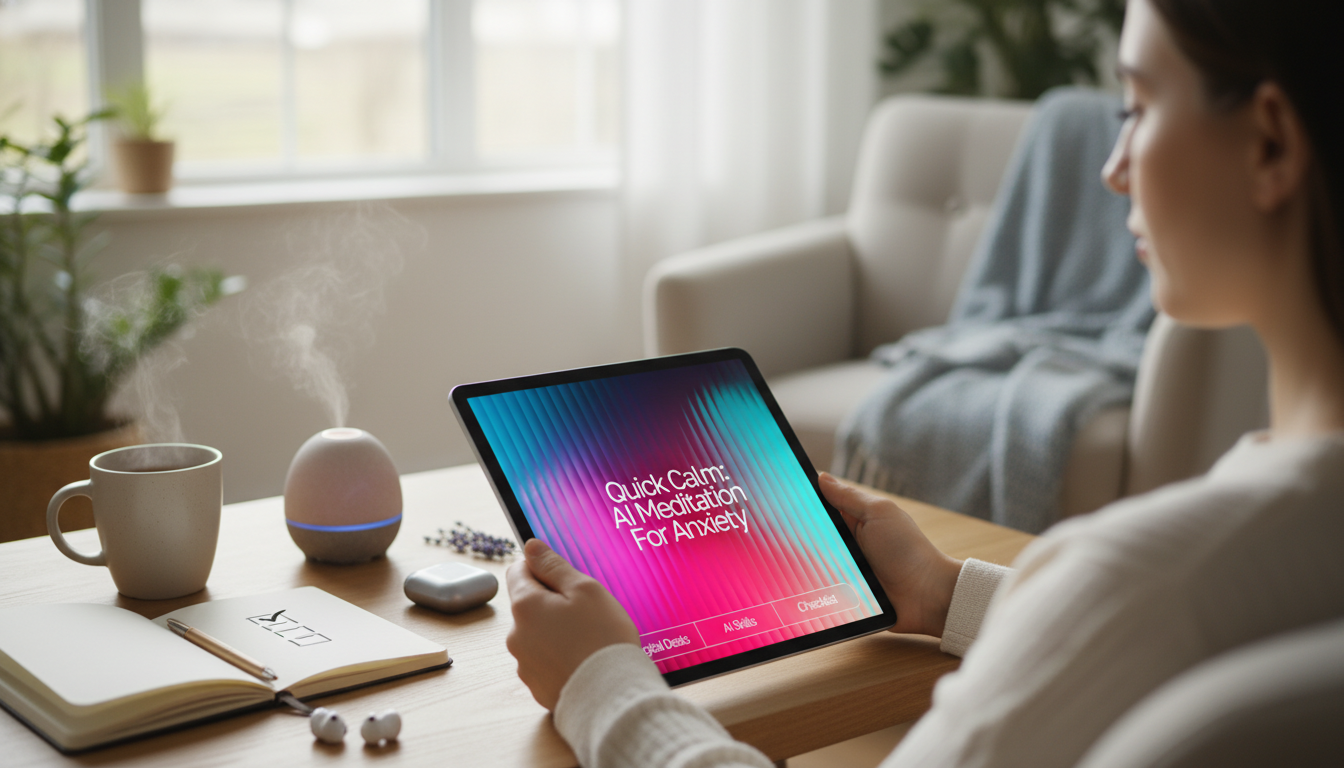
Quick Calm: A Simple AI-Guided Checklist for Anxiety Relief in Minutes
Anxiety can spike fast—during a meeting, before sleep, or in the middle of a busy day. A short, structured routine can help interrupt the spiral by giving the mind something clear and doable. This Quick Calm digital checklist uses AI-guided prompts to make quick meditation feel straightforward, even on high-stress days.
What “Quick Calm” Is and When It Helps Most
Quick Calm is a digital download checklist built for brief, repeatable calming sessions—especially when anxiety feels sudden, loud, or overwhelming. Instead of trying to remember what to do (or forcing yourself through a long routine), you follow a short sequence that keeps you moving forward step by step.
- A digital checklist designed for quick calming sessions you can repeat anytime anxiety surges.
- AI-guided prompts that reduce decision fatigue by giving you one clear next step at a time.
- Best-fit moments: pre-presentation nerves, nighttime rumination, social anxiety spikes, commute stress, and post-conflict emotional aftershocks.
- A practical option for beginners who struggle with unstructured meditation instructions.
For background on meditation and mindfulness effectiveness and safety, see the National Center for Complementary and Integrative Health (NCCIH). If anxiety is frequent or disruptive, the National Institute of Mental Health offers a helpful overview of anxiety disorders and when to seek support.
How the Checklist Works (A 5–10 Minute Flow)
The checklist is designed to work even when your mind is racing. The flow is simple: you track intensity, pick a pathway that matches what you’re experiencing, then follow a minimal sequence that gets you from “spinning” to “steady enough to continue.”
- Start by rating intensity (0–10) to quickly track patterns and improvement over time.
- Choose a short pathway based on the moment: body-based calming, breath pacing, grounding, or compassionate self-talk.
- Follow a minimal sequence: arrive → regulate → reframe → reset.
- End with a “next tiny action” so the calm carries into the next task (drink water, step outside, write one sentence, send one email).
Example Quick Calm Session Options
| Situation | Suggested track | Time | What it targets |
|---|---|---|---|
| Racing heart before a call | Breath + body scan | 5 minutes | Physiological arousal |
| Spiraling thoughts at night | Labeling thoughts + release | 8–10 minutes | Rumination |
| Feeling unreal or detached | 5-4-3-2-1 grounding | 4–6 minutes | Dissociation/overwhelm |
| Stress after conflict | Compassionate script + reset | 6–9 minutes | Self-criticism and tension |
Why AI-Guided Prompts Can Make Meditation Easier During Anxiety
When anxiety is high, the biggest obstacle is often not willingness—it’s bandwidth. Meditation can feel “too open-ended” in a moment when your brain is scanning for danger. AI-guided prompts help by narrowing your focus to the next doable step.
- Reduces cognitive load by turning “What should I do?” into a single next step.
- Encourages consistency by keeping the routine short enough to repeat, even on busy days.
- Helps people who freeze during anxiety by offering concrete language for grounding and self-soothing.
- Supports personalization by adapting the prompt path to your chosen situation (sleep, panic sensations, overthinking, stress).
The American Psychological Association discusses how mindfulness meditation can support stress management and emotional regulation in everyday life: APA — Mindfulness meditation.
Using Quick Calm Safely and Effectively
Calming skills tend to build faster through short, frequent reps than through occasional long sessions. The goal is not to “erase” anxiety on demand; it’s to reduce intensity and regain choice in what you do next.
- Keep sessions brief at first; frequent short repetitions usually build confidence faster.
- If breathwork increases dizziness or panic, switch to grounding (sensory scan, feet pressure, naming objects) instead of forcing deep breathing.
- Pair the checklist with a stable environment cue (same chair, same corner, same headphone playlist) to make the routine easier to start.
- This is a support tool, not a substitute for professional care; seek clinical help if anxiety is severe, persistent, or includes self-harm thoughts.
What’s Included in the Digital Download
The checklist is meant to be easy to use on a phone, tablet, or printed page—so it’s there when you need it most, not buried inside a complicated system.
- A step-by-step calming checklist designed for quick use on phone, tablet, or printed.
- Prompt paths for common anxiety patterns (physical symptoms, overthinking, stress overload, sleep anxiety).
- A simple progress tracker to notice triggers and what works best.
- A “reset plan” section to transition from calming into the next small task.
Recommended Digital Checklists
If you want a structured tool you can open in seconds, these in-stock downloads pair well together: one for in-the-moment calm, and one for days when breathing practice feels supportive.
- Quick Calm: AI Meditation for Anxiety Checklist (Digital Download)
- Breathe Easy: Mindfulness Breathing Action Checklist (PDF)
Pairing Quick Calm with a Breath Routine (Optional Add-On)
Some days, breathing techniques feel like a relief—especially when anxiety is mild to moderate and your body responds well to slower pacing. On other days, focusing on breath can feel activating. Having both options lets you choose what works in the moment.
A Practical Start Plan for the First Week
FAQ
How fast can a quick meditation help with anxiety?
Many people notice some relief within minutes by grounding attention, relaxing tense muscles, and lowering mental overload. Results vary, and short sessions tend to work more reliably with repetition over time.
What if focusing on breathing makes anxiety worse?
Switch to grounding methods like 5-4-3-2-1 sensory scanning, pressing your feet into the floor, or naming objects you see. Keep breathing natural rather than forcing deep breaths, and consider professional support if panic reactions are frequent.
Is this a replacement for therapy or medical treatment?
No. It’s a self-help support tool that can complement care, but it’s not a substitute for therapy, medical treatment, or crisis services when symptoms are severe or persistent.












Leave a comment