



MBSR for Health Anxiety: 7-Day Calm Plan + Digital Guide
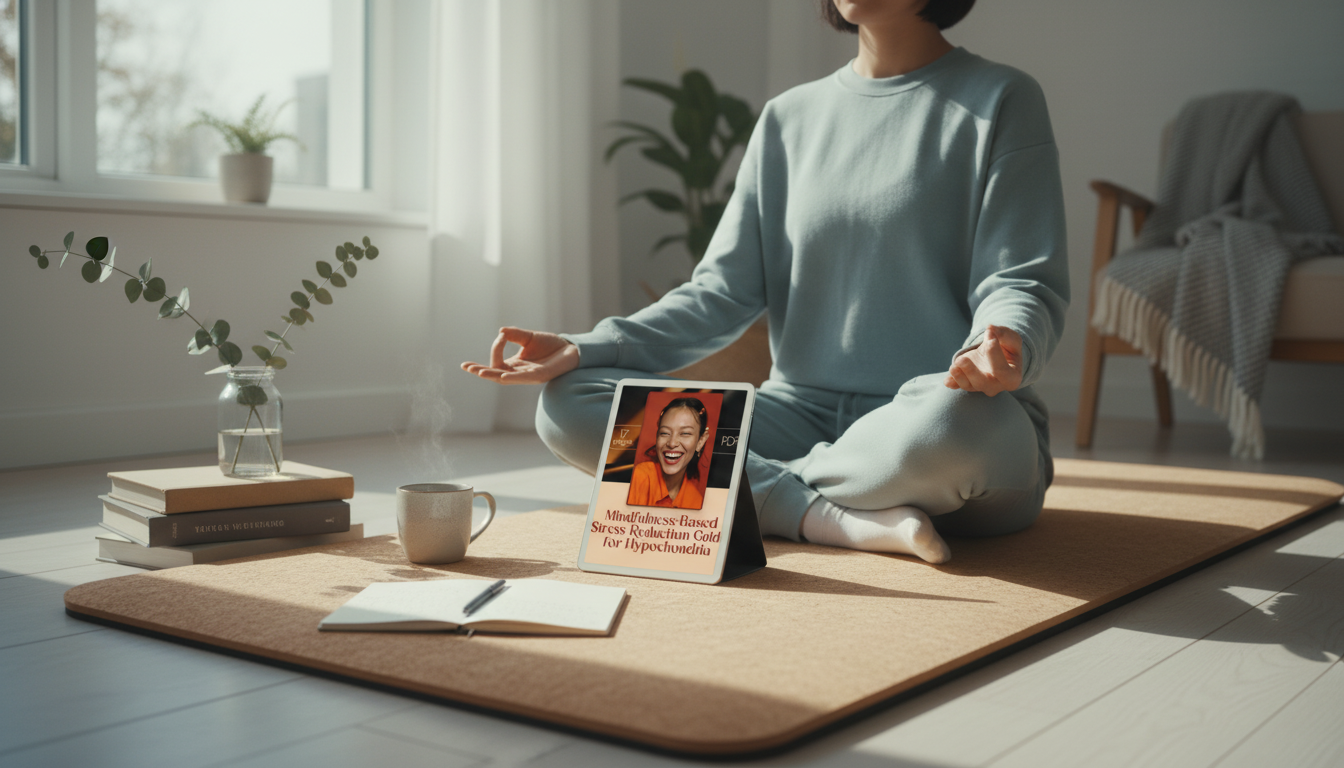
Mindfulness-Based Stress Reduction for Health Anxiety: A Calm, Practical Digital Guide
Health anxiety can turn normal body sensations into constant alarm signals. A mindfulness-based stress reduction (MBSR) approach helps retrain attention, reduce reassurance-seeking loops, and build steadier responses to uncertainty—using structured practices that fit real life.
When Health Anxiety Hooks the Mind
Health anxiety often follows a predictable cycle: a sensation appears, the mind interprets it as dangerous, fear spikes, and then checking or reassurance-seeking brings brief relief—until the next sensation feels even more urgent. Over time, the nervous system learns that “alarm + checking” is the solution, which strengthens the habit loop.
Common patterns include body scanning (“What do I feel now?”), repeated Googling, frequent vitals checking, asking friends or family to confirm you’re okay, and avoiding activities “just in case.” These behaviors are understandable, but they quietly teach the brain that uncertainty is intolerable.
Trying to force thoughts to stop usually backfires. The mind responds by monitoring even more closely for “danger signs,” which increases internal scanning and makes sensations feel louder. Mindfulness doesn’t aim to eliminate sensations or thoughts. It changes your relationship to them—helping you recognize “this is a worry story” or “this is an anxiety sensation” sooner, before the loop accelerates.
A practical goal is noticing earlier in the cycle and choosing a different response—even if the sensation doesn’t instantly disappear.
What MBSR Is (and Isn’t) for Hypochondria
MBSR is a structured way to train present-moment attention with an attitude of non-judgment. It typically includes breath awareness, body scans, gentle movement, and everyday mindfulness (like bringing attention to walking, eating, or showering). For an overview of mindfulness practices and benefits, see the American Psychological Association’s mindfulness meditation resource.
MBSR isn’t a promise that anxiety will never show up. Instead, it builds the skill of responding differently: less reactivity, fewer compulsive coping behaviors, and quicker recovery after triggers. This matters because health anxiety is often fueled not only by discomfort, but by suffering—the added layer of fear, rumination, and urgency that piles onto sensations.
Mindfulness works best as supportive skill-building alongside evidence-based care: appropriate medical guidance, therapy (often CBT-based), and steady routines that support sleep and resilience. The NCCIH overview on meditation and mindfulness is a helpful reference for effectiveness and safety considerations.
Progress markers tend to look like: fewer spirals, shorter time to settle, reduced checking and reassurance requests, improved sleep, and better ability to keep living your day even when uncertainty is present.
A Simple 7-Day Starter Plan (Low Pressure, High Consistency)
This starter plan keeps sessions short on purpose. Consistency matters more than intensity, especially when internal focus can feel triggering at first. If a practice spikes anxiety, shorten it and use an external anchor (sounds in the room, feet on the floor, or a visual object) before returning to the breath.
| Day | Practice | Time | When to Use It | What to Notice |
|---|---|---|---|---|
| 1 | 3-minute breathing space | 3 min | Morning + any spike | Mind wandering; gentle return |
| 2 | Body scan | 10 min | Before bed | Sensations without evaluating |
| 3 | Mindful walk | 10–15 min | Midday | External cues; reduce body scanning |
| 4 | Urge surfing | 5 min | Before checking symptoms | Urge peak and release |
| 5 | Mindful movement | 10 min | Afternoon | Safety, breath, tension softening |
| 6 | Thought labeling | 5 min | During rumination | Naming patterns; less fusion |
| 7 | Calm protocol | 10 min | Flare-up plan | Choosing response over reflex |
Core Skills That Target the Reassurance Loop
1) Name the loop so it becomes observable
2) Use “allow + anchor” instead of “analyze + fix”
3) Reduce compulsions gradually (delay, don’t demand perfection)
4) Speak to yourself like someone you care about
5) Shift from certainty-seeking to values-based action
Using the Digital Guide as a Daily Companion
A “minimum dose” you can keep—3 to 10 minutes daily—tends to beat occasional long sessions. Pair your practice with a reliable cue: after brushing your teeth, during a lunch break, or right before sleep. If you want a clear clinical background on MBSR’s structure, the UMass Memorial Health Center for Mindfulness describes the standard approach and training model.
Featured Digital Download: Mindfulness-Based Stress Reduction Guide for Hypochondria
For a structured, step-by-step approach designed specifically around health anxiety patterns, the Mindfulness-Based Stress Reduction Guide for Hypochondria – Digital Download for Health Anxiety Relief, MBSR eBook, Calm Mind eGuide is built to support consistent practice. It’s designed to be revisited as symptoms, triggers, and worry themes shift over time.
To make daily practice easier, pair it with a simple breathing routine you can use in the moment—like Breathe Easy: Your Mindfulness Breathing Action Checklist—so you have a clear “next step” when urges to check or Google spike.
| Format | Best For | Use Style | Access |
|---|---|---|---|
| Digital download eGuide/eBook | Health anxiety, hypochondria, stress reactivity | Daily practice + flare-up support | Instant access after download |
Small Adjustments That Make Mindfulness Work Better
FAQ
Can mindfulness make health anxiety worse at first?
Yes. Turning attention inward can initially amplify awareness of sensations, especially if you’re used to scanning for danger. Start with short sessions, use external anchors when needed, and treat the return to the breath as the real practice.
How long does it take for MBSR to help with hypochondria?
Small shifts can show up within days to a few weeks with consistent practice, especially reduced checking or quicker recovery after a trigger. Deeper changes usually take several weeks as your brain learns a new response pattern.
Is this a replacement for medical care or therapy?
No. Mindfulness is a supportive skill set that can complement appropriate medical guidance and therapy. If anxiety is persistent, severe, or escalating, professional support can help you tailor the approach safely.













Leave a comment