



5-Minute Morning Motivation Quotes Printable eBook
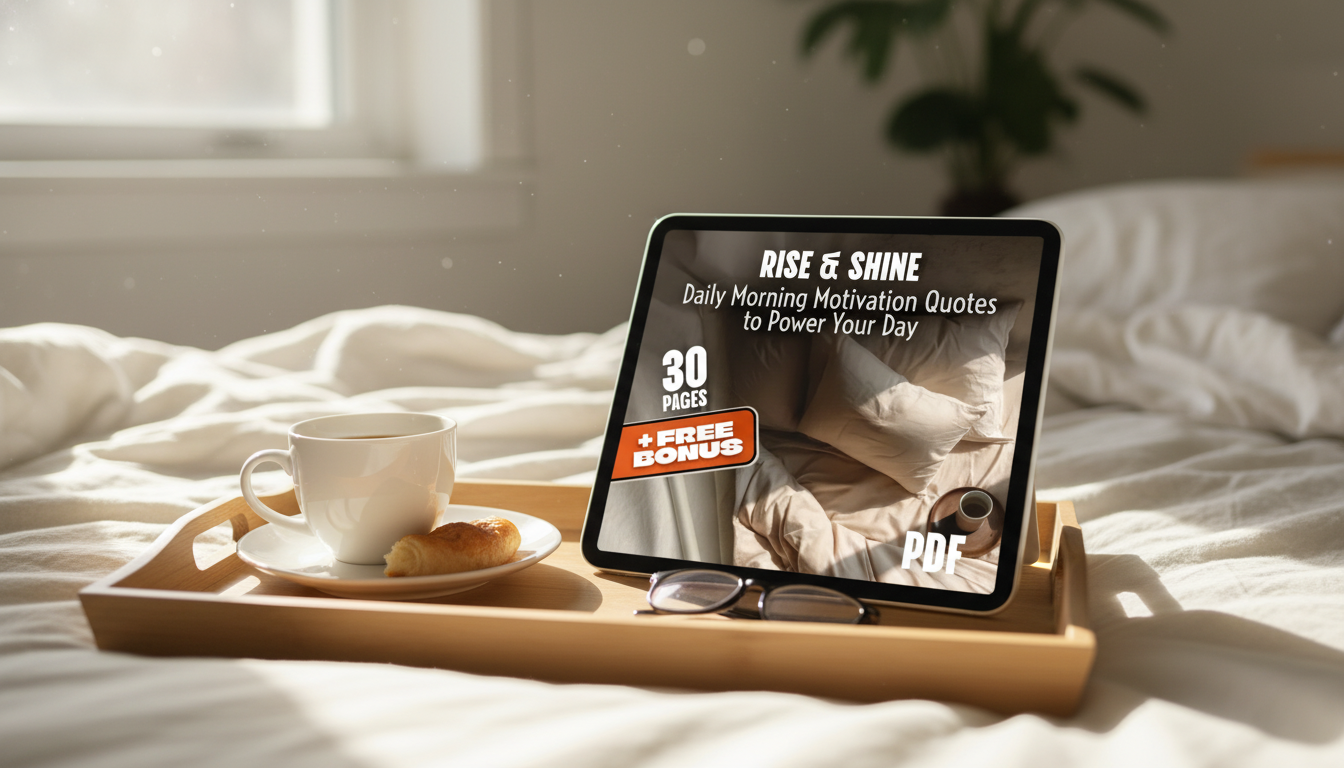
Rise & Shine: Daily Morning Motivation Quotes to Power Your Day
A steady morning mindset can change how the entire day feels. When the first few minutes are rushed or reactive, it’s easy to carry that tension into meetings, school drop-offs, workouts, and everything in between. A small, repeatable cue—like reading one uplifting line—can create a calmer starting point without adding another complicated “routine” to maintain.
Rise & Shine: Daily Morning Motivation Quotes to Power Your Day (Printable eBook) is a printable digital guide built for real mornings: short quotes, quick reflection space, and a simple rhythm that helps motivation show up before the day gets loud.
What This Printable eBook Helps With
- Creates a consistent morning cue to pause, reset, and choose a positive focus
- Supports routines for workdays, study days, and weekends without adding extra complexity
- Offers quick encouragement for low-energy mornings and high-pressure schedules
- Works well for journaling, vision boards, planners, and bedside reading
Even small stressors can add up over time, and a steadier morning can make it easier to respond instead of react. For a deeper look at how stress affects the body, the American Psychological Association breaks down common physical and emotional impacts in a clear, practical way.
What’s Included in the Digital Download
- A collection of morning-ready motivation quotes designed for daily use
- Printable pages suitable for a home printer and easy reprints whenever needed
- A simple daily structure that can be repeated: read → reflect → act
- A format that fits common routines: planner insert, wall print, desk card, or phone wallpaper (after saving)
The goal isn’t forced positivity—it’s giving the mind one clean “starting signal” each morning. Some days that signal becomes motivation. Other days it becomes steadiness. Both count.
A Simple 5-Minute Morning Routine Using Quotes
- Minute 1: Read one quote out loud (or silently) and pick one word to carry into the day
- Minutes 2–3: Write a two-sentence reflection: “Today I want to feel…” and “One step I can take is…”
- Minute 4: Choose one priority task that matches the quote’s energy (one call, one page, one walk)
- Minute 5: Set a reminder to revisit the quote at midday for a quick reset
Fast ways to use morning quotes
| Moment | How to use the quote | Time needed |
|---|---|---|
| Before checking the phone | Read the quote, then decide one intention for the day | 30–60 seconds |
| Coffee or breakfast | Write a one-line reflection in a journal or notes app | 2 minutes |
| Commute | Save as a lock screen and reread at stoplights/stations | 1 minute |
| Before starting work or study | Pick one action that matches the quote’s theme | 2 minutes |
| Midday slump | Re-read and take three slow breaths to reset | 1 minute |
If mornings feel foggy or low-energy, it also helps to keep expectations realistic. Sleep quality, bedtime consistency, and stress levels all affect how motivated anyone feels at 7 a.m. The NHS guide to sleep and tiredness offers straightforward suggestions that pair well with a gentler morning approach.
Printing and Setup Tips (So It Looks Great)
- Print a test page first to check margins and brightness; adjust printer settings if needed
- Use heavier paper (or cardstock) for desk cards and wall prints
- Keep a small “morning stack” near the bed, kettle, or workspace for friction-free use
- Place one page in a clear frame or clipboard for easy swapping each day
A useful setup trick: place the day’s quote where your hand naturally goes—next to your toothbrush, on your laptop, or by the coffee maker. The quote becomes a cue, not another task.
Who This Daily Guide Fits Best
- Busy professionals who want motivation without a long routine
- Students building consistency during exam seasons or heavy workloads
- Parents who want a calmer start and a quick personal reset
- Anyone who enjoys journaling, affirmations, and habit-building tools
- Gift-givers looking for a practical, uplifting digital present
For people who like to pair motivation with gratitude, a simple add-on is writing one specific thing you appreciate right after reading the quote. Harvard Health Publishing summarizes how gratitude practices can support well-being and shares easy ideas to try: Giving thanks can make you happier.
Pair It With a Gentle Motivation Plan When Stress Is High
When stress is high, motivation often returns after a little safety and clarity—not after more pressure. If you’re supporting a teen (or trying to reduce household friction around tasks, school, or routines), a calm, step-by-step approach can help. Consider pairing the morning quote practice with The Anxiety-Sensitive Motivation Checklist for Parents of Teens for a lower-pressure structure on hard days.
Shop the Digital Downloads
- Rise & Shine: Daily Morning Motivation Quotes to Power Your Day – Printable Morning Motivation Quotes eBook, Daily Inspirational Guide, Digital Download
- The Anxiety-Sensitive Motivation Checklist: 15 Gentle Power Moves for Parents of Teens | Teen Parenting Digital Download
FAQ
How do I access the digital download after purchase?
After checkout, the file is delivered digitally via a download link (often on your order page and/or in a confirmation email). Save the file to your device so you can print it, and keep it stored for easy re-download if you need it later.
Can the pages be printed more than once?
Yes—pages can typically be reprinted for personal use, which makes it easy to keep a binder and swap a fresh page into your routine whenever you want. Reprinting also helps if you like to post a quote on your desk while keeping another copy in a journal.
What if I’m not a morning person—will this still help?
It can, because the approach is flexible and low-effort: read one quote while still in bed, pick one word, and do one 60-second action (drink water, open the curtains, or write one sentence). The goal is a gentler start, not a perfect morning.













Leave a comment