



Puppy Training Toolkit: Step-by-Step Plan + Checklists
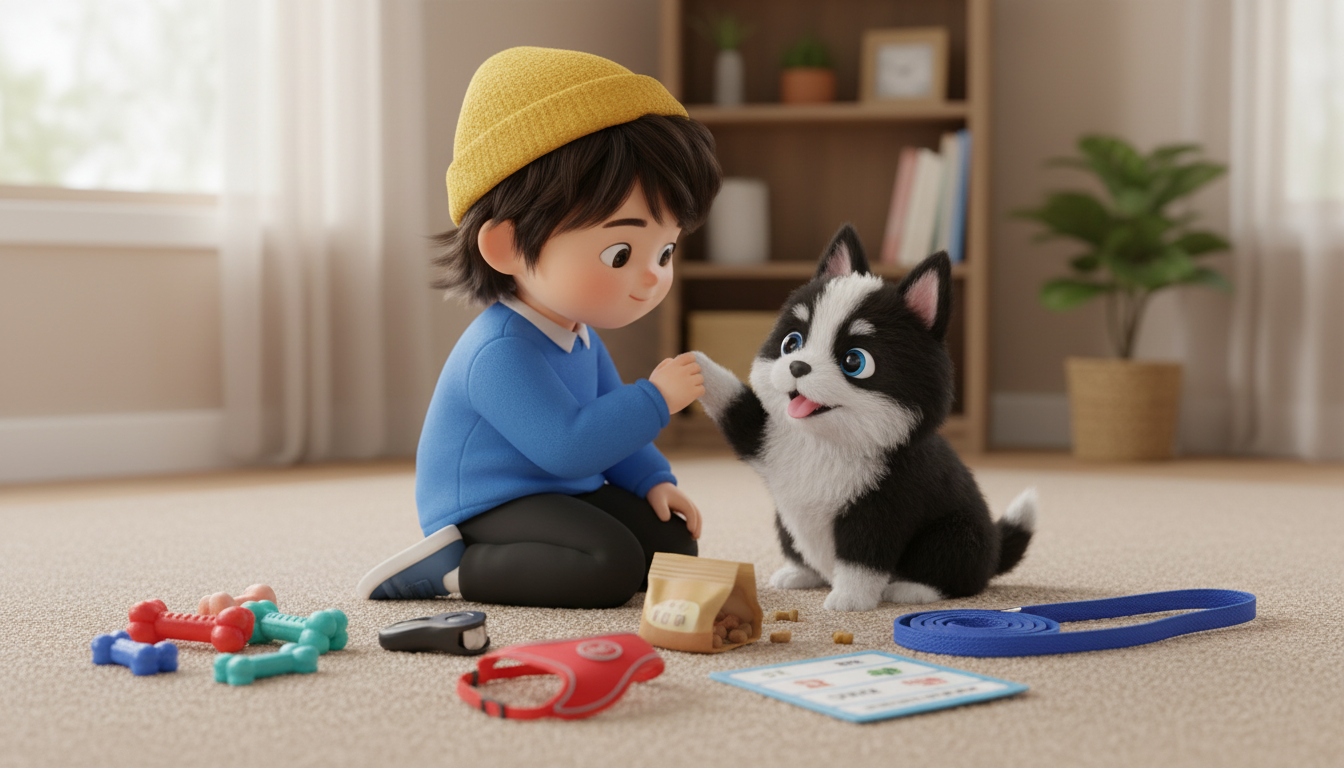
A new puppy learns fastest when training is simple, consistent, and easy to repeat daily. This beginner-friendly plan uses a “toolkit” approach: short sessions, clear cues, and checklists that make it easy to stay on track with house training, crate training, manners, and early socialization—without trying to do everything at once.
What “step-by-step” training looks like for a puppy
Step-by-step puppy training is less about doing “more” and more about doing the right basics, in the right order, every day. Start with foundations that support everything else: a predictable potty routine, crate comfort, a strong name response, and calm handling for paws, ears, mouth, and brushing.
Keep sessions short (1–5 minutes) and repeat them often. Puppies learn in tiny slices—end on a win before attention fades. Reward the behavior that happens (treats, toys, praise), and prevent unwanted behavior from becoming a habit with smart management: crates, pens, baby gates, and a leash indoors when needed.
Add only one new skill at a time. Once the puppy succeeds easily in a quiet room, then (and only then) add mild distractions like a different room, a family member walking by, or a slightly longer distance. A simple checklist helps everyone in the home use the same cues and track what’s working.
What’s included in a puppy training toolkit (and why it helps)
A well-designed training toolkit removes guesswork by giving you a logical sequence and a repeatable “micro-routine” you can do any time: cue → mark → reward → reset → repeat. Instead of jumping between random tips, you build skills like a ladder: house training first, then basic cues, then manners, then real-world practice.
- Guided lessons that build in a practical order (house training → basic cues → manners → real-world practice).
- Printable/digital checklists for daily routines, training goals, and behavior notes.
- Troubleshooting prompts to help identify whether a problem is training, management, or a needs-based issue (sleep, potty, exercise).
- A consistent training format that’s easy for the whole household to follow.
- Space to record what motivates your puppy most (soft treats, kibble, tug, sniff breaks).
For socialization, prioritize safe, positive exposure. The American Veterinary Society of Animal Behavior explains why early socialization matters and how to approach it thoughtfully: AVSAB position statements. For additional training fundamentals, the American Kennel Club’s puppy training basics are a helpful reference.
Daily routine: the minimum effective schedule for beginners
Most puppy problems improve when the day follows a predictable cycle: potty → play/training → food/water → rest → potty. Naps are not optional; overtired puppies mouth more, bark more, and struggle to control impulses. When you can’t supervise, management tools (crate, pen, leash, gates) prevent accidents and chewing rehearsals.
If your puppy has trouble focusing, separate training from high-arousal play. Do a short training session first, then play. Or do training after a nap, when the brain is ready to learn.
Sample day plan (adjust for age, breed, and household schedule)
| Time block | What to do | Goal | Checklist note |
|---|---|---|---|
| Morning wake-up | Potty trip immediately, then calm praise/reward | Prevent accidents and reinforce going outside | Record success/accident |
| After breakfast | 2–5 minutes: name game + sit | Build attention and a first cue | Treat type that worked best |
| Mid-morning | Crate/pen nap (60–120 min) | Teach rest and prevent mischief | Note whining duration |
| After nap | Potty + leash walk/sniff time | Reinforce outdoor potty, introduce the world calmly | Track triggers (people, dogs, noises) |
| Afternoon | 3 minutes: touch/come + gentle handling practice | Recall foundations and vet/grooming comfort | Handling tolerance score |
| Evening | Chew toy/food puzzle + calm settle | Reduce mouthing and teach relaxation | Chew preference + duration |
| Before bed | Final potty + short crate settle routine | Set up overnight success | Night wakings count |
Week-by-week priorities for the first month
Think of the first month as “installing the basics” rather than chasing perfection. Many puppies need weeks of repetition before skills look reliable, especially in new places.
- Week 1: house training rhythm, crate positivity, name response, gentle handling (paws/ears/mouth).
- Week 2: sit/down, begin “leave it” using trades, brief alone-time practice to reduce distress.
- Week 3: loose-leash basics in low-distraction areas, “drop it,” polite greetings (no jumping with consistent rules).
- Week 4: proof basics in new locations, slightly increase duration on “stay” moments, add controlled socialization experiences.
Core skills: quick-start training scripts
Potty training script
Crate training script
Name response script
Mouthing script
Loose-leash script
Common setbacks and how checklists prevent them
Using a digital toolkit effectively at home
Step-by-Step Puppy Training Toolkit: what it offers for beginners
If a clear plan would make daily training easier, Step-by-Step Puppy Training Toolkit: A Beginner’s Guide to Dog Training + eBooks & Checklists organizes the early months into manageable steps, with materials you can reuse whenever you need a reset.
More digital bundles (for structured, checklist-style learning)
- Low-Effort Makeup Secrets Pack | Simple Makeup Ideas 4-in-1 Digital Beauty Bundle
- Color Theory Seasons Bundle 10-in-1 | Seasonal Color Analysis Guides & Checklists
FAQ
How long should puppy training sessions be?
Plan for 1–5 minutes per session for young puppies, repeated multiple times a day. Stop while your puppy is still successful and interested, then repeat later for more learning without frustration.
When should crate training start?
Start as soon as your puppy comes home. Build positive associations with food, treats, and chews, and increase time gradually after potty and comfort needs are met.
What’s the best way to stop puppy biting?
Redirect to appropriate chews and reward calm mouth behavior. For hard bites, pause play briefly (5–10 seconds), then restart with a toy, and make sure your puppy gets enough naps and enrichment to reduce overstimulation.










Leave a comment