



Outfit Doubt Fix: The 5-Step Style-Confidence Loop
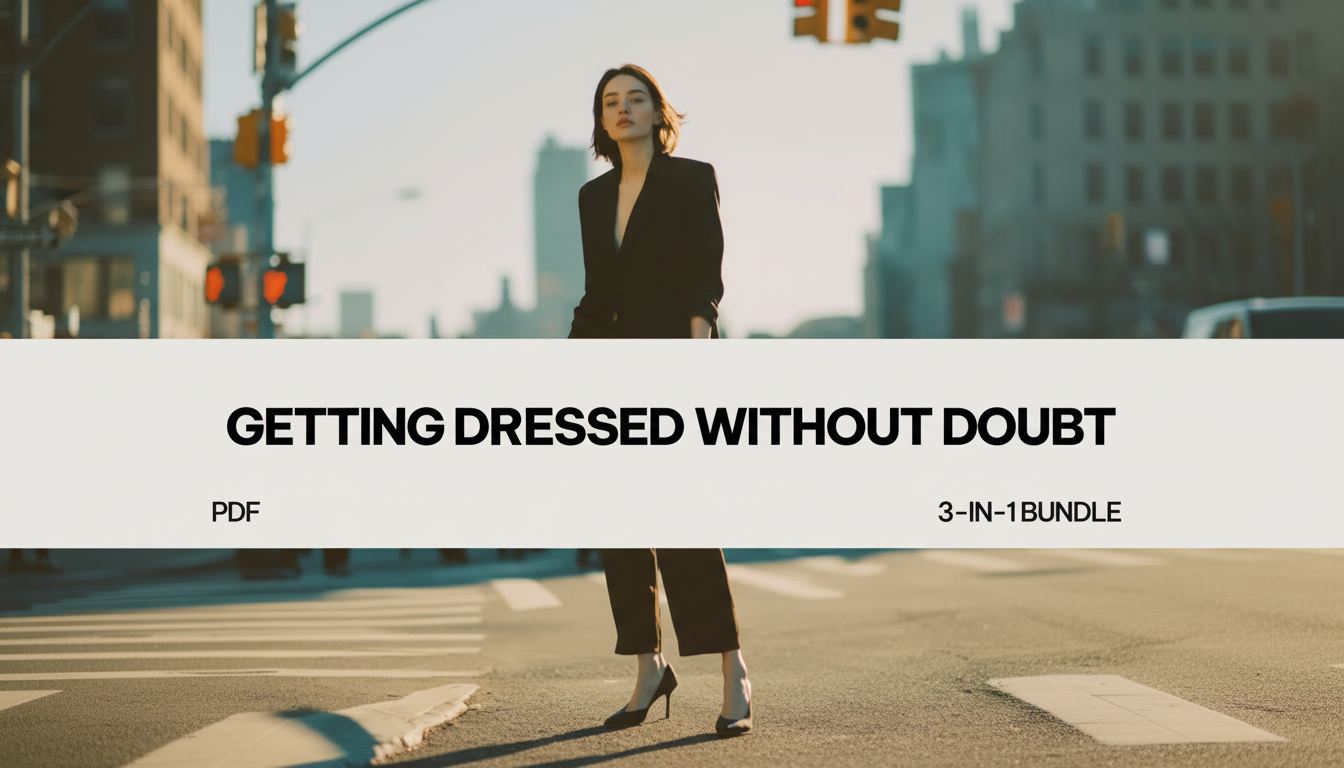
Getting Dressed Without Doubt: A Practical Style-Confidence System for Everyday Outfits
Second-guessing outfits can turn a simple morning routine into a spiral of doubt. A repeatable system—part mindset, part wardrobe clarity—makes getting dressed faster and more satisfying. The goal isn’t to “have more clothes.” It’s to have fewer decisions, better inputs, and a reliable method that turns “nothing feels right” into go-to looks that match your day.
What “outfit doubt” looks like (and why it sticks)
Outfit doubt usually shows up as a pattern, not a one-off bad day. Common signs include changing multiple times, defaulting to the same “safe” outfit, avoiding certain events because you don’t know what to wear, or buying pieces that never leave the closet.
It sticks for a few practical reasons:
- Decision fatigue: when you’ve already made dozens of decisions, even small wardrobe choices feel heavy. (Harvard Health has a helpful overview of the concept of decision fatigue.)
- Unclear style goals: if you can’t define what “good” means for your real life, every option feels questionable.
- Mismatched wardrobe pieces: a closet full of items that don’t work together creates constant friction.
- Unrealistic inspiration images: the outfit looks effortless—until you realize it relies on a different body, climate, lifestyle, or budget.
Most of the time, confidence is a process problem, not a body problem. When you improve the process, the uncertainty drops. That aligns with the idea of self-efficacy: confidence grows when you can reliably take action and get results.
The Style Confidence Loop: a simple system that reduces second-guessing
This loop works because it limits the number of decisions you make while still leaving room for personal style.
Step 1 — Clarify the moment
Define the setting, activity level, temperature, and what “success” looks like. Pick one primary goal: comfort, polish, approachability, or authority.
Step 2 — Choose a base formula
Start with a repeatable silhouette that already works for you, such as straight-leg pants + fitted top + layer, or midi skirt + knit + boots. Formulas reduce guesswork because they’re proven, not theoretical.
Step 3 — Add one intentional detail
Choose one focal point only: a color pop, texture, accessory, or shoe. One intentional detail reads as “styled” without creating a domino effect of changes.
Step 4 — Quick mirror test
Check fit, proportion, and mobility. If something tugs, pulls, slips, or pinches, swap the problem piece rather than restarting the whole outfit. (A small fix is faster than a full reset.)
Step 5 — Save the win
When an outfit works, capture it: write the formula and context (where you wore it, weather, shoes). This turns a good day into an easy repeat.
| Checkpoint | What to look for | Quick fix if it’s off |
|---|---|---|
| Fit | No pulling at buttons/hips, comfortable sitting and walking | Size up, add stretch, or swap to a more forgiving cut |
| Proportion | Balanced top-to-bottom volume; waist placement feels intentional | Tuck/half-tuck, add a layer, change rise or hem length |
| Comfort | Shoes and fabrics feel wearable for the full plan | Switch shoes, add insoles, swap fabric weight |
| Cohesion | Colors and textures look like they belong together | Repeat one color, add a neutral layer, simplify accessories |
| Identity | Feels like “you,” not a costume | Remove one trend item and replace with a trusted staple |
Build a “no-doubt” wardrobe foundation (without starting over)
Instead of overhauling your closet, build a foundation that supports fast, repeatable outfits.
A practical bonus: what you wear can change how you feel and perform. Research on “enclothed cognition” suggests clothing can influence psychological processes in the wearer, which helps explain why a reliable outfit formula can shift your mood and focus. (See Adam & Galinsky’s paper.)
Using a guide + checklist + eBook as a repeatable routine
Getting Dressed Without Doubt Kit: what’s inside and who it’s for
Getting Dressed Without Doubt Kit is built for anyone who wants a clear, low-friction way to feel confident in what they wear—especially when mornings feel rushed or emotionally draining. It’s also useful if you’re rebuilding confidence after body changes, simplifying a cluttered closet, or trying to make your style feel more consistent.
| Component | Purpose | When to use it |
|---|---|---|
| How to Feel Confident in What I Wear Guide | Clarifies personal style goals and decision rules | When you feel stuck or want to reset |
| Confidence Checklist | Speeds up outfit decisions and reduces overthinking | Daily, especially on busy mornings |
| Style Confidence eBook | Deeper support for mindset, wardrobe gaps, and outfit formulas | Weekly troubleshooting and planning |
Pairing options if you want a fuller glow-up routine
- If color choices feel random, the Color Theory Seasons Bundle can give you a simple framework so outfits look intentional with less effort.
- If you want a fast polish step, the Low-Effort Makeup Secrets Pack can reinforce that “put together” feeling without adding much time.
A 7-day confidence plan (small steps, noticeable results)
FAQ
How can outfit confidence improve quickly without buying new clothes?
Use repeatable outfit formulas and do fit-first swaps (change the piece that pinches or pulls instead of starting over). Shop your closet by building 2–3 reliable looks per lifestyle lane and documenting the wins so you can repeat them.
What should be on a daily getting-dressed checklist?
Include: occasion and comfort goal, fit and mobility check, proportion balance, cohesive colors, one intentional detail, and a final practicality check for weather, shoes, and bag.
Is a style guide useful if personal style feels unclear?
Yes. A good guide helps you define decision rules—silhouettes, colors, and priorities—so you stop relying on guesswork. Clarity usually comes from testing a few formulas and keeping notes on what consistently works.









Leave a comment