



Declutter One Room at a Time: The Focus Toolkit Method
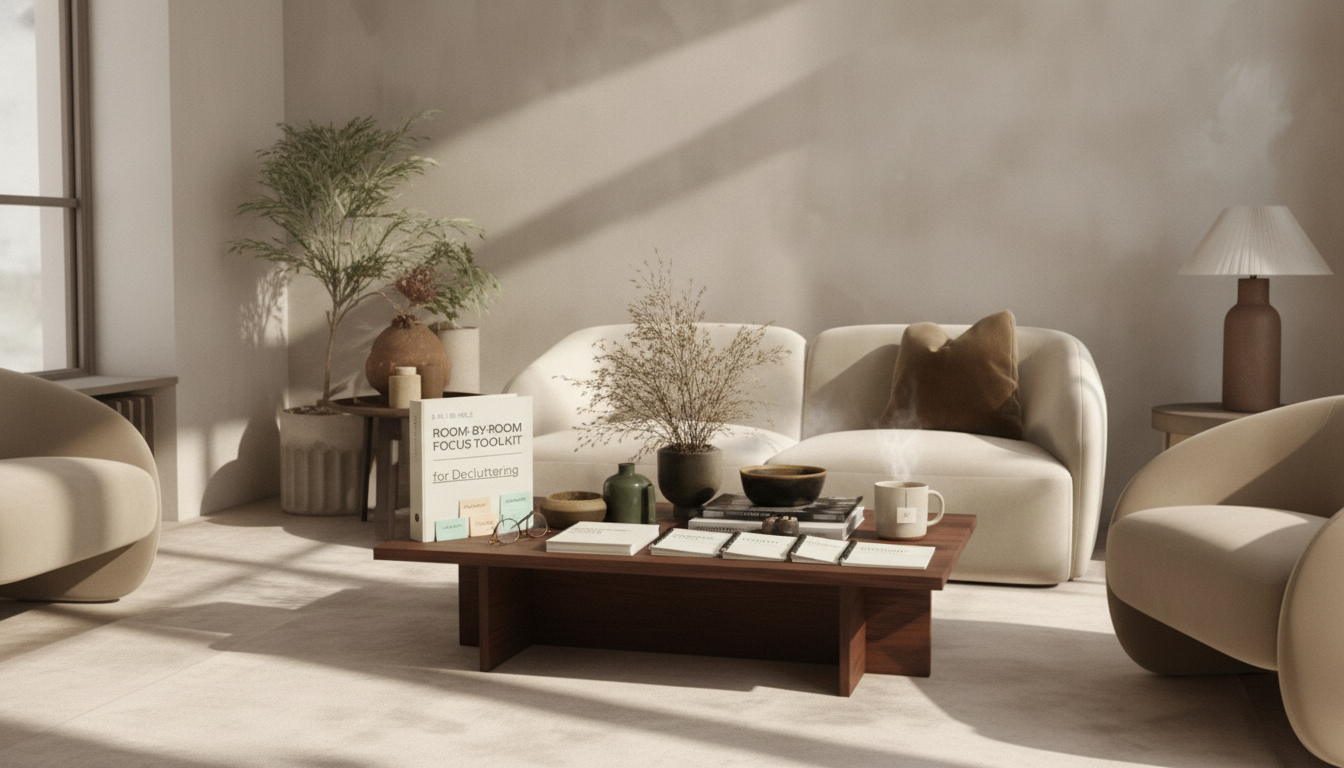
Room-by-Room Focus Toolkit for Decluttering: A Simple Way to Reset Your Home One Space at a Time
Decluttering feels hardest when the whole home is treated like one giant project. A room-by-room approach reduces decision fatigue, creates visible wins faster, and builds habits that make it easier to keep spaces clear. This guide maps out a practical, repeatable process and shows how a focused toolkit can support consistent progress from the entryway to the bedroom.
Why decluttering one room at a time works
When every room is “in progress,” the brain keeps reopening the same decisions: Where does this go? What should I keep? That loop is exhausting and can increase stress over time (the American Psychological Association covers how chronic stress can affect daily functioning). A one-room focus narrows the decision zone to a single space and a single finish line.
- Limits overwhelm by shrinking the scope to one room (or even one zone).
- Creates fast, motivating results that make it easier to start the next room.
- Prevents “doom piles” from spreading by keeping sorting contained.
- Builds routines (reset, review, remove) instead of occasional marathon cleanouts.
Set a clear finish line for each room
A finish line turns decluttering from “endless sorting” into a short, winnable mission. Keep the goal simple: clear surfaces, usable storage, and an easy daily reset that takes just a few minutes.
- Define what “done” means for that room: clear key surfaces, storage that closes, and a quick reset plan.
- Choose one primary purpose (sleep, cooking, studying, relaxing) to guide what stays.
- Pick a realistic time container (30, 60, or 90 minutes) and stop when it ends to avoid burnout.
- Decide where removed items go immediately: trash, recycling, donation, and a “relocate” bin.
Quick room goal examples (simple finish lines)
| Room | Finish line | 15-minute daily reset |
|---|---|---|
| Kitchen | Counters clear; one drawer/one cabinet simplified | Unload dishwasher; clear sink; wipe counters |
| Bedroom | Nightstand cleared; floor visible; laundry contained | Put clothes in hamper; reset nightstand |
| Living room | Coffee table clear; blankets contained; cords managed | Return items to baskets; quick surface sweep |
| Bathroom | Only daily-use items on counter; under-sink grouped | Put products back; wipe sink; hang towels |
The four-box method that keeps momentum
If a room stalls, it’s usually because items don’t have a “next stop.” The four-box method gives every object a destination so you can keep moving.
- Keep: stays in the room because it supports the room’s purpose.
- Donate/Sell: usable items you’re ready to release.
- Trash/Recycle: broken, expired, or no-longer-usable items.
- Relocate: belongs elsewhere in the home.
Handle each item once whenever possible: touch it, decide, place it. Skip “maybe” piles; if you truly need time, use a short review window (7–14 days) with a calendar reminder. Keep the relocate bin contained and empty it at the end of the session (or within 24 hours) to avoid creating a new clutter hotspot.
A practical room-by-room sequence (and why order matters)
Order matters because early wins reduce friction for later rooms. Start where clutter causes the most daily drag—high-traffic, high-visibility areas—then move into personal reset zones. Save storage-heavy spaces for last, once your decision-making “muscle” is warmed up (research on executive function and self-regulation highlights how planning and inhibition can be taxed by complex tasks; see the NIH overview hub at NCBI/NIH).
- Start with entryway, kitchen, and living room for fast relief.
- Next, improve daily routines in the bedroom and bathroom.
- Finish with closets, garage, and attic once you’re in a steady rhythm.
- Repeat the same steps: clear a zone, sort, clean, return only what earns its place.
Suggested sequence with time blocks
| Space | Best first target | Typical time block |
|---|---|---|
| Entryway | Shoes + drop zone surface | 30–45 minutes |
| Kitchen | One counter + one drawer | 60–90 minutes |
| Living room | Coffee table + media area | 45–75 minutes |
| Bedroom | Nightstand + floor + one drawer | 60–90 minutes |
| Bathroom | Counter + under-sink bin | 30–60 minutes |
| Closets/Storage | One shelf or one category | 60–120 minutes |
Keep what supports the room’s purpose (simple decision rules)
Once you’ve cleared a zone, take a moment to clean before returning items. For foundational home cleaning and disinfecting guidance, the CDC’s recommendations are a helpful reference—especially in kitchens and bathrooms where routines matter most.
Use a focused toolkit to stay consistent
Product options to support a room-by-room reset
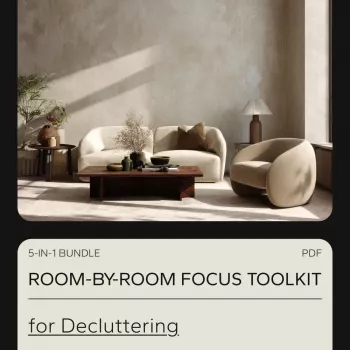
- Room-by-Room Focus Toolkit for Decluttering: Declutter One Room at a Time (in stock) for step-by-step, room-based momentum.
- Low-Effort Makeup Secrets Pack | Simple Makeup Ideas 4-in-1 Digital Beauty Bundle (in stock) to simplify a vanity routine and reduce “getting ready” clutter.
- Color Theory Seasons Bundle 10-in-1 | Seasonal Color Analysis Guides & Checklists (in stock) to help streamline wardrobe choices and curb duplicate purchases.
At-a-glance details
| Item | Details |
|---|---|
| Name | Room-by-Room Focus Toolkit for Decluttering: Declutter One Room at a Time |
| Availability | In stock |
| Price | 1255.99 USD |
| Link | View product page |
Make it stick: a weekly reset that prevents re-cluttering
FAQ
How long should it take to declutter one room?
Most rooms can be improved in 30–90 minutes when you focus on one zone at a time. Repeat short sessions over a week or two rather than pushing through an exhausting marathon day.
What should be decluttered first when everything feels messy?
Start with the most visible, high-traffic surface: the entry drop zone, a kitchen counter section, or the coffee table. Fast wins create breathing room and make the next decision easier.
How can donations and “relocate” items be handled without creating new piles?
Use one donation box near the exit and a single contained relocate bin. Empty the relocate bin within 24 hours and set a recurring donation drop-off (or pickup) day so items actually leave.












Leave a comment