



Mind-Relaxing Yoga Checklist for Daily Calm (5–30 Min)
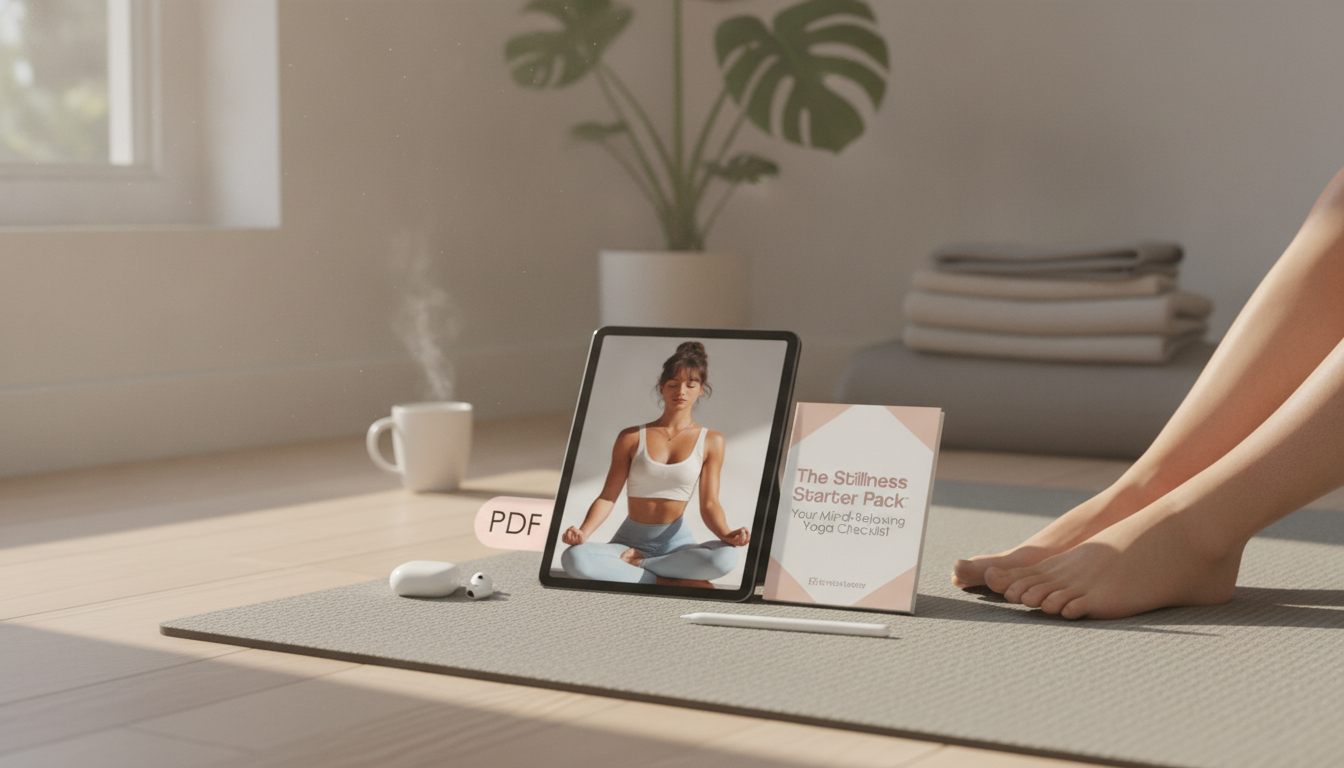
The Stillness Starter Pack: A Mind-Relaxing Yoga Checklist for Daily Calm
A simple checklist can turn “I should relax” into an actual routine. This guide breaks down a practical, low-pressure yoga flow designed for mental quiet, nervous-system downshift, and better end-of-day decompression—without needing long sessions or advanced poses.
What “mind-relaxing yoga” looks like in real life
Mind-relaxing yoga is less about chasing intensity and more about creating a predictable, soothing signal to your body: “You’re safe; you can soften.” Instead of fast transitions or big peak poses, it leans on fewer shapes, longer holds, and an exhale-forward breath that gently supports calm.
- Focuses on easing mental noise rather than pushing flexibility milestones, sweating, or “earning” rest.
- Pairs gentle movement with longer exhales to support relaxation and steadier attention.
- Uses fewer poses, slower transitions, and more time in each shape to reduce decision fatigue.
- Works best as a repeatable ritual: same cues, same order, same closing minute.
- Ideal moments: after work, before bed, after scrolling, or when feeling overstimulated.
For a deeper look at how yoga can support stress management, see Yoga for Stress Management (NCCIH). If you’re curious why stress can feel so physical (tight jaw, shallow breath, tense shoulders), the APA’s overview on stress effects on the body is a helpful reference.
What’s inside The Stillness Starter Pack and how to use it
If planning a “relaxing routine” turns into more thinking, a guided checklist helps. The Stillness Starter Pack: Your Mind-Relaxing Yoga Checklist is built around a simple idea: set a short time window, follow the steps in order, and stop when the checklist ends. That finish line matters—stopping on time builds trust and makes the routine easy to repeat tomorrow.
- A guided checklist approach that reduces guesswork and helps build consistency.
- Designed for quick set-up: choose a time window, follow the steps, and stop when the checklist ends.
- Useful for beginners who want structure, and for experienced yogis who want a no-planning wind-down.
- Best practice: print or keep it open on a device, then check off each step to avoid overthinking.
- Product link for details and access: The Stillness Starter Pack: Your Mind-Relaxing Yoga Checklist.
Quick-start: pick a session length and follow the matching checklist
| Session length | Goal | What to include | How it should feel |
|---|---|---|---|
| 5–7 minutes | Interrupt stress spirals | Breath + 2 gentle poses + short rest | Quieter, not “worked out” |
| 10–15 minutes | Reset after a long day | Breath + 4–6 poses + longer hold | Slower thoughts, looser jaw/shoulders |
| 20–30 minutes | Deep decompression | Full checklist + extended closing rest | Heavy-limbed calm, steady breathing |
Set the scene in under two minutes
The environment doesn’t need to be perfect; it just needs to be consistent enough that your brain recognizes the pattern. Think “minimum viable calm.”
- Choose a mat-sized floor area and add one folded blanket or cushion.
- Lower input: dim the light, silence notifications, and keep the room slightly warm if possible.
- Pick one anchor: a timer, a playlist, or a single cue word (like “soften”) to return attention.
- Decide the finish line before starting (7, 12, or 20 minutes) to prevent bargaining mid-session.
- If energy is low, start seated; if restless, start with a slow standing fold to discharge tension.
If you want to reduce decision-making in your broader routine (which can help the mind feel less “full”), pairing yoga with a simplified getting-ready plan can be surprisingly soothing. Two optional add-ons for streamlining daily choices: Low-Effort Makeup Secrets Pack | Simple Makeup Ideas 4-in-1 Digital Beauty Bundle and Color Theory Seasons Bundle 10-in-1 | Seasonal Color Analysis Guides & Checklists.
Breath cues that calm the mind without overcomplicating it
Breath is the easiest “lever” to pull when you want to downshift. A longer exhale than inhale tends to feel settling and can help the body move toward relaxation.
Small, consistent movement also supports overall health. For general guidance on recommended activity levels, see Physical Activity Guidelines for Americans (HHS).
A gentle checklist flow: poses that reliably unwind the nervous system
If you’re using The Stillness Starter Pack, treat the list like a guardrail: it keeps the flow simple, repeatable, and mercifully free of “What should I do next?”
A 7-day stillness plan that builds the habit (without relying on motivation)
7-day micro-routine (adjust times as needed)
| Day | Time | Focus | Checklist highlight |
|---|---|---|---|
| Day 1 | 7–10 min | Start small | Breath + Child’s Pose + rest |
| Day 2 | 10–12 min | Shoulder/neck ease | Cat–Cow + longer exhales |
| Day 3 | 12–15 min | Hip release | Figure-4 + slow transitions |
| Day 4 | 8–10 min | Low-energy reset | Legs-up-the-wall + quiet breathing |
| Day 5 | 15–20 min | Full-body unwind | Add twist + longer hold times |
| Day 6 | 10–12 min | Mind quieting | Fewer poses, more stillness |
| Day 7 | 15–25 min | Long close | Extended Savasana + reflection note |
Common sticking points and quick fixes
FAQ
How often should a relaxing yoga routine be done to notice a difference?
Most people notice small shifts with 3–5 days per week, and even daily 5–10 minute sessions can help when done consistently. Look for practical changes like easier sleep onset, less jaw/shoulder tension, and a calmer response to typical end-of-day stress.
Is it better to do relaxing yoga in the morning or at night?
Morning sessions can support steadier mood and focus, while evening sessions are great for downshifting and sleep. The best choice is the time you can repeat most reliably; on busy days, use the shortest version and keep the habit intact.
What if certain poses make me feel uncomfortable or anxious?
Skip or swap any pose that doesn’t feel safe or steady, reduce range of motion, and use props to increase comfort. If there’s pain or significant distress, consult a qualified professional before continuing.














Leave a comment