



Drying Rack Knife Placement: Safe & Edge-Friendly Tips
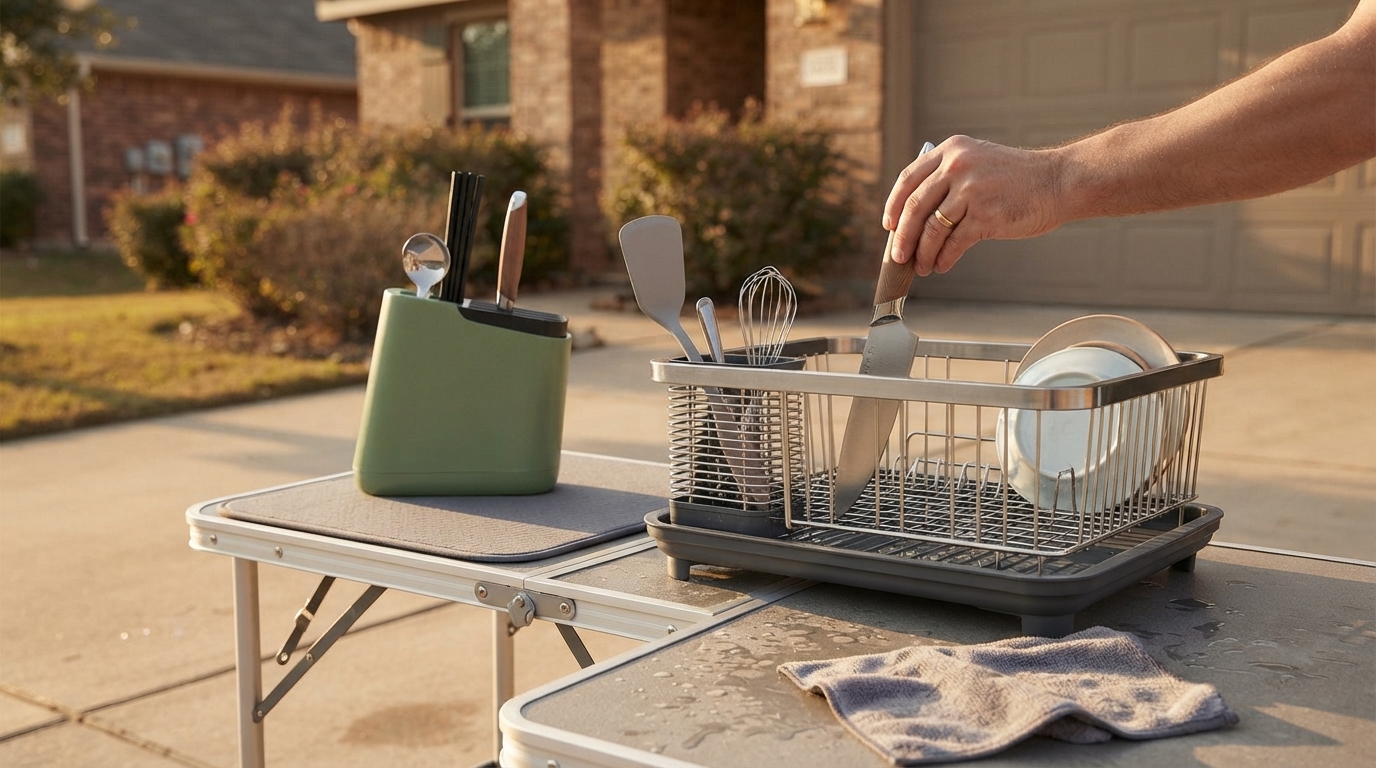
How to Put Knives in a Drying Rack?
Knives can dry safely on a rack, but the way you place them matters for both blade protection and hand safety. The goal is to keep sharp edges from contacting metal wires, prevent tipping, and make it hard to accidentally grab a blade instead of a handle.
Best Way to Place Knives in a Drying Rack
1) Use a dedicated knife slot when possible
If your drying rack has an integrated knife/utensil section, place knives handle-up so you can lift them out by the handle. Slide the blade into the slot without forcing it; pressure can dull the edge and can also make removal risky.
2) If there’s no slot, position knives flat and stable
Lay the knife on the rack so the blade rests on a stable surface without the cutting edge grinding against the rack wires. If the rack design forces edge contact, it’s better to hand-dry the knife instead of letting it sit and dull.
3) Keep blades separated and away from other utensils
Don’t pile knives in a utensil cup or let them touch forks and spoons. Crowding increases the chance of nicks in the blade and accidental cuts when unloading.
4) Choose a safe orientation for unloading
Place knives so the handle is the most accessible point. Avoid storing them blade-up or with the tip pointing outward where hands pass by frequently.
5) Dry promptly to prevent spots and corrosion
Even stainless steel benefits from quick drying. Once water stops dripping, remove the knife, wipe it fully (including near the handle and bolster), and store it in a block, sheath, or magnetic strip.
For rack setups that keep counters cleaner and make knife drying safer, see the full guide here: https://havencia.com/guide-knife-utensil-drying-station-cleaner-counters/.
FAQ
Is it safe to put sharp knives in the utensil cup of a drying rack?
It’s usually not the safest option because blades can be hidden among utensils and are easy to grab accidentally. If you must use a cup, keep knives separated, handle-up, and remove them first when unloading.












Leave a comment