



Cat-Friendly Home Setup: 4-in-1 Practical Digital Pack
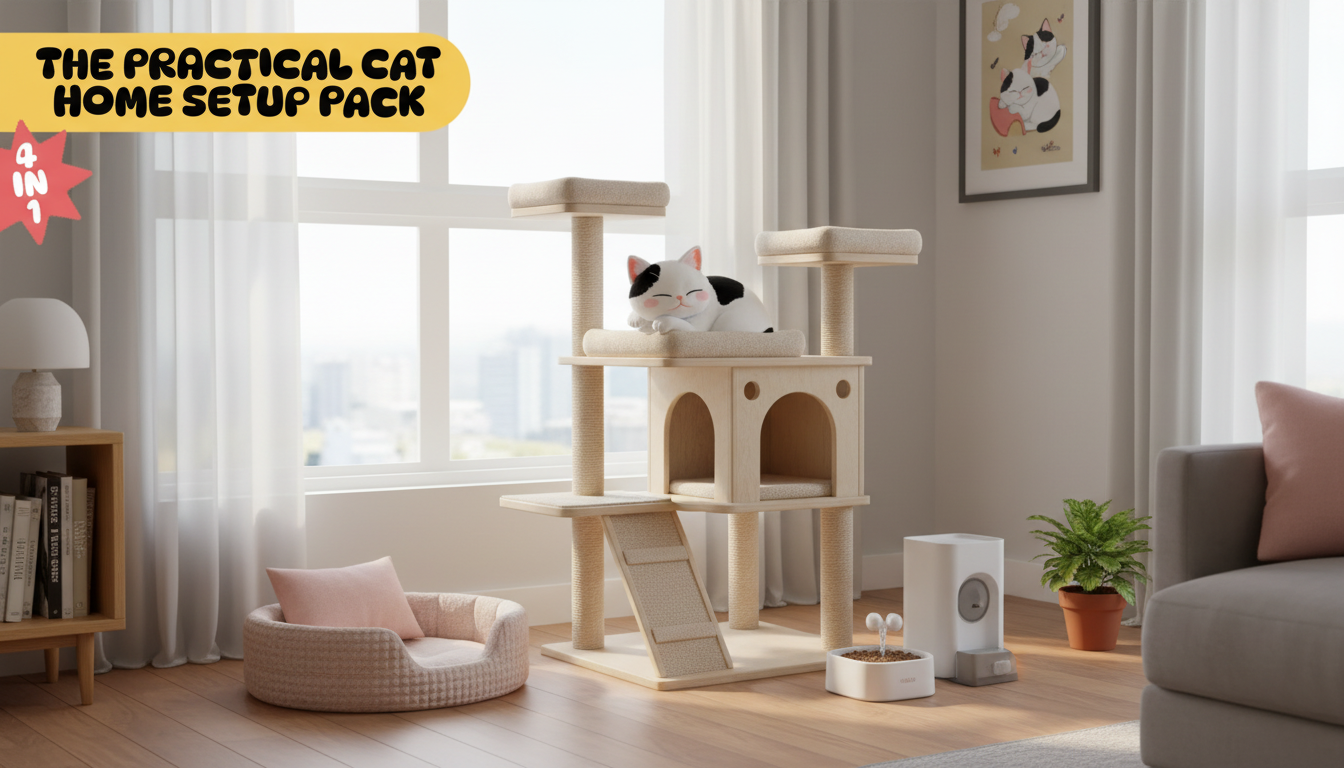
The Practical Cat Home Setup Pack: 4-in-1 Digital Bundle for a Cat-Friendly Home
A cat-friendly home is less about buying more and more about placing the right essentials in the right spots. This digital bundle organizes the setup into clear steps—so new cat parents, adopters, and multi-cat households can reduce stress, prevent common behavior issues, and build routines that actually stick.
What a cat-friendly home looks like (and why it works)
Cats thrive when their environment makes sense. When key resources are easy to find and don’t feel “risky” to use, cats are more likely to eat, drink, eliminate, rest, and play in healthy patterns—without improvising on your sofa or in your favorite plant.
- Clear “zones” for key needs: eating, drinking, toileting, play, rest, and scratching each have an intentional place.
- Predictable routines and consistent placement: reduces anxiety, pacing, and roaming behaviors—especially after adoption or a move.
- Vertical space and safe hiding areas: supports confidence and calmer exploration, particularly for shy cats.
- Environmental enrichment: helps prevent boredom-related scratching, zoomies, and nighttime disruption.
- Small adjustments solve big problems: litter box location, better scratching options, or a smarter feeding setup often changes everything.
For additional evidence-based guidance, cat-focused organizations such as the American Association of Feline Practitioners (AAFP) and International Cat Care offer helpful principles for designing calmer, more usable spaces for cats.
What’s inside the 4-in-1 Practical Cat Home Setup Pack
The Practical Cat Home Setup Pack: 4-in-1 Digital Bundle for a Cat-Friendly Home is designed to make the “where do I put everything?” phase straightforward. Instead of guesswork (and a pile of unused purchases), it guides you through a repeatable home setup that works for one cat or a busy multi-cat household.
- A structured plan that breaks the home setup into manageable, repeatable steps
- Checklists that help confirm the essentials are covered before issues start
- Guides that support calm transitions for new cats, movers, and changing households
- Tools that help align placement, routine, and enrichment with typical cat behavior
- Digital format that’s easy to reference on a phone while you set up or troubleshoot
Bundle overview and how each part helps at home
| Bundle part | Primary focus | Best time to use | Practical outcome |
|---|---|---|---|
| Setup guide | Home zones and placement | Before day 1 or during a reset | Fewer “trial-and-error” purchases and better layout decisions |
| Checklists | Essentials and readiness | Before adoption, after a move, or when adding a second cat | Confidence that core needs are covered |
| Routine support materials | Daily rhythm and consistency | First 2–4 weeks and after schedule changes | Smoother feeding/play/sleep patterns |
| Enrichment and behavior support | Scratching, play, calm spaces | Ongoing, especially for indoor cats | Reduced boredom behaviors and healthier outlets |
Room-by-room setup priorities
Thinking in “rooms” helps you set up in logical stages—starting with a decompression space, then expanding outward as your cat settles. If you’re bringing home a new cat, organizations like the ASPCA also emphasize a calm start and gradual adjustment.
- Entry/quiet room: create a low-traffic decompression space with litter, water, a bed, and a hiding spot. Keep it simple and consistent.
- Living areas: add vertical options (cat tree or shelves) and at least one scratching station near common pathways where the cat naturally travels.
- Feeding area: keep food away from litter. If your cat seems to avoid drinking, try separating food and water locations.
- Litter locations: choose accessible, low-traffic spots with “escape routes.” Avoid tight corners that can feel like traps.
- Bedrooms: plan calming nighttime routines and evening play to reduce early-morning wake-ups.
Core setup checklist: the essentials that prevent the most problems
When problem behaviors show up, they often trace back to missing (or poorly placed) basics. This checklist focuses on the highest-impact essentials—things that tend to prevent the most common friction points.
- Litter boxes: follow the “n + 1” guideline (one per cat, plus one extra) and place them in separate areas when possible.
- Scratching options: offer both vertical and horizontal scratchers in different textures. Put them where scratching already happens, not where you wish it would happen.
- Safe rest and hiding: provide covered beds, boxes, or under-furniture access so cats can relax without feeling exposed.
- Enrichment: rotate toys, add short wand-play sessions, and use puzzle feeders to keep indoor life engaging.
- Comfort and health basics: have a nail care plan, grooming tools if needed, and a carrier that stays out as a neutral, non-scary object.
Helping a cat settle in: a realistic timeline and what to watch for
Settling in is rarely instant. The goal is steady progress—eating, using the litter box reliably, and gradually expanding comfort zones.
Common setup mistakes (and quick fixes)
Getting the most out of the digital bundle
Households with both cats and dogs often find it helpful to keep training routines equally structured. If you’re also setting up a new puppy, Step-by-Step Puppy Training Toolkit: A Beginner’s Guide to Dog Training + eBooks & Checklists can complement a calmer, more predictable home routine.
FAQ
How long does it take for a cat to get used to a new home?
Many cats start to relax within a few days, but a realistic range is a few days to a few weeks, depending on personality and past experiences. A quiet starter room, consistent feeding and play routines, and gradual expansion of space usually speed up comfort; refusal to eat, ongoing vomiting, straining in the litter box, or severe, persistent hiding should prompt a vet call.















Leave a comment