



Propane Tankless Water Heaters: Sizing, Venting & Costs
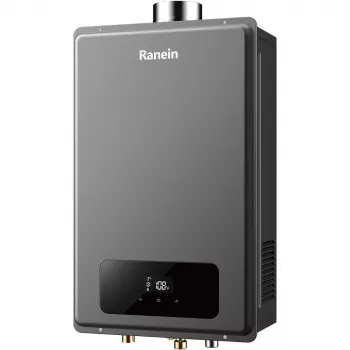
Propane Gas Tankless Water Heater: What to Know Before You Install One
A propane tankless water heater delivers hot water on demand without storing it in a tank, making it a strong option for homes that want steady performance and extra space where a traditional tank used to sit. The best choice comes down to how much hot water you need at once (flow rate), how cold your incoming water is, what venting route you can use, and whether your propane tank, regulators, and gas piping can support the unit’s peak BTU demand.
How a Propane Tankless Water Heater Works
Tankless water heaters heat water only when you need it. When you open a hot-water tap, cold water moves through a heat exchanger while a propane burner fires to raise the temperature to your setpoint.
- Cold water flows through a heat exchanger and is warmed by a propane burner only when a hot-water tap is opened.
- A flow sensor and control board modulate burner output to help maintain a set outlet temperature.
- Because there is no storage tank, standby heat losses are reduced, but adequate gas and venting capacity become more important.
For a technical overview of demand-type systems and efficiency considerations, the U.S. Department of Energy has a helpful guide: Tankless or Demand-Type Water Heaters.
Key Benefits and Trade-Offs
Propane tankless models are popular in rural areas and off-grid-adjacent setups where propane is already used for space heating or cooking. They can be excellent performers, but they’re not “plug-and-play” in every home.
- Space-saving installation compared with many tank-style heaters.
- Potential for higher efficiency models, especially when properly sized and maintained (check ENERGY STAR guidance: Water Heaters).
- Hot-water duration is typically better for back-to-back showers, but output is limited by maximum flow rate and temperature rise.
- May require upgrades: larger gas line, appropriate venting, combustion air provisions, and sometimes electrical power for ignition and controls.
- Hard water can accelerate scale buildup, increasing maintenance needs.
A practical way to think about it: a tank heater is a “battery” of hot water, while a tankless heater is a “generator.” If the generator is too small (or restricted by gas/venting), you’ll feel it as reduced hot-water flow or temperature swings.
Sizing: Flow Rate, Temperature Rise, and Household Demand
Sizing is where most satisfaction (or frustration) starts. A propane tankless heater must produce enough hot water for the fixtures you might run at the same time, while also handling the required temperature rise from your local inlet water temperature to your desired setpoint.
- Estimate simultaneous hot-water use (e.g., shower + sink + dishwasher) to determine required gallons per minute (GPM).
- Account for local incoming water temperature; colder climates require more temperature rise and reduce achievable GPM.
- Look for stable temperature control features to minimize fluctuations when fixtures turn on/off.
- Plan for peak scenarios: multiple showers, large soaking tubs, or appliances running together.
Quick sizing checkpoints
| What to check | Why it matters | Rule of thumb |
|---|---|---|
| Peak simultaneous fixtures | Determines required flow capacity | Add expected GPM from fixtures likely to run at the same time |
| Incoming water temperature | Colder inlet water reduces delivered GPM at a given setpoint | Colder regions need higher-capacity units for the same comfort |
| Setpoint and mixing | Higher setpoints increase needed temperature rise | 120°F is common; consider thermostatic mixing valves where appropriate |
| Future needs | Avoid undersizing if household size changes | If adding a bathroom, consider upsizing now |
Propane Supply Planning (Tank Size, Regulators, and Gas Lines)
Unlike many tank heaters, tankless units can draw a lot of fuel when firing at full output. That’s great for performance, but it puts stress on the propane delivery “chain” if anything is undersized.
- Verify propane tank capacity and refill cadence based on heater BTU input and overall household propane loads (furnace, range, fireplace).
- Confirm the correct regulator setup and delivery pressure for the appliance requirements.
- Have a qualified professional assess gas line diameter and run length; tankless units can have high peak BTU demand.
- In cold weather, propane vaporization rate can limit performance if tank size is too small or draw is too high.
If you’ve ever had a propane appliance “starve” on the coldest days, that’s often a tank size/vaporization or regulator/line sizing issue—both worth checking before you commit to a high-demand tankless model.
Venting, Clearance, and Indoor Air Requirements
Venting is not optional detail work—it’s core to safe, reliable operation. Always follow the manufacturer’s venting instructions and local codes.
For code context and safety baselines, see the NFPA overview for fuel gas systems: National Fuel Gas Code (NFPA 54) Overview.
Installation and Operating Costs to Expect
Maintenance and Longevity Basics
A Ready-to-Order Option
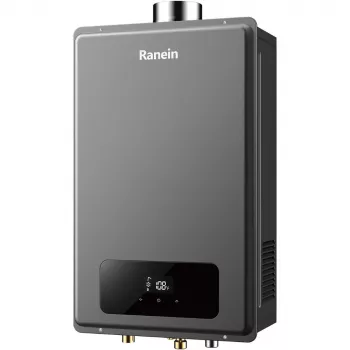
If you already have propane service (or you’re planning it) and want a streamlined purchase, review an in-stock Propane Gas Tankless Water Heater and confirm key requirements with your installer before ordering—venting type, BTU input, electrical needs, and whether your gas line and regulator setup are ready for the peak draw.
For homeowners who are reorganizing utility spaces to make installation and service access easier, a quick planning resource like Clear Space, Clear Mind: How to Find Motivation and Declutter Your Home for Good can help you map storage and clearance so the unit stays accessible for maintenance.
FAQ
How long will a 100 gallon propane tank last for a tankless water heater?
It depends on the heater’s BTU input, how much hot water you use, your incoming water temperature, and what other propane appliances are running. A 100-gallon tank typically holds about 80 gallons usable (filled to 80%); to estimate, convert the heater’s BTU/hr to gallons per hour at full fire (propane is roughly 91,500 BTU per gallon), then adjust down because most homes use hot water intermittently rather than continuously.












Leave a comment