



70mm Floating Minnow Hardbait: Twitch, Pause, Strike
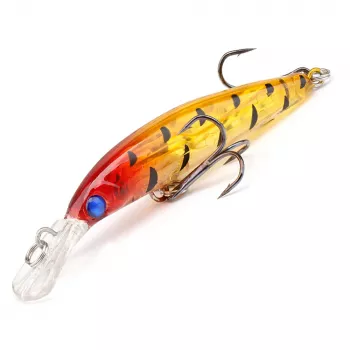
Floating Minnow Lure 70mm (3.5g) Hardbait with Sharp Treble Hooks
A small floating minnow hardbait is built for drawing reaction strikes with a tight wobble, quick directional changes, and a pause that hangs in the strike zone. This 70mm, 3.5g profile suits finesse situations—clear water, pressured fish, and shallow structure—while sharp treble hooks help convert short hits into solid hookups.
What This Lure Is Built to Do
This compact hardbait is designed for anglers who want control in skinny water without sacrificing the ability to trigger fish that are following but not fully committing.
- Floating minnow profile for shallow-water searching and controlled stop-and-go presentations
- Lightweight 3.5g size for finesse approaches on streams, ponds, canals, and calm inshore edges
- Hardbait body for consistent action, durability, and crisp darting on twitches
- Sharp treble hooks for improved hookup rates on light bites and following fish
If you fish around shallow cover, the floating nature is a practical advantage: when you stop the retrieve, the lure rises instead of sinking deeper into trouble. That makes it easier to work along weed tops, over scattered rock, and tight to docks where a pause often triggers the bite.
Specifications at a Glance
The 70mm size matches a wide range of small forage—minnows, juvenile baitfish, and slim-bodied fry—making it a reliable choice when fish are keyed in on smaller meals.
- 70mm body length provides a small baitfish silhouette that matches many common forage species
- 3.5g weight fits light and ultralight setups; casting improves with thin braid or smooth mono
- Floating behavior supports pauses near cover and helps reduce snagging versus fast-sinking baits
| Feature | Detail |
|---|---|
| Type | Floating minnow hardbait |
| Length | 70 mm |
| Weight | 3.5 g |
| Hooks | Treble hooks (sharp) |
| Best water zone | Shallow to near-surface (with pauses) |
Where It Shines
This style of lure excels wherever fish have time to inspect a presentation—and where a subtle change in cadence can turn a look into a strike.
- Shallow flats, shorelines, and riprap where baitfish roam close to the surface
- Clear to lightly stained water when fish inspect lures closely
- Around weeds, laydowns, docks, and edges where a floating pause can trigger strikes
- Cold fronts or post-spawn conditions when slower presentations outproduce constant retrieves
In calm inshore water, a floating minnow can be especially effective when worked parallel to structure on a controlled pace. If you time trips around moving water, consult tide predictions from NOAA Tides & Currents to plan those higher-percentage windows.
Retrieve Styles That Trigger Strikes
One of the biggest advantages of a small floating hardbait is how many “looks” it can give fish without changing lures. Rotate retrieves until you find what they’ll chase and what they’ll eat.
- Steady swim: moderate retrieve to keep a consistent wobble for active fish
- Twitch-and-pause: two short twitches, then pause; let the lure float up slightly before repeating
- Slash and stall: sharper jerks to make the bait dart, then stop to invite a reaction bite
- Bank-walk: cast parallel to shore and work in short increments to keep the lure in the strike zone longer
Pause length matters. In warmer water, brief pauses (1–2 seconds) keep the lure moving and competitive. In colder water or when fish are pressured, longer pauses (3–8 seconds) give followers time to line up and strike as the bait slowly rises.
Gear Pairing for Better Casting and Control
At 3.5g, casting distance and accuracy depend heavily on choosing the right rod and line combination.
- Rod: light to medium-light fast action for crisp twitches without ripping hooks free
- Line: thin braid with a short fluorocarbon leader for distance and sensitivity; or mono for extra buoyancy
- Leader length: 2–6 ft depending on water clarity and abrasion risk
- Knots and clips: a loop knot can increase freedom of movement; small snaps speed lure changes but choose compact sizes
For treble-hooked baits, a slightly softer tip helps keep pressure steady during headshakes. If you’re fishing current (creeks, spillways, tidal cuts), that forgiveness becomes even more important when fish hit close and fast.
Target Species and Situations
Always match your approach to local rules and seasonal closures—especially in brackish and saltwater zones. For Florida anglers, review the latest requirements and species regulations via the Florida Fish and Wildlife Conservation Commission (FWC).
Hook, Handling, and Maintenance Tips
Common Issues and Quick Fixes
Shop In-Stock Picks
- Men’s Luxury Chronograph Quartz Watch with Leather Band & Waterproof Features
- Vintage Leather Bracelet for Men with Stainless Steel Magnetic Clasp – Trendy Bangle for Fashion & Parties
FAQ
How do floating minnow lures work on the pause?
On the pause, a floating minnow rises or “hangs” upward, imitating a weakened baitfish that’s trying to recover. That brief lift often convinces following fish to commit, especially when you vary pause length based on water temperature (shorter in warm water, longer in cold or pressured conditions).
What line works best for a 70mm, 3.5g hardbait?
Thin braid (around 6–10 lb) with a 4–8 lb fluorocarbon leader helps casting distance and sensitivity with a 3.5g lure. If you want extra buoyancy and a bit more forgiveness with trebles, 4–8 lb monofilament is a solid choice for close-to-cover work.
Can the treble hooks be replaced or upgraded?
Yes—treble hooks are typically swapped via the split rings. Match the replacement hook size and weight closely to avoid changing how the lure floats and tracks, and choose corrosion-resistant trebles when fishing brackish or saltwater.













Leave a comment