



Choosing the Right GPM for a Tankless Water Heater
How many gpm should I get for a tankless water heater?
The right GPM (gallons per minute) for a tankless water heater depends on how many hot-water fixtures you want to run at the same time and how cold your incoming water is. A bigger GPM number usually means the unit can support more simultaneous hot-water use, but the real-world output drops as the required temperature rise increases.
Start with your “simultaneous use” plan
List the hot-water activities that might happen at once in your home. Common approximate flow rates are: a shower (about 1.5–2.5 GPM), a bathroom faucet (0.5–1.0 GPM), and a kitchen faucet (1.0–2.2 GPM). If you want to run two showers at the same time, plan for roughly 3–5 GPM just for that, before adding sinks or appliances.
Account for temperature rise (the hidden limiter)
Tankless heaters are rated at a specific temperature rise, but colder groundwater requires more heating, which reduces the available GPM. In warm climates, a mid-range unit may comfortably cover multiple fixtures. In colder regions, you may need a higher-capacity model (or plan for fewer simultaneous fixtures) to keep showers hot without fluctuation.
Typical sizing ranges that work for many homes
As a rough guide: 4–5 GPM often fits a small home or apartment with limited simultaneous use; 6–7 GPM can fit many 1–2 bathroom households; and 8+ GPM is better for larger families, bigger homes, or frequent multi-shower overlap—especially where incoming water is cold.
Why a 7.4 GPM unit is a popular “middle ground”
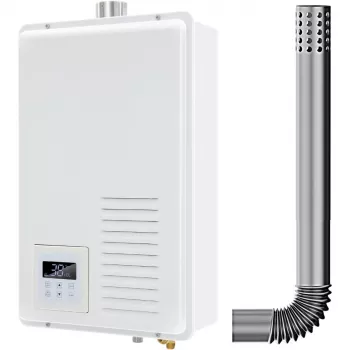
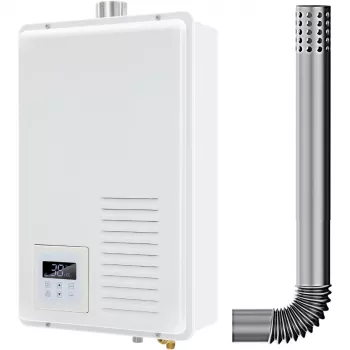
A 7.4 GPM indoor propane tankless water heater can be a practical choice for homes that want strong performance without oversizing, particularly when you prioritize a couple of simultaneous fixtures. For a closer look at what a 7.4 GPM indoor propane unit can handle and how to match it to your needs, see this guide: 7.4 GPM Indoor Propane Tankless Water Heater Guide.
FAQ
What size gas line do I need for a propane tankless water heater?
It depends on the heater’s BTU rating, total gas load in the home, and the length of the run. Many tankless units require a larger dedicated line than a traditional tank, so it’s best to size it using a gas-piping chart or have a licensed installer verify it.












Leave a comment