



Gas Tankless Water Heater Indoors: What’s Required
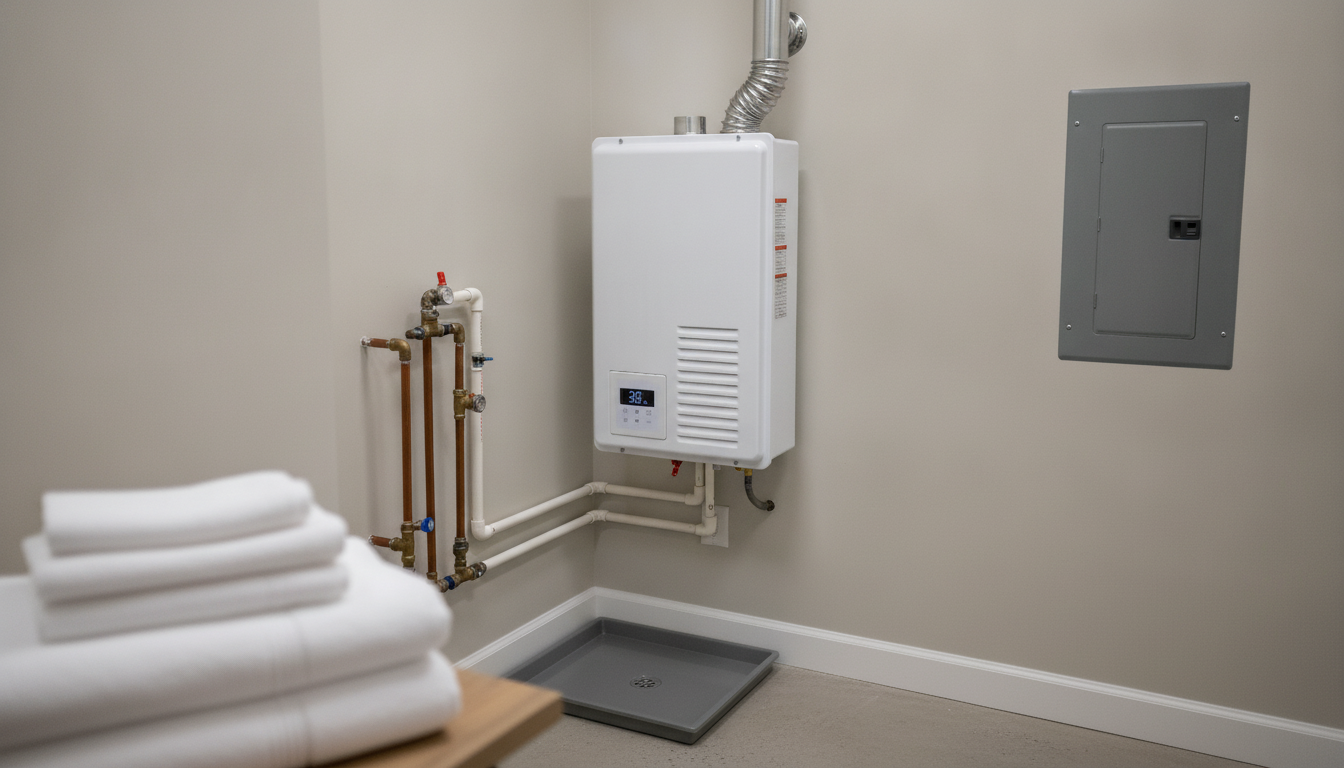
Can a gas tankless water heater be installed indoors?
Yes—many gas tankless water heaters are specifically designed for indoor installation, but they must be installed correctly for safety and performance. The key requirements are proper venting of exhaust gases, a reliable supply of combustion air, and correct gas-line sizing and pressure so the unit can fire at full output without starving other appliances.
Indoor models are typically “sealed combustion” (direct vent), meaning they pull fresh air from outdoors and send exhaust back outdoors through dedicated vent piping. This setup helps keep carbon monoxide out of living spaces and reduces drafts compared with older, open-combustion appliances. Venting materials, pipe diameter, maximum run length, and termination location must match the manufacturer’s instructions and local code.
What you need for an indoor install
Venting and combustion air: Indoor gas tankless units usually require a direct-vent configuration using approved pipe (often PVC/CPVC/PP, depending on the model). The termination must be placed with required clearances from windows, doors, and soffit vents.
Gas supply: Tankless units can have high BTU demands. A professional will verify the fuel type (natural gas vs. propane), regulator settings, and that the gas line is properly sized for the distance and total load.
Condensate handling: High-efficiency condensing models create acidic condensate that needs a drain route and, in many areas, a neutralizer before discharge.
Location and service access: Install in an area protected from freezing (unless the unit is rated and protected accordingly), with adequate clearance for maintenance, flushing, and future repairs.
When indoor installation isn’t a good idea
If the space can’t accommodate proper venting, lacks a safe condensate drain, or can’t meet clearance requirements, an outdoor-rated unit or a different location may be safer and simpler. In all cases, permitting and installation by a qualified technician help ensure code compliance.
For a deeper look at indoor propane tankless options, venting considerations, and sizing, see the guide here: https://havencia.com/guide-7-4-gpm-indoor-propane-tankless-water-heater-guide/.
FAQ
What’s the difference between indoor and outdoor tankless water heaters?
Indoor units require dedicated venting and combustion air management, while outdoor units are built to vent directly to open air. Outdoor models can simplify installation but must be protected from freezing and weather per manufacturer requirements.












Leave a comment