



5-Year Goal Checklist: Plan Milestones & Win Each Week
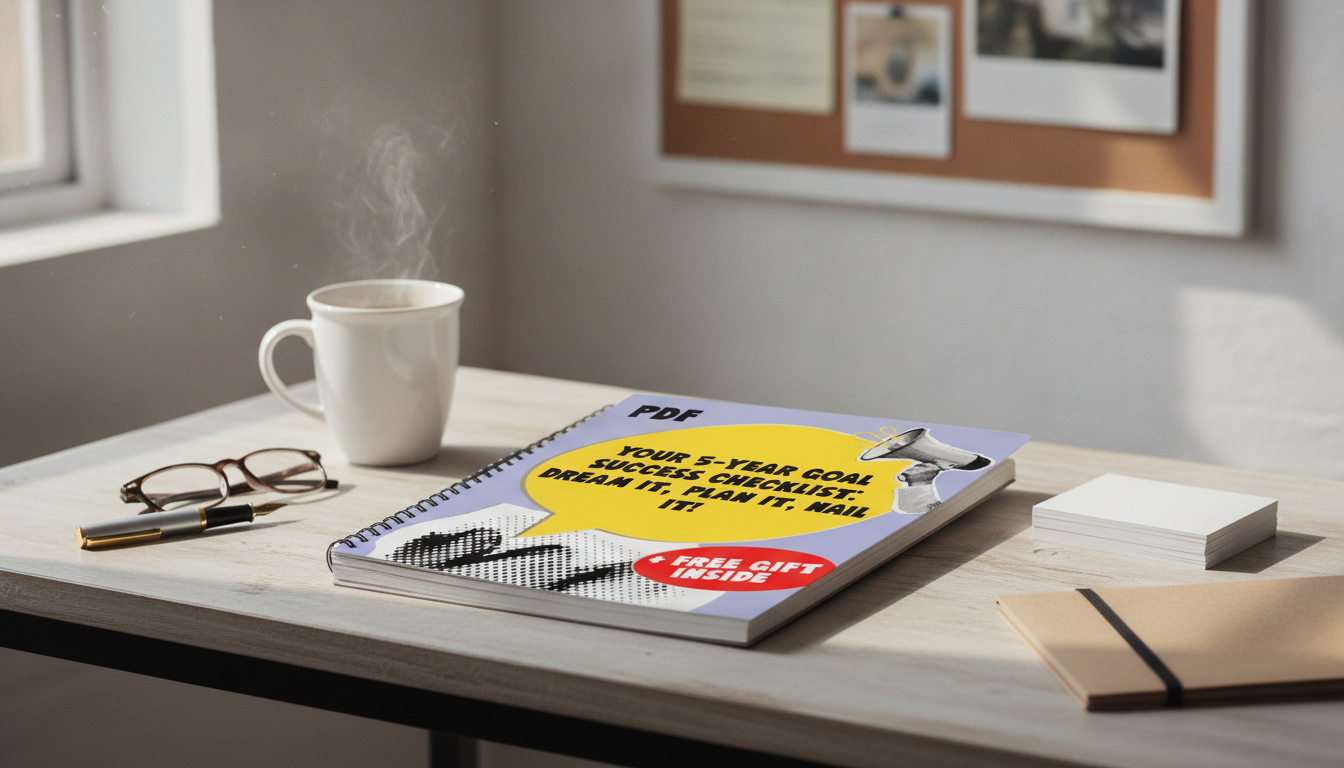
Your 5-Year Goal Success Checklist: Dream It, Plan It, Nail It!
Big goals get easier when they’re translated into clear milestones, next steps, and simple weekly actions. A 5-year plan doesn’t need to be rigid—it needs to be usable. This guide walks through a practical, repeatable way to define your direction, choose priorities, and track progress using a printable checklist that turns ambition into a step-by-step plan.
What a 5-year goal plan is (and what it isn’t)
A 5-year plan is a direction-setting tool: a short list of meaningful outcomes across life areas, plus the milestones that make them achievable. It’s designed to help you decide what matters most, what comes first, and what “progress” looks like long before you reach the finish line.
It is not a prediction of the future. It’s a flexible roadmap you can revise as priorities, opportunities, and constraints change. The point is clarity: fewer goals, better defined, tied to daily or weekly actions. The most useful checklist doesn’t collect vague wishes—it prompts decisions and creates traction.
Start with the “Dream It” layer: define outcomes that actually motivate action
Start by choosing 3–6 life areas that cover what you genuinely care about. Common examples include career/business, finances, health, relationships, home, learning, creativity, travel, and community. Then write one outcome per area in plain language—what life looks like in five years if things go well.
Aim for evidence-based specificity: add observable markers that make the goal real. That could be a role/title, a savings number, a routine frequency, a skill level, or a finished project you can point to. This aligns with classic findings that specific, challenging goals tend to improve performance when paired with feedback and commitment (see Locke & Latham’s Goal-Setting Theory overview).
For each outcome, add one line on why it matters. When motivation dips, that “why” keeps your plan from turning into a forgotten document. Finally, choose a primary theme for the next 12 months—the lever that makes other goals easier. For some people it’s health (more energy), for others it’s debt reduction (more options), and for others it’s skill building (more earning power).
Turn dreams into a plan: milestones, constraints, and trade-offs
Convert each 5-year outcome into 3–5 milestones so progress is visible early. A simple approach is: Year 1 (foundation), Years 2–3 (build), Years 4–5 (expand and lock in). Then get honest about constraints—time, money, childcare, energy, location, health, and current obligations. Planning improves when reality is included.
Next, identify trade-offs. What must be reduced or removed to make space—subscriptions, commitments, low-return projects, or excessive screen time? Add support systems to make follow-through easier: an accountability partner, mentor, coaching, a community group, recurring calendar blocks, or automated savings. Then write a “not now” list to protect focus and prevent goal creep.
Milestone Map (Example Template)
| Life Area | 5-Year Outcome | Year 1 Milestone | Next 90 Days | This Week |
|---|---|---|---|---|
| Career | Move into a senior role with stronger scope and pay | Complete one portfolio-ready project + request expanded responsibilities | Pick project, define deliverables, schedule 2 deep-work blocks weekly | Draft project outline; book stakeholder check-in |
| Finances | Build a 6-month emergency fund and invest monthly | Save first month buffer + automate transfers | Set target amount; open high-yield account; automate payday transfer | Review budget; set auto-transfer; cancel one unused expense |
| Health | Consistent strength + cardio routine and better sleep | Train 3x/week for 12 weeks and set a sleep cutoff | Choose program; schedule workouts; set bedtime routine triggers | Shop for meal staples; plan 3 workouts; set phone-off time |
Use the checklist to nail execution: from annual direction to weekly momentum
To strengthen follow-through, use a simple planning loop: schedule actions, not intentions. Put specific days/times on the calendar, set minimum viable targets, and define a fallback plan for busy weeks. Habit research also points to the value of shaping your environment—make the right action easier and the wrong action harder (a practical summary is available at James Clear’s Atomic Habits resources).
Add friction reducers that remove excuses: a packed gym bag, saved email templates, auto-payments, pre-written outreach messages, or a “default” weekly meal plan. Finally, track progress with a quick weekly review: wins, misses, blockers, and one adjustment for next week. If you want a structured mental contrast tool—wish, outcome, obstacle, plan—WOOP has a research-backed framework (see WOOP: Scientific Strategy for Goal Achievement).
What’s inside the Printable PDF: Your 5-Year Goal Success Checklist (Digital Download)
If you want a ready-to-use format that walks you from big-picture clarity to weekly action, the Your 5-Year Goal Success Checklist: Dream It, Plan It, Nail It! (Printable PDF) is built for exactly that flow.
Optional add-ons for a “reset season” (digital downloads)
- Color Theory Seasons Bundle 10-in-1 | Seasonal Color Analysis Guides & Checklists (for simplifying wardrobe decisions and building a consistent look)
- Low-Effort Makeup Secrets Pack | Simple Makeup Ideas 4-in-1 Digital Beauty Bundle (for quick routines that fit busy weeks)
How to review and reset without losing progress
FAQ
How many 5-year goals should be on the checklist?
A small set works best—often 3–6 goals across key life areas. Fewer goals improves clarity, makes trade-offs easier, and increases the odds you’ll execute consistently each week.
What if priorities change before five years is up?
That’s normal. Treat your plan as a living roadmap: keep the weekly planning habit, then adjust milestones during quarterly and annual reviews so your actions match your current realities.
Can the checklist be used digitally or does it have to be printed?
It works either way as a PDF. Print it if you like handwriting, or use a tablet/PDF annotation app for a fully digital planning setup.














Leave a comment