



550Wh Solar Power Station: 600W Pure Sine Backup Guide
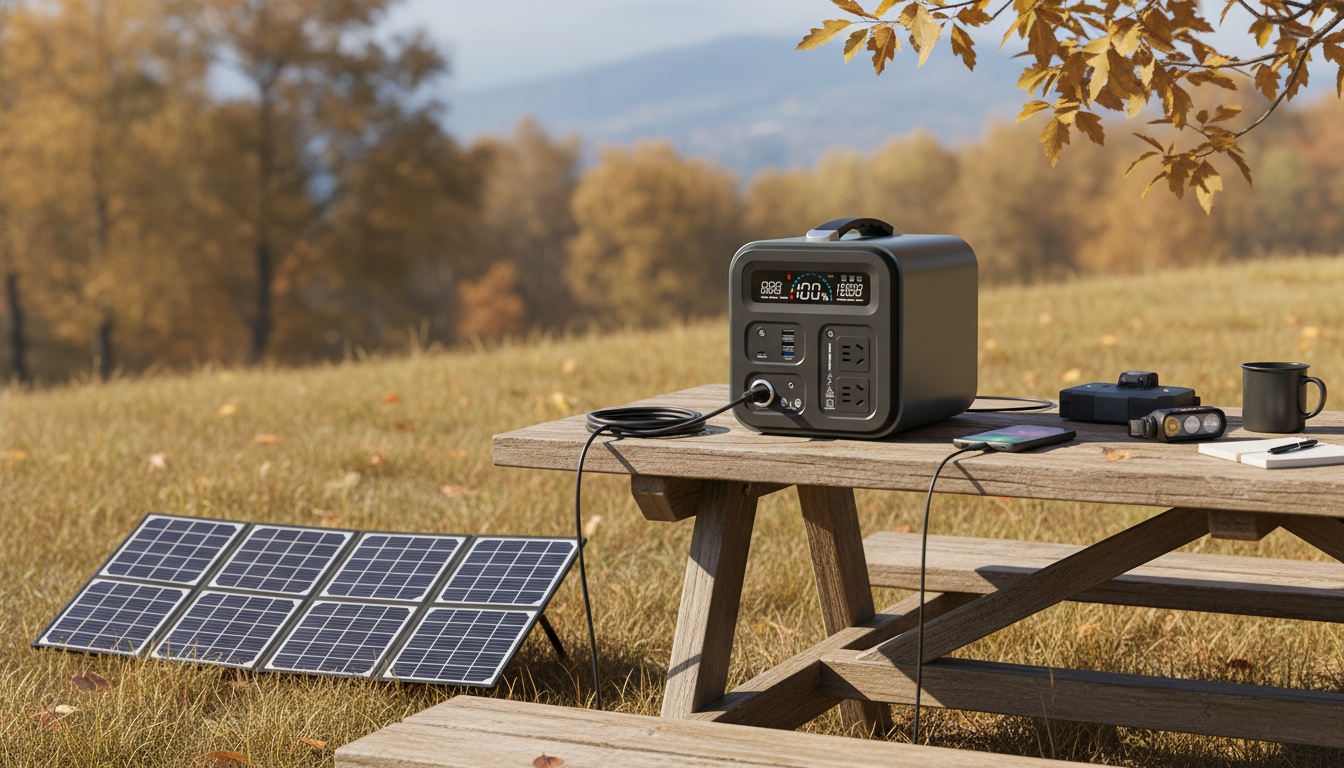
Portable 550Wh Solar Power Station with 600W Pure Sine Wave AC, USB & DC Outputs: Everyday Backup and Off-Grid Power
A compact solar power station can keep essential devices running during outages, trips, and remote work days—without fuel, fumes, or loud operation. This guide explains what a 550Wh battery and a 600W pure sine wave inverter mean in day-to-day use, how to choose between AC/USB/DC ports, and what to expect when topping up from solar.
What This 550Wh Power Station Is Built For
A 550Wh class power station is designed for the “keep life moving” category: communications, lighting, small electronics, and select comfort devices. It’s a practical fit when silence, indoor safety, and portability matter more than running high-watt appliances.
- Short outages: keep phones, a Wi‑Fi router (if your ISP is up), LED lighting, and rechargeable batteries running.
- Camping and RV weekends: power fans, lights, phones, camera batteries, and small kitchen devices that stay within inverter limits.
- Work-from-anywhere setups: run a laptop, hotspot, and possibly a small monitor for a few hours depending on load.
- Emergency readiness: a quiet alternative to small gasoline generators for low-to-medium power needs.
- Small medical and comfort devices: pure sine wave can be friendlier to sensitive electronics (always check device requirements).
Understanding Capacity (550Wh) and Inverter Power (600W)
Two specs do most of the decision-making: energy capacity and output power.
- Watt-hours (Wh) describe stored energy. 550Wh is your electrical “fuel tank.”
- Watts (W) describe how fast energy can be delivered. 600W is the continuous AC output ceiling (confirm any surge rating on the product page/manual).
- Runtime estimate: runtime (hours) ≈ usable Wh ÷ device watts.
- Plan for losses: usable Wh is typically lower than the label due to conversion and inverter losses (often ~10–25% on AC loads). USB/DC loads can be more efficient.
- Know what won’t fit: space heaters, hair dryers, and most microwaves usually exceed 600W and aren’t a match.
Example: a 60W fan might run roughly (550Wh × 0.8 usable) ÷ 60W ≈ 7.3 hours. A 300W appliance might run about 1.4 hours—if it stays under the inverter limit and doesn’t require a big start-up surge.
Pure Sine Wave AC: Why It Matters
Not all AC power is shaped the same. A pure sine wave inverter produces AC that more closely resembles what comes from a household wall outlet, which can reduce buzzing, excess heat, or finicky charger behavior in some electronics.
- Cleaner power for sensitive gear: often a better fit for audio equipment, certain chargers, and some medical/comfort devices.
- Motorized devices can be happier: some small AC motors run smoother on pure sine wave than on modified sine wave (device-dependent).
- Limits still apply: even with pure sine wave, the combined AC load must remain within the inverter rating.
- Watch start-up draw: compressors and motors can briefly pull more power at start than their running wattage.
Using AC, USB, and DC Outputs Without Overloading
The easiest way to stretch a 550Wh station is to match the port to the device instead of defaulting to AC for everything.
Quick Load Planning Examples (Approximate)
| Device | Typical Power Draw | Estimated Runtime Notes |
|---|---|---|
| Smartphone charging | 5–15W | Many full charges; USB is typically the most efficient route |
| Laptop (office work) | 45–90W | Several hours depending on screen brightness and workload |
| LED lantern or string lights | 5–30W | Often runs all evening; great for outage lighting |
| Portable fan | 20–60W | A few to several hours; speed setting makes a big difference |
| Mini fridge/12V cooler (varies widely) | 40–120W average | Runtime varies with ambient temperature and compressor cycling; check actual draw |
Solar Recharging and Real-World Expectations
Solar recharging is straightforward, but it’s rarely “nameplate watts all day.” Panel output changes with sun angle, temperature, cloud cover, and even partial shade (a small shadow can reduce output disproportionately). For a helpful primer on how solar works and why conditions matter, see the U.S. Department of Energy’s Solar Energy Basics and NREL’s PV research resources.
Practical Use Cases and Packing Checklist
Product Snapshot: Portable 550Wh Solar Power Station (600W Pure Sine Wave)
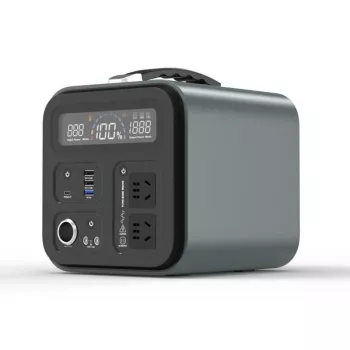
If you want a compact station for weekend trips and practical home backup, the Portable 550Wh Solar Power Station with 600W Pure Sine Wave AC, USB & DC Outputs fits the sweet spot between portability and usable output.
At-a-Glance Checklist Before Buying
| What to Check | Why It Matters |
|---|---|
| Continuous watts needed (W) | Prevents inverter overload and shutdown |
| Total daily energy needed (Wh) | Determines whether 550Wh is enough for the planned runtime |
| Port types required (AC/USB/DC) | Ensures direct compatibility without extra adapters |
| Solar input rating and connector type | Determines which panels can recharge the unit and how quickly |
| Device start-up surge needs | Some compressors and motors draw more power at startup than their running wattage |
More In-Stock Picks to Round Out Your Preparedness Kit
- Breathe Easy: Your Mindfulness Breathing Action Checklist | Mindfulness Breathing Exercises PDF | Calm & Focused Daily Breathing Routine (a simple way to stay calm and focused during outages or travel disruptions)
- Clear Space, Clear Mind: How to Find Motivation and Declutter Your Home for Good | Digital Decluttering Guide | How to Get Motivated to Declutter Your House (helpful for organizing charging cables, emergency bins, and go-bags)
FAQ
Do portable solar power banks really work?
Yes, when sized correctly. They store energy in a battery and deliver it through AC/USB/DC ports; results depend on capacity (Wh), output limits (W), and charging conditions—solar works best with adequate panel wattage, strong sun, and a compatible input.












Leave a comment