



AI for Arts & Crafts: Ideas, Plans, and Original Style
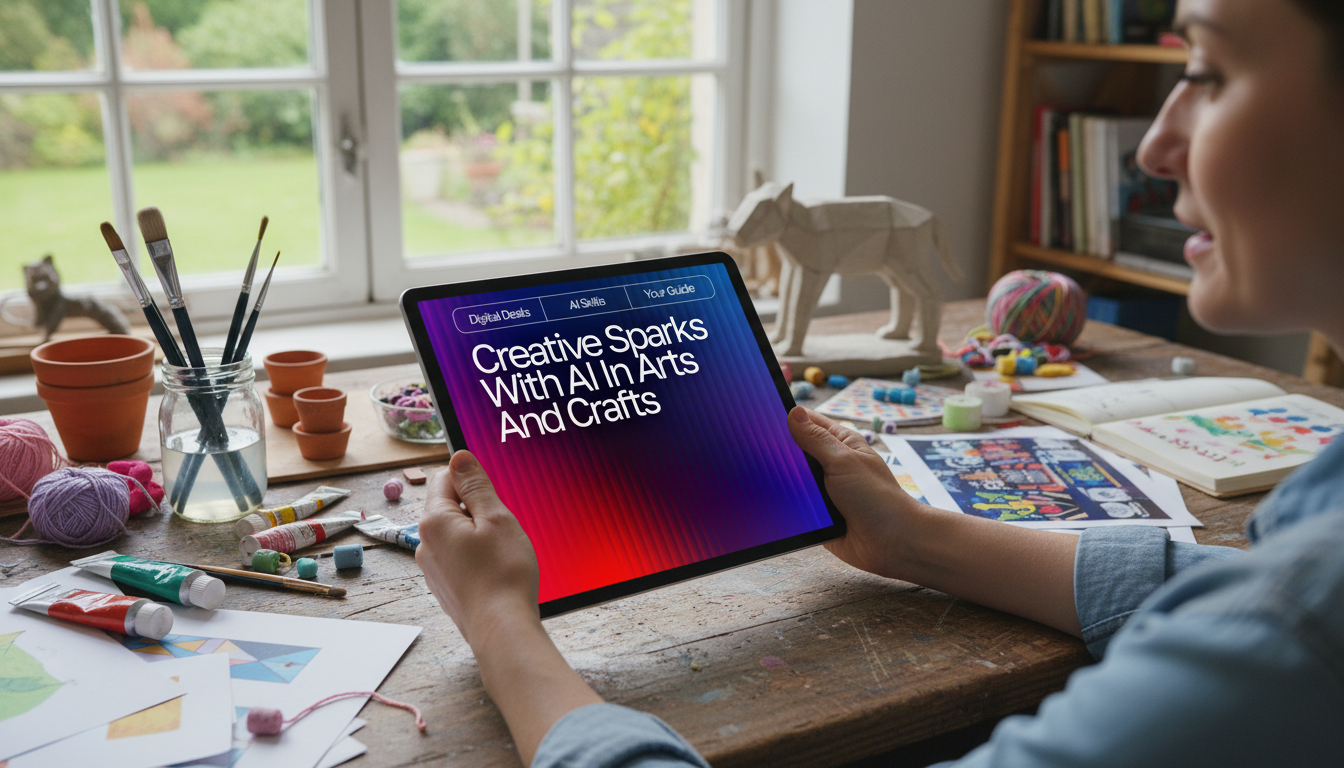
Creative Sparks with AI: A Practical Arts & Crafts Guide for Makers and Artists
Creative blocks happen—even when the craft room is full of supplies. AI can work like a quick-thinking studio buddy: it helps you generate fresh concepts, explore style directions, remix materials, and turn loose ideas into workable projects. The best results come when AI stays in the “sketchbook” role while you keep the final decisions—materials, finishing, and personal taste—firmly in your hands.
What AI Can Do for Arts and Crafts (and What It Can’t)
AI is strongest when you use it for volume, options, and organization. It’s less reliable when you treat it like a guarantee or a substitute for hands-on judgment.
- Use AI for divergence: rapid idea lists, theme variations, color palettes, pattern motifs, and “what if” combinations of mediums.
- Use AI for structure: step-by-step plans, supply substitutions, time estimates, and troubleshooting checklists.
- Use AI for iteration: alternative layouts, scale changes, personalization ideas (names, dates, meaningful symbols), and series-building.
- Avoid relying on AI as the final author: craft decisions, finishing, and personal style remain the human advantage.
- Set expectations: output may be generic or inaccurate; treat it like a first pass you refine.
Best AI Uses by Craft Goal
| Craft goal | What to ask for | What to watch out for |
|---|---|---|
| Break creative block | 10 concept directions in 3 styles; 5 unexpected material pairings | Repetitive suggestions; ask for constraints (budget, size, theme) |
| Plan a project | Step-by-step build with timings and tools; beginner vs. advanced options | Safety gaps; confirm with trusted sources for tools/chemicals/heat |
| Improve design | 3 composition options; palette suggestions; pattern repeats | Overly trendy results; refine with your own references |
| Personalize a gift | Meaning-based symbols, monograms, motifs tied to hobbies or places | Trademarked characters/logos; keep it original |
| Make a cohesive series | A 12-piece collection plan with consistent rules (palette, motif, format) | Sameness; add one variable per piece for variety |
A Simple Workflow: From Spark to Finished Craft
When you’re juggling inspiration, supplies, and limited time, a repeatable workflow turns “maybe someday” ideas into finished pieces.
- Define constraints: medium, size, time, skill level, budget, and who it’s for.
- Ask for options: request 10–20 ideas, then pick 2–3 that feel most like you.
- Choose one “north star”: theme + function + signature detail (texture, stitch, motif, finish).
- Build a rough plan: materials list, measurements, assembly order, and a stopping point.
- Prototype quickly: a paper mock-up, mini swatch, or sample panel reduces wasted materials.
- Iterate with intention: adjust only one variable at a time (palette, scale, layout, technique).
- Finish and document: finalize edges, sealing, labels, and capture notes so the idea can become repeatable.
A small shift that helps: decide what “done” looks like before you start. AI can suggest checkpoints (base layer complete, details added, protective finish applied), but you get to set the aesthetic standard.
Idea Starters for Popular Mediums
Use these as jumping-off points, then add your own constraints—favorite colors, a recipient’s hobby, a meaningful location, or a rule like “only recycled materials.”
- Paper crafts: layered shadow-box scenes, pop-up cards with hidden messages, collage using a restricted palette, modular origami color gradients.
- Fiber arts: stitch samplers based on a story theme, upcycled patchwork with a consistent motif, colorwork charts inspired by nature silhouettes.
- Painting & drawing: limited-tool challenges (one brush, two colors), series of micro-landscapes, texture experiments with homemade tools.
- Clay & resin: small-batch charm sets, functional pieces with stamped patterns, botanical imprint tiles, gradient pours with controlled bubbles.
- Wood & mixed media: simple joinery boxes with decorative inlays, geometric wall hangings, photo-transfer on reclaimed boards.
- Kids/family crafts: seasonal garlands, scavenger-hunt craft prompts, safe sensory projects with clear cleanup steps.
Make the Results Feel Original
Originality often comes from your choices, not a single “perfect” concept. The easiest way to avoid cookie-cutter outcomes is to feed AI personal inputs and then apply your own rules.
Safe, Ethical, and Practical Guardrails
For deeper context, helpful reference points include the U.S. Copyright Office guidance on works containing AI-generated material, the NIST AI Risk Management Framework, and this overview of how artists are using artificial intelligence.
Using the Digital Guide: Quick Wins in 30 Minutes
Recommended Digital Downloads for Makers
- Creative Sparks with AI in Arts and Crafts Guide (digital download) — a practical resource for turning brainstorms into actionable project plans you can actually finish.
- Color Theory Seasons Bundle 10-in-1 — useful when you want a consistent palette rule for a collection (cards, prints, ornaments, textiles) without second-guessing every color choice.
FAQ
Will AI make my craft projects look generic?
They can look generic when the inputs are vague. Add constraints (size, budget, recipient, mood), include personal references, and use rule-based design, then refine with a signature finishing style you repeat across projects.
Can AI help if I’m a beginner and don’t know where to start?
Yes—ask for beginner-safe steps, material substitutions, and realistic time estimates, then prototype small before committing to final materials. Always verify any guidance involving sharp tools, heat, chemicals, or fumes using manufacturer instructions and trusted sources.
Is it okay to sell items inspired by AI suggestions?
Yes, as long as the final design is distinct and you avoid trademarked characters/logos or copying recognizable protected elements. Keep your product photos, packaging text, and instructions original, and treat AI output as brainstorming rather than something to reproduce directly.











Leave a comment