



Cash Envelope Budgeting: Simple Cash Stuffing Routine
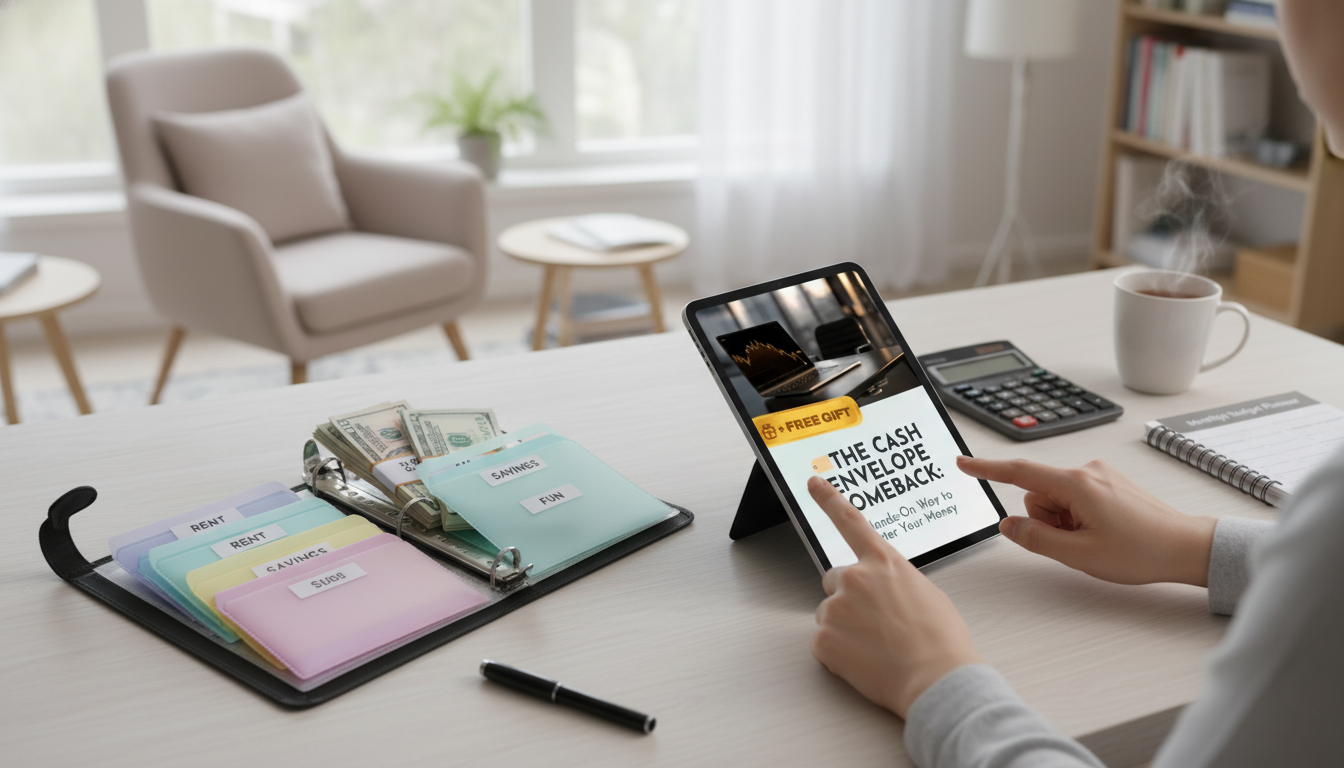
The Cash Envelope Comeback: A Hands-On Way to Master Your Money
The cash envelope method turns abstract budgeting into something you can see and feel. By assigning cash to labeled categories and spending only what’s inside, it becomes easier to curb impulse buys, stay consistent week to week, and spot problem areas quickly. This guide breaks down how the system works, how to set up envelopes that match real life, and how a printable budgeting guide can help build a routine that lasts.
Why cash envelopes work when apps and good intentions don’t
Cash envelopes add friction in a good way. When money is “just numbers” on a screen, it’s easy for small purchases to slide by unnoticed. With envelopes, the limit is visible—and that changes behavior.
- Physical limits create natural pause points: when an envelope is running low, spending decisions slow down and become more deliberate.
- Category-based cash reduces invisible spending: those “only $6” moments (coffee, convenience snacks, random add-ons) don’t blend into card swipes.
- Clear boundaries protect priorities: groceries, transportation, and debt payments are less likely to be crowded out by optional spending.
- Best for variable categories: dining out, personal care, hobbies, and convenience purchases are where overspending tends to hide.
- Cash reinforces planning: it doesn’t replace a budget; it makes the budget tangible.
What you need to start (and what to skip)
You can start with a minimal setup and get results fast. The goal is consistency, not perfection.
- Envelopes + labels: paper, laminated, or a wallet-style set—whatever is easy to use every week.
- A routine tied to payday: weekly or biweekly “cash stuffing” aligned with when money actually arrives.
- A simple tracker: printable worksheets, a binder, or a spreadsheet so envelope spending and bill payments stay coordinated.
- Skip overly detailed categories at first: too many labels can make the system feel like homework.
- Keep bills and savings goals outside the envelopes: unless you truly pay them in cash, envelopes are most useful for discretionary and variable essentials.
If a ready-made structure helps you stay consistent, The Cash Envelope Comeback budgeting guide PDF provides templates and trackers you can repeat each pay period without reinventing your system.
Set up your categories: start simple, then customize
Start with 6–10 envelopes that reflect how money actually flows, not how it “should” flow. If you try to fix everything at once, it’s easy to quit when life gets busy.
- Common starter envelopes: Groceries, Gas/Transit, Dining Out, Household, Personal, Kids/Pets, Fun, Miscellaneous.
- Add sinking funds for irregular expenses: Gifts, Car Maintenance, Medical Copays, Haircuts, School Fees.
- Consider a buffer envelope: especially helpful for inconsistent income or weeks when expenses show up early.
- Use a hybrid approach if needed: cash envelopes for variable spending + digital payments for fixed bills.
Sample envelope plan (adjust to match income and priorities)
| Envelope category | What it covers | Funding rhythm | Overspending fix |
|---|---|---|---|
| Groceries | Food and household consumables | Weekly | Plan meals before shopping; bring a list |
| Gas/Transit | Fuel, parking, public transit | Weekly | Combine trips; set a maximum per fill-up |
| Dining Out | Restaurants, coffee runs, delivery | Weekly | Use a smaller envelope; schedule one treat day |
| Household | Cleaning supplies, small home needs | Biweekly | Track what’s already at home before buying |
| Personal | Self-care, clothing, small wants | Biweekly | Add a 24-hour pause rule for non-essentials |
| Gifts | Birthdays, holidays, hosting | Monthly (sinking fund) | Set an annual target and divide by 12 |
A step-by-step cash stuffing routine that stays sustainable
A good envelope system is boring in the best way: predictable, quick, and repeatable.
- Step 1: Cover fixed bills first (rent/mortgage, utilities, insurance, minimum debt payments) before allocating cash envelopes.
- Step 2: Set weekly limits for the most tempting categories (dining out, fun, convenience) so they can’t silently expand.
- Step 3: Withdraw the planned cash amount on a consistent day and immediately distribute it into envelopes.
- Step 4: Record starting balances, spending, and remaining amounts; a one-page tracker is often enough.
- Step 5: When an envelope is empty, stop spending in that category—or move money intentionally from a lower-priority envelope.
- Step 6: Reset each week: count what’s left, roll over what makes sense, and adjust next week based on real outcomes.
For general budgeting fundamentals and planning tools, the Consumer Financial Protection Bureau (CFPB) and the FDIC Money Smart resources are helpful references for building a stable baseline alongside the envelope method.
Common obstacles and practical fixes
Making the system easier with a printable budgeting guide
If budgeting stress is tied to overall clutter and decision fatigue, pairing money routines with home routines can help. The Clear Space, Clear Mind digital decluttering guide is a complementary way to reduce the “too much stuff, too many choices” pattern that often feeds overspending.
Who this method helps most (and when to choose a hybrid)
For a calmer daily routine while you’re rebuilding money habits, a short breathing reset can help reduce impulse decisions under stress. The Breathe Easy mindfulness breathing action checklist is a simple add-on that pairs well with a weekly envelope check-in.
FAQ
What is the Dave Ramsey essential cash envelope system?
It’s a cash-based budgeting approach where you assign cash to labeled categories for variable spending and only spend what’s in each envelope. When an envelope is empty, you stop spending in that category or intentionally move money from another category, and it’s often used alongside a zero-based budget.













Leave a comment