



Durable Paw Print Dog Chew Ball for Fetch & Chewing
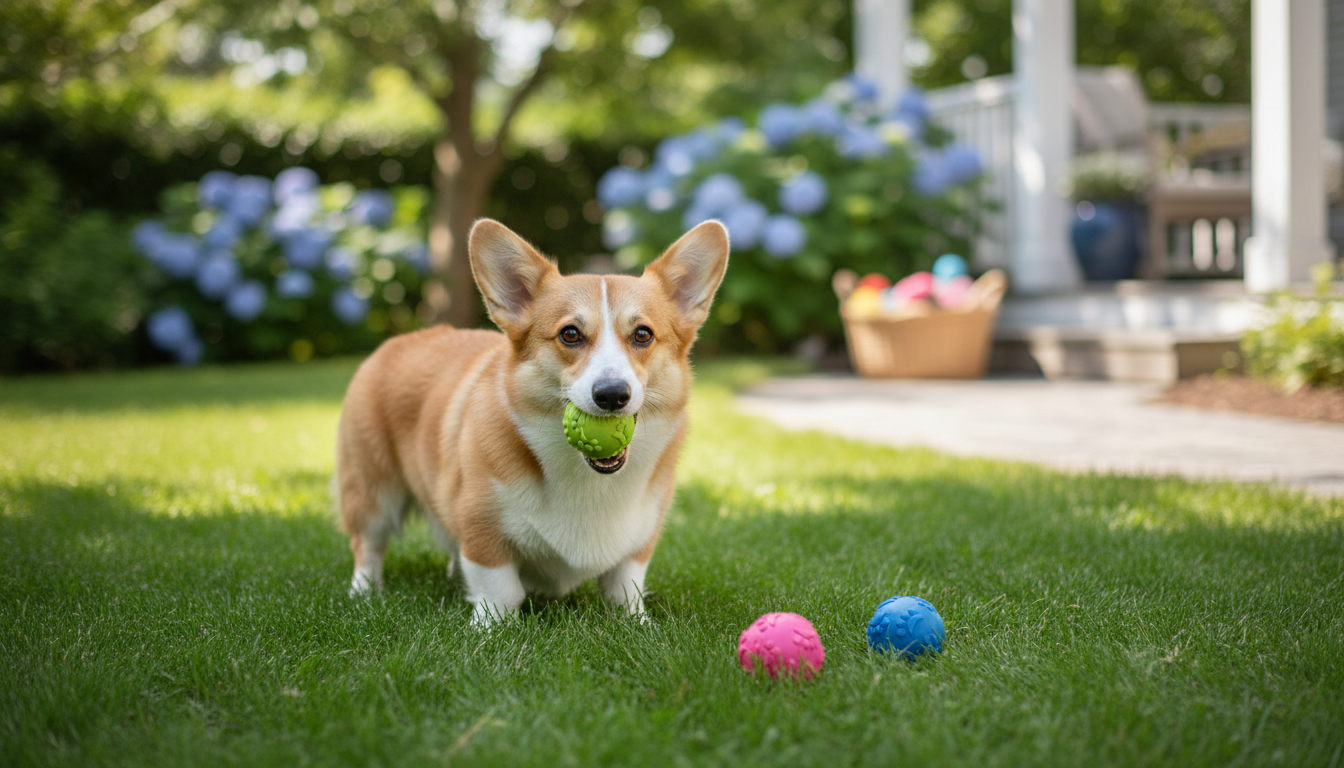
Durable Paw Print Dog Chew Ball: A Simple Toy Built for Real Play
A chew ball that holds up to daily play can help channel chewing into a safer, more rewarding routine. This paw print dog chew ball is designed for fetching, solo chewing, and interactive games—while staying easy to rinse and reuse. For many dogs, a dependable ball becomes the “default” enrichment option: quick to grab, easy to carry, and engaging enough to help take the edge off boredom.
What this chew ball is made for
- Supports common play styles: fetch, tug-and-release games, and independent chewing sessions.
- Paw-print texture adds grip for dogs and helps keep the ball from slipping during play.
- A simple, ball-shaped toy encourages movement and helps reduce boredom during downtime.
- Works well as a rotating toy alongside other enrichment (walks, training, puzzle feeders).
Dogs often prefer toys that “do something” in their mouths—either by bouncing, rolling, or offering a satisfying texture to gnaw. A textured ball can keep play straightforward while still giving your dog a task: chase, retrieve, chew, repeat.
Key features to look for in a durable chew ball
- Material resilience: choose a chew toy that resists tearing and splintering under repeated bites.
- Surface texture: raised patterns can improve grip and add interest without sharp edges.
- Bounce and roll: a predictable bounce is helpful for indoor play; a livelier bounce can energize outdoor fetch.
- Washability: a toy that rinses clean easily is more likely to stay in regular rotation.
- One-piece construction: fewer seams can mean fewer weak points for heavy chewers.
Durability isn’t only about toughness—it’s also about how the toy fails. A safer chew ball should resist forming sharp edges and should be retired quickly if it starts cracking or shedding pieces. For general toy safety guidance, the American Veterinary Medical Association (AVMA) recommends choosing appropriate toys for your pet’s size and play habits, and removing toys that become damaged.
Choosing the right size and chew intensity
- Pick a size that cannot be swallowed and is hard to fit fully inside the mouth.
- For strong chewers, prioritize firmness and thickness over soft, compressible toys.
- If a dog tends to shred toys, supervise early sessions and remove the ball if chunks start to break off.
- Puppies may do better with shorter chew sessions to protect developing teeth.
- Replace toys that show cracking, sharp edges, or missing pieces.
Quick fit guide
| Dog type | What to prioritize | What to avoid |
|---|---|---|
| Small dogs / gentle chewers | Easy grip, moderate firmness, lighter bounce | Oversized toys that are hard to carry |
| Medium dogs / mixed play | Balanced firmness, durable texture, good roll | Very soft materials that tear easily |
| Large dogs / power chewers | Thicker construction, minimal seams, high durability | Toys that compress too much or shed pieces |
Safer play and chewing habits
- Supervise new toys until chewing style is clear (crunching, tearing, or gnawing).
- Set time limits if the dog becomes overly fixated; swap to training or sniff games.
- Keep the ball clean to reduce bacteria buildup—especially after outdoor use.
- Avoid using damaged toys; discard if the surface becomes sharp or pieces can be pulled off.
- If a dog has dental issues, ask a veterinarian whether firm chew toys are appropriate.
Enrichment works best when it’s balanced. If your dog gets overstimulated during fast games, build in short pauses: ask for a sit, reward calm, then restart play. For broader behavior and care basics, the ASPCA’s dog care resources offer helpful guidance on meeting daily needs.
Ways to use a chew ball for daily enrichment
- Structured fetch: short sets of throws with pauses for calm sits to prevent over-arousal.
- Hide-and-seek: place the ball in another room to encourage sniffing and problem-solving.
- Reward substitute: offer the ball after training reps to reinforce focus with play.
- Calm chewing window: provide the ball during quiet time to help settle after walks.
- Rotation rule: keep only a few toys out at once to maintain novelty.
If you’re looking for fresh play ideas to mix into your dog’s week, the American Kennel Club (AKC) shares practical exercise and activity suggestions that pair nicely with a go-to fetch ball.
Care, cleaning, and when to replace
Product option available now
- Durable Paw Print Dog Chew Ball is currently in stock and ready for daily play routines.
- Useful as a general-purpose toy for fetch and chewing, especially for dogs that like textured grip.
- A solid choice to keep near the door for quick outdoor play breaks or indoor enrichment sessions.
More in-stock picks
- Vintage Leather Bracelet for Men with Stainless Steel Magnetic Clasp – Trendy Bangle for Fashion & Parties
- Men’s Luxury Chronograph Quartz Watch with Leather Band & Waterproof Features
- elegant-art-deco-inspired-crystal-branch-chandelier-for-dining-room
FAQ
Is a chew ball safe for aggressive chewers?
It can be, but safety depends on your dog’s chew style and the toy’s condition. Use the correct size to reduce swallowing risk, supervise early sessions, and replace the ball if you see cracking, sharp edges, or pieces coming off.
How often should a dog chew toy be replaced?
Replace it when you notice visible cracks, sharp edges, missing pieces, or significant thinning in high-wear spots. Dogs that chew daily typically need more frequent inspections and faster replacements than occasional chewers.
Can a chew ball help with boredom and destructive chewing?
Yes—structured play and an appropriate chew outlet can reduce boredom and help redirect chewing to a safer target. For best results, rotate toys and pair ball time with walks and short training sessions; persistent destruction tied to anxiety may require guidance from a veterinarian or qualified trainer.












Leave a comment