



Relax Your Mind Fast: Simple Methods for Busy Days
Proven Ways to Relax Your Mind (That Fit Real Life)
A calm mind rarely arrives on its own—it’s usually built through small, repeatable choices. The approaches below are designed for real schedules: quick resets when stress spikes, deeper decompression when you finally have a few minutes, and simple habits that lower mental noise over time. If stress feels constant or severe, consider pairing these tools with guidance from a qualified professional, and explore evidence-based resources like the American Psychological Association’s stress management page.
Start With a 60-Second Reset
When the mind is loud, aim for “less activated,” not instantly peaceful. A one-minute reset can interrupt spirals long enough to choose your next step.
- Exhale longer than you inhale for 5–10 breaths. A slower, longer exhale helps nudge the body toward calm.
- Relax the jaw and drop the shoulders. Unclenching reduces the “background” tension that keeps thoughts edgy.
- Name what’s happening (“stress,” “overload,” “worry”). Labeling creates a little distance from the feeling.
- Use a sensory anchor: 5 things seen, 4 felt, 3 heard, 2 smelled, 1 tasted.
- Sip water slowly and notice temperature and swallowing. Small rituals can break the loop of rumination.
Choose the Right Technique for the Time You Have
Matching the method to your time window makes relaxation more consistent. Short practices done often usually beat waiting for the “perfect” long break.
- Pick a method that fits your minutes. Consistency matters more than intensity.
- Use short practices more often instead of saving everything for the weekend.
- If a technique irritates you, switch styles: try movement, breath, sound, or a focus-based exercise.
Relaxation Menu by Time Available
| Time | Technique | How to do it | Best for |
|---|---|---|---|
| 1–2 minutes | Physiological sigh | Two short inhales through the nose, long slow exhale through the mouth; repeat 3–5 times | Fast stress spike, racing thoughts |
| 3–5 minutes | Body scan mini-check | Move attention from forehead to feet, softening each area on the exhale | Tension you can’t quite locate |
| 5–10 minutes | Walk-and-notice | Walk slowly and label neutral details (colors, shapes, sounds) without judging | Mental chatter, screen fatigue |
| 10–20 minutes | Progressive muscle relaxation | Tense and release muscle groups from toes to face; breathe steadily | Physical tightness, restlessness |
| 20–30 minutes | Unwind routine | Dim lights, stretch, warm shower, light reading; same order each night | Evening wind-down, better sleep |
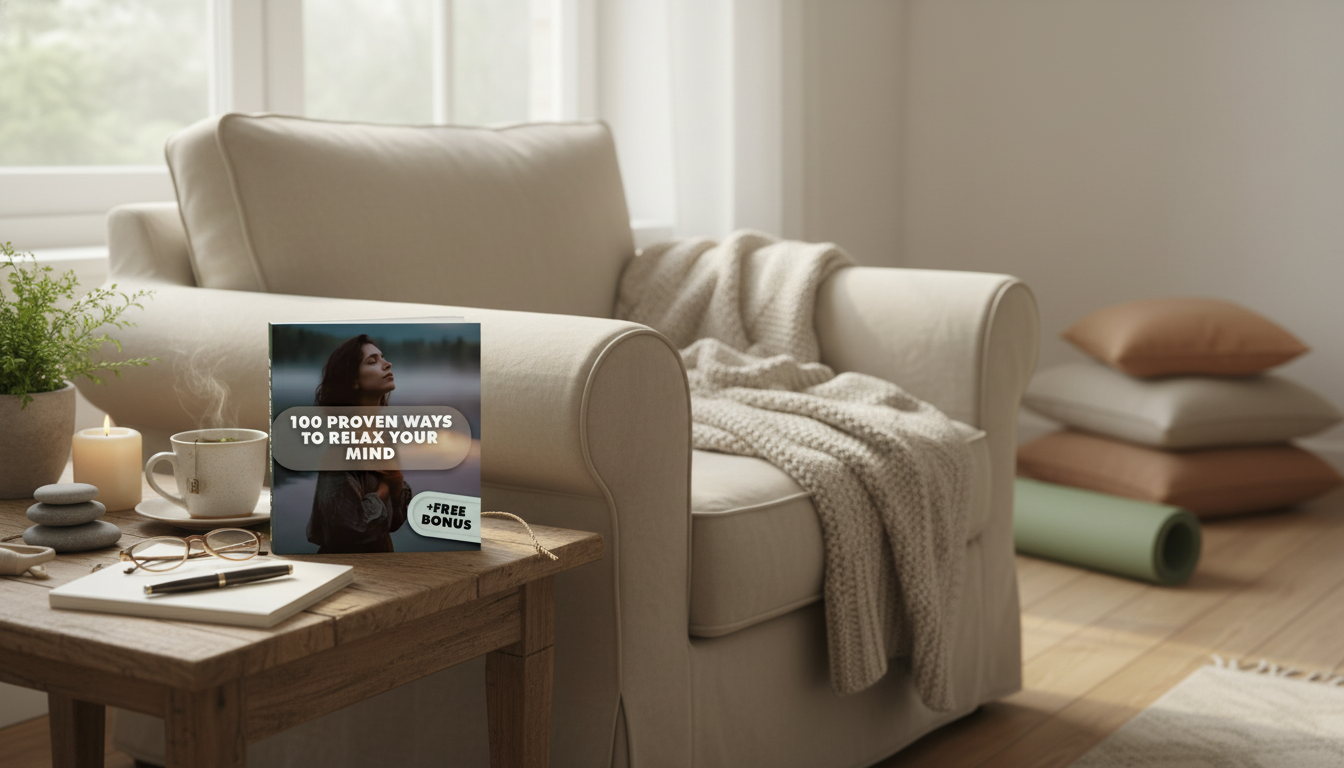
For more structured variety (especially on days when your usual trick doesn’t work), keep a curated list nearby—like 100 Proven Ways to Relax Your Mind—and commit to trying just one option for three minutes before switching.
Quiet the Mind by Releasing the Day’s “Open Loops”
Many “busy brain” moments are the mind trying (and failing) to keep track of unfinished business. Closing a few loops reduces the urge to mentally rehearse.
- Do a 3-list brain dump: “Must do,” “Should do,” and “Can wait.” Once it’s written, stop adding.
- Turn worries into next actions: replace “I’m behind” with one concrete 10-minute step you can do today.
- Set a decision boundary: give yourself a time limit for researching/choosing, then commit.
- Use a “parking lot” note for recurring thoughts and schedule a time to revisit them.
- Close the day with a recap: one win, one lesson, one priority for tomorrow.
Use the Body to Settle the Mind
Stress is often physical first—tight muscles, shallow breathing, restless energy. When you work “bottom-up,” thoughts often soften on their own. For a deeper overview of relaxation methods, the Mayo Clinic’s relaxation techniques guide is a solid reference.
If you like a tactile “anchor” during breathing or walking, a small wearable cue can help you remember to slow down. Some people use a bracelet as a grounding reminder—see the Vintage Leather Bracelet for Men with Stainless Steel Magnetic Clasp as a simple, everyday option.
Create a Low-Noise Environment Without Overhauling Your Life
Lighting matters more than most people expect. If harsh overhead light keeps you keyed up at night, consider a warmer, softer ambiance in your main “wind-down” space. For a statement piece that can change the feel of a dining or living area, explore the Elegant Art Deco Inspired Crystal Branch Chandelier for Dining Room and pair it with a dimmer-friendly bulb choice.
Build a Simple Wind-Down Routine for Better Sleep and a Calmer Tomorrow
A Guided Collection for When You Want More Options
If you’re interested in mindfulness-based options, the National Center for Complementary and Integrative Health summarizes what meditation and mindfulness can (and can’t) do, plus safety considerations.
FAQ
What can calm a racing mind quickly?
Try 5–10 breaths with a longer exhale than inhale, do the 5-4-3-2-1 sensory grounding exercise, or take a 5-minute walk-and-notice where you label neutral details. Pick one option and repeat it for a few minutes instead of switching constantly.
How do you relax your mind when you feel overwhelmed?
Reduce inputs first (silence notifications, step away from screens), then do a quick brain dump and turn one worry into a single 10-minute next action. Follow that with 1–2 minutes of paced breathing or light movement to help your body downshift.
Is it normal for relaxation techniques to feel hard at first?
Yes—many techniques feel awkward initially because the nervous system isn’t used to slowing down. Start with shorter durations, try a different style (movement-based instead of stillness, or sound instead of breath), and practice consistently; if distress is persistent or intense, seek professional support.













Leave a comment