



Stop Negative Spirals: A Simple CBT-Inspired Checklist
Why a checklist works when negative thinking feels automatic
Negative thinking often shows up like a reflex: a stressful email, a tough conversation, a mistake you can’t stop replaying. The harder you try to “just be positive,” the more unrealistic it can feel—especially on busy, high-pressure days. That’s where a checklist approach helps. Instead of relying on motivation or perfect emotional control, you use a simple sequence that interrupts the spiral, challenges the thought, and nudges you into a steadier, more workable perspective.
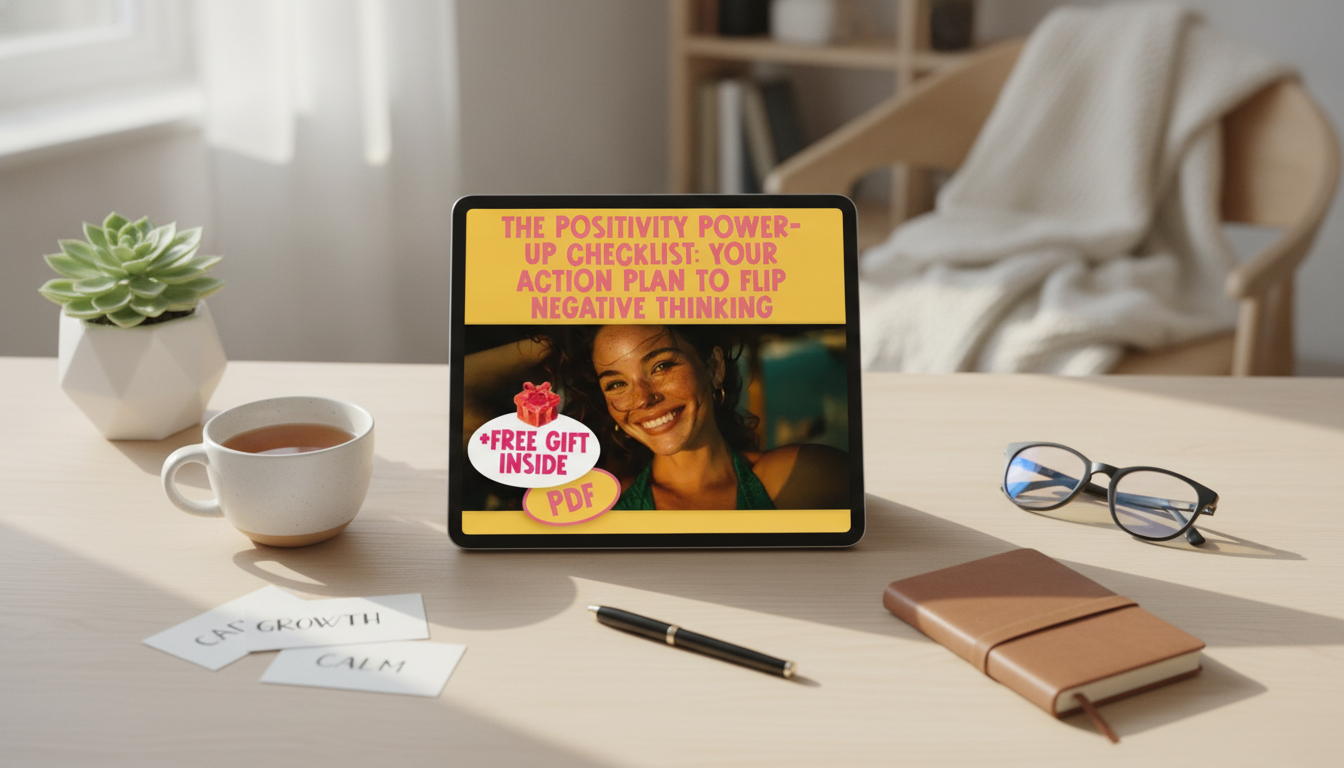
The The Positivity Power-Up Checklist (digital download) is designed for practical mindset support: short prompts, clear steps, and quick “next action” choices that build emotional resilience without pretending hard things aren’t real.
What the Positivity Power-Up Checklist helps with
- Catching negative self-talk early (before it snowballs into mood or behavior changes)
- Reducing “all-or-nothing” thinking and other common cognitive distortions
- Building a quick reset routine for anxious, irritated, or discouraged moments
- Strengthening consistency with micro-actions that support confidence and calm
- Creating a repeatable plan that works on busy days, not just “good” days
This style of structured reflection pairs well with skills commonly used in cognitive behavioral therapy (CBT), which focuses on how thoughts, emotions, and behaviors influence each other. For a deeper overview, see the American Psychological Association (APA) guide to Cognitive Behavioral Therapy or the Mayo Clinic overview of CBT.
Who it’s for (and who it’s not)
- Great fit for anyone who wants a structured, step-by-step way to shift attitude patterns without a long workbook
- Helpful for students, professionals, caregivers, and anyone who tends to overthink or self-criticize
- Works well for people who like checklists, quick prompts, and visible progress
- Not a substitute for professional care—if negative thoughts include self-harm, hopelessness, or severe anxiety/depression, professional support is important
- Best results come from repetition: the goal is gradual rewiring, not instant “always positive” feelings
What’s included in the digital download
- A guided checklist that turns mindset shifts into clear actions that can be repeated daily or used as-needed
- Prompts to identify triggers, name the thought, and choose a healthier response
- Small habit cues for gratitude, self-compassion, and forward-focused problem solving
- Space to track wins and reinforce evidence of progress (useful for breaking the “nothing ever changes” story)
- Digital format designed for quick access when a mood shift is needed
At-a-glance: how each part supports a mindset shift
| Checklist element | Purpose | When to use it |
|---|---|---|
| Spot the thought | Separates feelings from facts and reduces reactivity | At the first sign of spiraling |
| Name the trigger | Clarifies what actually set the mood off | After a stressful moment or conflict |
| Reality-check prompt | Challenges exaggerations and assumptions | When thoughts feel “certain” but painful |
| Reframe choice | Builds a more balanced, workable perspective | Before responding or making decisions |
| Next best action | Turns positivity into behavior (not just affirmations) | When stuck, procrastinating, or ruminating |
| Win tracker | Creates evidence that counters negativity bias | End of day or end of week |
How to use the checklist as a daily reset (3 time options)
If you want an extra boost to make the routine feel rewarding, pairing the reset with a simple “confidence cue” can help. Something small—like a 3-minute grooming step or getting dressed with intention—can signal a shift from spiraling to forward motion. For a fast, low-friction add-on to a morning reset, consider the Low-Effort Makeup Secrets Pack | Simple Makeup Ideas 4-in-1 Digital Beauty Bundle.
Flip negative thinking without forcing fake positivity
Examples of reframes you can practice
| Negative thought | Balanced reframe | Next best action |
|---|---|---|
| “I always mess this up.” | “I’ve struggled before, but I can improve with one small change.” | Pick one step to do differently today. |
| “They must think I’m annoying.” | “I don’t know what they think; I can ask or let it go.” | Send one clear message or pause assumptions. |
| “If I can’t do it perfectly, I shouldn’t start.” | “Progress counts; starting small is still starting.” | Do a 5-minute starter task. |
| “This will never get better.” | “This feels heavy right now; change is possible with support and time.” | Choose one support action (walk, call, plan). |
Make it stick: a 7-day momentum plan
For some people, “making it stick” also means reducing decision fatigue in other areas of life. If getting dressed is a daily stressor, a quick style framework can remove friction and free up mental bandwidth for the habits you’re building. The Color Theory Seasons Bundle 10-in-1 | Seasonal Color Analysis Guides & Checklists is another checklist-based download that can support a smoother, more confident routine.
Download, access, and practical tips
When stress and rumination keep looping, structure helps. For additional background on how CBT-style approaches can support everyday stress patterns, the NHS overview of CBT is a helpful, plain-language reference.
FAQ
How fast can negative thinking start to change?
Some relief can be immediate when you interrupt a spiral and choose a next action, but lasting change usually comes from repetition over weeks. Small daily practice builds a more consistent, automatic response over time.
Is this checklist the same as affirmations?
No—this is more action-focused and reality-based, using prompts to spot the thought, check it, and reframe it in a believable way. Affirmations can be optional, but the goal is balanced thinking you can actually follow through on.
Can this help with anxiety or stress spirals?
It can help with everyday stress, rumination, and anxious thought loops by adding structure and grounding steps. If symptoms are severe or include hopelessness or self-harm thoughts, professional support is important.














Leave a comment