



Wide-Base Foot Hammock: Comfort for Flights & Desks
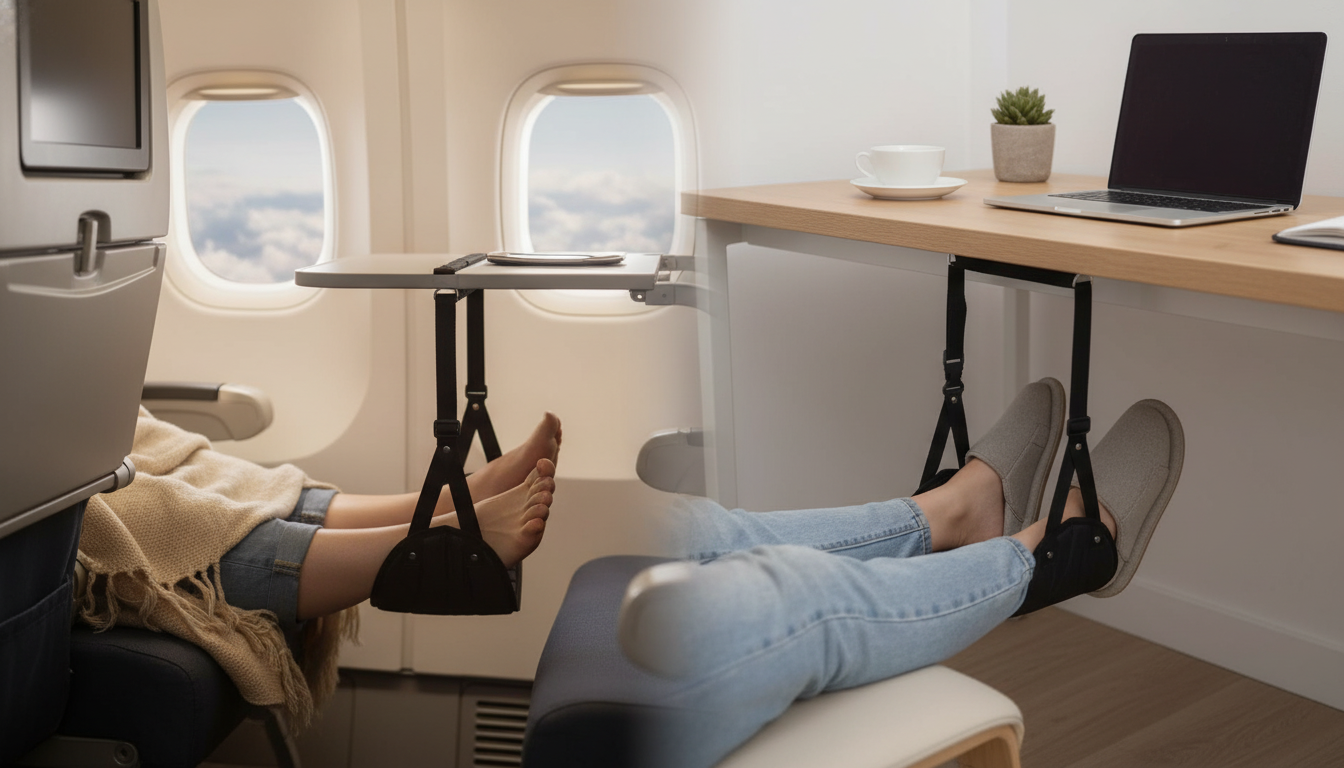
Long hours with feet flat on the floor can leave legs stiff, knees aching, and lower back tired—especially on flights or at a desk where seat height and legroom are limited. An adjustable foot hammock creates a supported “floating footrest” that helps elevate the feet, reduce pressure behind the thighs, and make sitting feel more natural in tight spaces.
What a foot hammock does (and when it helps most)
A foot hammock is a compact, hang-from-the-seat style footrest that gives your feet a stable place to land when the floor is too far away or awkwardly positioned. By elevating your feet a few inches, it can reduce the “dangling legs” feeling that often tightens hips and strains the backs of the thighs.
- Provides an elevated surface for the feet to reduce strain from dangling legs or an awkward seat height.
- Helps relieve pressure points by supporting the feet evenly rather than on a narrow strap or edge.
- Useful on airplanes, trains, buses, and under-desk seating where conventional footrests don’t fit.
- Best for seated stretches, light elevation, and comfort—not a medical device or a substitute for walking breaks.
For travel comfort and quick setup, the Adjustable Airplane Foot Hammock with Wide Base for Travel and Office is designed to pack small and adjust to different seat heights.
Why a wide base matters in cramped seating
Not all foot slings feel the same. Narrow designs can create a “strap edge” that presses into the midfoot, especially when you shift positions or keep shoes on. A wide base changes the feel by spreading support across more of the foot—closer to the sensation of a mini platform than a loop.
- A wider platform distributes weight across more of the foot, which can feel steadier during turbulence or shifting positions.
- Allows two-foot support (feet side-by-side) or single-foot lounging without the strap cutting into the arch.
- Reduces the “rope swing” sensation common with narrow, single-strap foot slings.
- Can improve comfort for shoes-on use compared with narrow foot loops, depending on cabin space.
Tip: if you’re tall or your seat pitch is tight, a wide base can still work well—just set it slightly lower so your knees stay relaxed rather than lifted toward your chest.
Adjustability features to look for
The best results usually come from small adjustments. Moving the height by even an inch can shift pressure from the backs of the knees to the calves or help your hips feel more level.
- Length-adjustable straps to match different heights and seat pitches; small changes can shift pressure from knees to calves.
- Secure buckle or clasp that holds position without slowly slipping during a long flight or work session.
- Soft, supportive base material that stays comfortable at the edges (where straps attach).
- Compact packing profile so it fits in a carry-on pocket and can be deployed quickly after takeoff.
For an easy “carry-on add-on,” pair travel comfort with something simple you’ll actually use on the go—like the Vintage Leather Bracelet for Men with Stainless Steel Magnetic Clasp if you want a low-fuss accessory that doesn’t take up space.
How to set it up on an airplane (step-by-step)
A foot hammock is most comfortable when it’s centered, low enough to keep the knees easy, and positioned so it doesn’t intrude into the space of the passenger in front.
- Attach the strap around the tray-table arms or the seatback support point (where permitted) in front; keep it centered.
- Start with a slightly lower position: knees should stay relaxed, not lifted sharply toward the chest.
- Place both feet on the wide base, then fine-tune strap length until pressure behind the thighs feels reduced.
- Avoid blocking the aisle or contacting the passenger in front; keep movement gentle during use.
- Stow it during meals, takeoff/landing, and whenever crew instructions require a clear area.
Travel note: airlines vary on what they allow around the seat area, so it’s smart to follow general safety guidance and crew directions. For broader packing and safety considerations, see the FAA Pack Safe resource.
Using a foot hammock at the office or home desk
Comfort and circulation habits for long sitting
A foot hammock can improve comfort, but healthy sitting still benefits from movement and basic circulation habits. If you’re traveling long-distance, consider credible medical guidance around blood clot risk and prevention, including the CDC’s information on blood clots during travel and the Mayo Clinic overview of deep vein thrombosis (DVT).
Common footrest options compared
| Option | Best for | Trade-offs |
|---|---|---|
| Adjustable foot hammock (wide base) | Compact elevation in tight spaces; two-foot support; quick setup | Needs a stable attachment point; may not suit all seat designs |
| Inflatable foot pillow | Soft support on flights with more legroom; doubles as a cushion | Bulkier; can shift on the floor; inflation needed |
| Hard under-desk footrest | Stable office use; consistent angle | Not travel-friendly; takes floor space |
| Compression socks | Supporting circulation during travel | Doesn’t provide elevation; fit and tolerance vary |
Care, packing, and travel-ready tips
FAQ
Will a foot hammock fit in economy seats?
It can, but fit depends on seat pitch and what attachment points are available. Set it lower at first so your knees stay relaxed, and be ready to stow it when space is tight or service begins.
Is it okay to use a foot hammock during takeoff and landing?
Follow airline and crew instructions; in many cases it should be stowed during taxi, takeoff, landing, and meal service to keep the area clear and avoid interfering with seat functions.
Can it help with lower-back discomfort from sitting?
Gentle foot elevation can reduce strain for some people by improving leg support and posture, especially when the chair height isn’t ideal. For best results, combine it with lumbar support and regular movement breaks.












Leave a comment