



Set Up a Fried Ice Cream Roll Machine: First Use
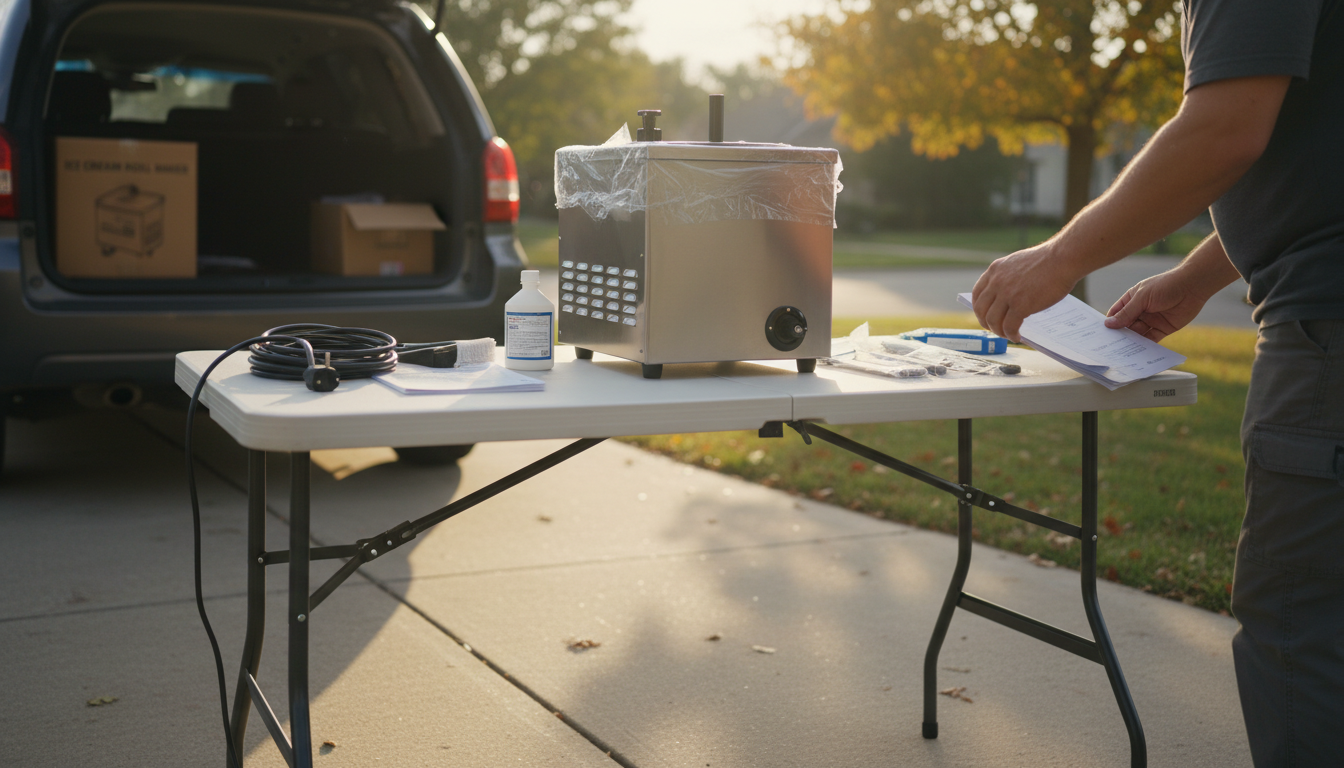
How do you set up a fried ice cream roll machine for first-time use?
Unbox, place, and level the machine
Set the machine on a sturdy, flat counter with plenty of airflow around the vents. Keep it away from direct sunlight, hot appliances, and water sources. If your unit has adjustable feet, level it so the freezing pan sits perfectly flat—this helps the mix freeze evenly and roll cleanly.
Let the unit rest after shipping
If the machine traveled on its side, let it stand upright before powering on (many owners wait several hours). This gives the refrigeration system time to settle so the compressor can start smoothly.
Clean all food-contact surfaces
Wash and sanitize the freezing pan, splash guard, ingredient bins, and utensils before the first batch. Use a non-abrasive cloth or sponge so you don’t scratch the pan. Dry everything completely; moisture left on the pan can cause uneven freezing and ice crystals.
Connect power and do a quick safety check
Plug the machine into the correct outlet (use a dedicated circuit when possible). Confirm the power switch, temperature controls, and any emergency stop function operate normally. Make sure the pan area is clear and that the scraper blades are smooth, clean, and free of nicks.
Pre-chill and test-freeze the pan
Turn the unit on and allow the pan to reach working temperature before adding your first mix. Many machines perform best after a pre-chill period, letting the surface get cold enough to flash-freeze a thin layer. Once chilled, pour a small test amount of base on the pan to confirm it firms up quickly and scrapes cleanly.
Dial in workflow for the first batch
Set out chilled base, chopped mix-ins, and clean spatulas. Work in small pours to create a thin sheet, then scrape and roll once the sheet is set. If the sheet is too soft, wait a bit longer; if it’s brittle, reduce the freeze time or pour slightly more base.
Get a detailed walkthrough
For step-by-step setup, operation tips, and care guidance specific to fried ice cream roll machines, follow the full guide here: https://havencia.com/guide-fried-ice-cream-roll-machine-setup-operation-care/.
FAQ
How do you clean a fried ice cream roll machine after use?
Turn the unit off, let the pan warm slightly, then scrape off residue and wipe with a soft cloth and food-safe cleaner. Finish by sanitizing and drying the pan and tools so the next batch freezes evenly.












Leave a comment