



GaN Charger Downsides: Cost, Heat, Ports & Compatibility
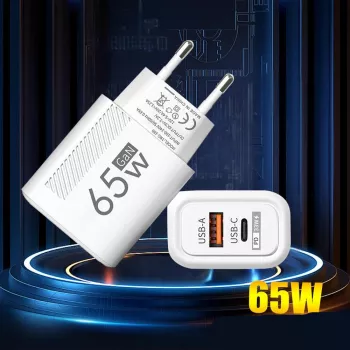
What are the disadvantages of a GaN charger?
GaN (gallium nitride) chargers are popular for being compact and powerful, but they’re not perfect for every setup. The main disadvantages usually come down to cost, real-world heat, device compatibility edge cases, and how some multi-port models manage power when more than one device is connected.
They often cost more upfront
Compared with basic silicon chargers, GaN models typically have a higher purchase price—especially for trusted brands with strong safety certifications and good quality control. The price gap has narrowed, but budget options can be a gamble.
Small size can still mean noticeable heat
GaN chargers are efficient, yet a tiny enclosure has less surface area to dissipate heat. Under sustained high loads (like charging a laptop at 60–100W), the charger may run warm or hot to the touch. Quality designs manage this well, but heat can still be surprising if you’re used to larger “brick” chargers.
Multi-port charging may reduce output
Many GaN chargers advertise a maximum wattage that only applies when a single port is used. Plug in a second device and the power is often redistributed, which can slow laptop charging or cause charging to cycle as devices renegotiate power. This isn’t “bad,” but it can be inconvenient if you expect full speed on every port simultaneously.
Compatibility quirks can happen
Most GaN chargers work great with USB-C Power Delivery, but edge cases exist: some older laptops, proprietary fast-charge systems, or certain cables may not deliver the expected speed. A charger may also support specific PD profiles that don’t perfectly match a device’s ideal input, leading to slower-than-expected charging.
Quality varies widely
Because GaN chargers are trendy, the market includes plenty of low-cost models with questionable components, weak thermal design, or inconsistent protections. Choosing reputable brands and looking for safety marks can matter more with high-wattage compact chargers.
For a deeper look at wattage, ports, and what to expect from a modern compact charger, see this guide: https://havencia.com/blog/guide-65w-gan-usb-c-charger-quick-charge-usb-pd/.
FAQ
Do GaN chargers charge slower than regular chargers?
No—charging speed depends on supported standards (like USB-C PD), wattage, and the device’s limits. A well-matched GaN charger can charge just as fast as, or faster than, a comparable silicon charger.













Leave a comment