



GaN USB-C Wall Chargers Explained: Fast, Small, Cool
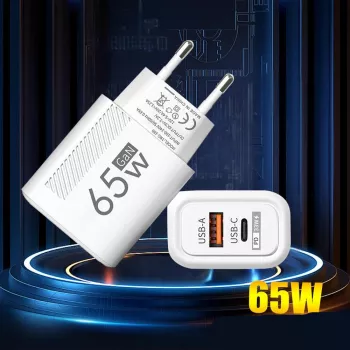
What is a GaN USB-C wall charger?
A GaN USB-C wall charger is a compact power adapter that uses gallium nitride (GaN) transistors instead of traditional silicon to convert AC wall power into the DC power your devices need—delivered through a USB-C port. In practical terms, GaN technology lets chargers run more efficiently, generate less wasted heat, and shrink in size while still delivering high wattage for fast charging.
How GaN changes a USB-C charger
Compared with older designs, GaN components can switch power faster and with lower energy loss. That improved efficiency is why many GaN USB-C wall chargers feel smaller than you’d expect for their power rating, and why they can often support multiple devices without becoming bulky. Less heat also helps a charger maintain stable output when you’re pushing higher loads, such as charging a laptop while topping off a phone.
What “USB-C” really means here
USB-C describes the connector type, but most modern GaN USB-C wall chargers also support USB Power Delivery (USB PD). USB PD is the charging standard that negotiates voltage and current between the charger and your device. When both sides support it, your phone, tablet, handheld console, or laptop can request the fastest safe charging profile available.
What to look for when buying one
Start with wattage. For phones and earbuds, lower wattage is fine, but for tablets and many laptops you’ll typically want a higher-output model (often in the 45W–100W range, depending on your device). Next, check port count and power sharing: a multi-port charger may reduce the maximum output per port when more than one device is connected. Finally, confirm compatibility with your device’s charging standard (commonly USB PD, and sometimes additional fast-charge protocols).
For a deeper breakdown of wattage, USB PD fast charging, and what a 65W GaN model can handle, see the full guide here: https://havencia.com/blog/guide-65w-gan-usb-c-charger-quick-charge-usb-pd/.
FAQ
Can a GaN USB-C wall charger charge a laptop and a phone at the same time?
Yes, if it has multiple ports and enough total wattage. Keep in mind that some chargers split power across ports, so laptop charging speed may drop when a second device is plugged in.













Leave a comment