



Fried Ice Cream Rolls vs Deep-Fried: Key Differences
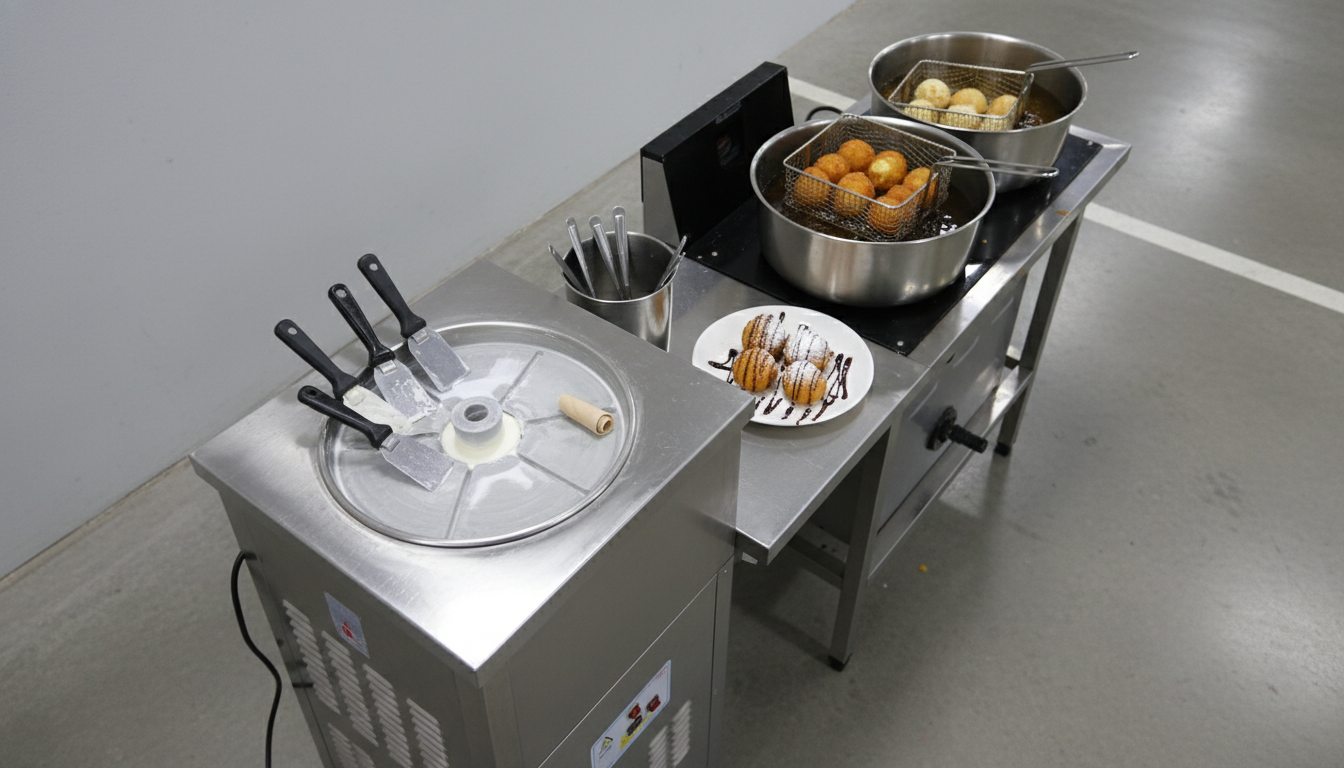
What is the difference between a fried ice cream roll machine and a traditional deep-fried ice cream setup?
Answer
A fried ice cream roll machine “fries” by using extreme cold on a stainless-steel freezing pan, while a traditional deep-fried ice cream setup fries with hot oil around a breaded, frozen scoop. Both create a crispy-outside/creamy-inside experience, but they get there in very different ways—one with rapid freezing and shaping, the other with quick heat and insulation.
With a roll machine, you pour a liquid base (often an ice cream mix) onto a chilled plate, spread it thin, add mix-ins, then scrape it into rolls. The “fried” effect comes from texture: the thin sheet freezes fast, develops a slightly caramelized-toasty note if you use sugary ingredients, and can be topped with crunchy elements. There’s no oil, no battering, and no dunking—so cleanup is mostly wiping down the cold plate and tools.
A deep-fried ice cream station works the opposite way. You start with very firm, pre-scooped ice cream balls (often hardened in a freezer), coat them in cereal crumbs or batter, then flash-fry for seconds in hot oil. The outer shell crisps because it’s exposed to high heat, while the interior stays cold because the coating and the short fry time act as insulation. This setup typically needs a fryer, oil management, safety protocols, and a workflow that prevents melting before frying.
Operationally, roll machines are built for showmanship and customization: guests can watch add-ins chopped, mixed, and rolled to order. Deep-frying is faster per portion once prep is done, but it depends heavily on advance freezing and consistent breading to avoid blowouts. Cost and maintenance differ too: roll machines require strong refrigeration performance and plate care, while deep-fried setups involve oil filtering, disposal, and more ventilation considerations.
For a practical walkthrough of equipment, setup, operation, and care, see the main guide: https://havencia.com/guide-fried-ice-cream-roll-machine-setup-operation-care/.
FAQ
What should I look for when buying a fried ice cream roll machine?
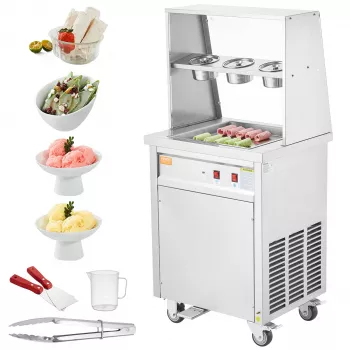
Prioritize freezing power (compressor strength and plate recovery time), pan size, temperature control, and build quality of the stainless surface. Also consider ease of cleaning, included tools, and whether you need a single-pan or dual-pan unit for higher volume.












Leave a comment