



Modern Cat Tree Tower: Woven Basket, Hammock & Wood
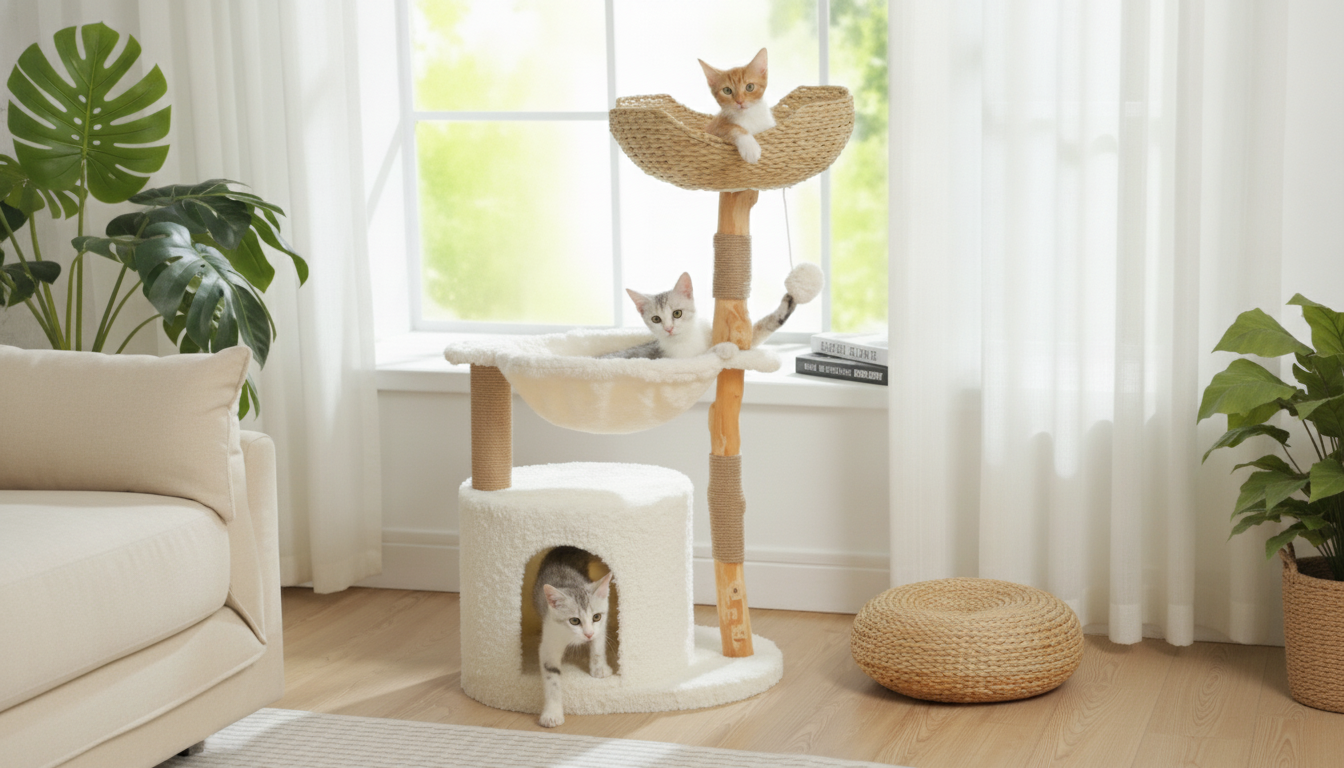
Modern Cat Tree Tower with Large Woven Basket, Hammock & Solid Wood Post
A cat tree can be more than a scratch post and a nap spot—it can be a calm, well-made piece that blends into a modern home while giving cats vertical space, cozy lounging, and a stable place to stretch and claw. This tower pairs a sculptural, minimalist look with comfort-forward details like a roomy woven basket perch and a hammock-style lounge area, anchored by a solid wood post for dependable scratching and support. Use the guide below to understand what features matter most, where to place it, and how to keep it looking great over time.
What makes this tower different from basic cat trees
Many cat trees get the job done, but they can feel bulky, temporary, or visually loud—especially in open-plan spaces. A modern basket-and-hammock tower is built to look intentional while still meeting the everyday needs that keep cats relaxed indoors.
- Modern, furniture-like profile: Clean lines and natural textures help it sit comfortably in living rooms rather than looking like a spare-room accessory.
- Two distinct rest zones: A large woven basket creates a defined “nest” for curling up, while the hammock offers a second posture for cats that prefer to sprawl or drape.
- Solid wood post support: Solid wood components tend to feel more rigid under load, which can reduce wobble during jumping, climbing, and determined scratching.
- Vertical territory for calmer cats: Height lets indoor cats observe their environment and step away from floor-level commotion, which can lower stress.
- Multi-surface routine: Basket + hammock + scratch post supports a natural cycle of rest, play, stretch, and scratch throughout the day.
Key features to look for before buying
When a cat tree becomes part of daily life, the small design choices start to matter—especially stability, scratch satisfaction, and how easy it is to keep clean during shedding seasons.
- Stability: Look for a wide, heavy base and secure connections between platforms to reduce tipping when cats launch upward.
- Scratch performance: A post tall enough for a full-body stretch tends to be more rewarding, which helps pull attention away from sofas and rugs.
- Comfort sizing: The basket should fit your cat’s curl (or semi-sprawl). Hammock fabric should support without excessive sag that bends the spine awkwardly.
- Material feel and aesthetics: Woven textures complement natural-wood interiors; smooth solid wood reads more “furniture” than carpet-wrapped tubes.
- Cleaning practicality: Wipeable surfaces, lint-friendly fabrics, and easy-to-reach corners make routine upkeep far simpler.
Sizing and placement for a calmer, more useful cat zone
Even the best-looking tower can be ignored if it’s placed in the wrong spot. Cats tend to use vertical furniture most when it supports their natural habits: watching, basking, and retreating.
- Place near a window for enrichment: Birds, street activity, and sunbeams increase daily use and reduce boredom-related scratching elsewhere.
- Give it “launch space”: Leave clear jump room so cats can hop up without grazing shelves or knocking decor.
- Avoid high-traffic pinch points: A quieter corner often gets more consistent use as a sleep spot, especially for timid cats.
- Plan for multi-cat flow: Avoid placements that trap a cat between the tower and a wall; an easy exit route reduces tension and guarding.
- Mind the flooring: On hardwood or tile, an anti-slip mat under the base can reduce micro-sliding during takeoff and landing.
At-a-glance feature checklist
| Feature | Why it matters | Good sign to look for |
|---|---|---|
| Woven basket perch | Creates a secure nest for deep sleep and “hideaway” comfort | High sides and a wide interior space for curling and kneading |
| Hammock lounge | Offers a second rest zone and pressure-relieving support | Firm attachment points and supportive fabric that doesn’t over-sag |
| Solid wood post | Improves sturdiness and provides a satisfying scratch/stretch surface | Stable feel during use and enough height for a full-body stretch |
| Base stability | Reduces tipping risk and increases confidence for jumping cats | Wide footprint and solid connections between components |
| Home-friendly finish | Helps the tower blend with modern decor | Neutral tones, clean lines, and natural textures |
Helping cats use it right away
For more on why scratching matters (and how it supports feline wellbeing), see guidance from International Cat Care. If you’re weighing alternatives to scratching-related behavior challenges, the American Veterinary Medical Association (AVMA) declawing policy also provides helpful context on humane approaches.
Care and upkeep for woven and wood surfaces
Is this style a good fit for your cats and your space?
Shop in-stock picks
- Modern Cat Tree Tower with Large Woven Basket, Hammock & Solid Wood Post
- Step-by-Step Puppy Training Toolkit: A Beginner’s Guide to Dog Training + eBooks & Checklists
- Low-Effort Makeup Secrets Pack | Simple Makeup Ideas 4-in-1 Digital Beauty Bundle
FAQ
Will a woven basket perch hold up to daily cat use?
It can, as long as the weave is tight and supported by a sturdy frame. Routine inspection, keeping nails trimmed, and redirecting chewing help extend its lifespan.
Where should a cat tree tower be placed for the most use?
Place it near a window or a favorite hangout spot, with clear jump space and away from noisy foot traffic. In multi-cat homes, ensure there’s an easy exit route and add a non-slip mat on smooth floors.
How do you get a cat to use the scratching post instead of the sofa?
Put the tower next to the problem area at first, add catnip, and reward scratching on the post right away. Make the post the easiest, most attractive scratch option while blocking or covering the sofa corner temporarily if needed.










Leave a comment