



Modern LED Pendant Light: Elegant Living & Dining Glow
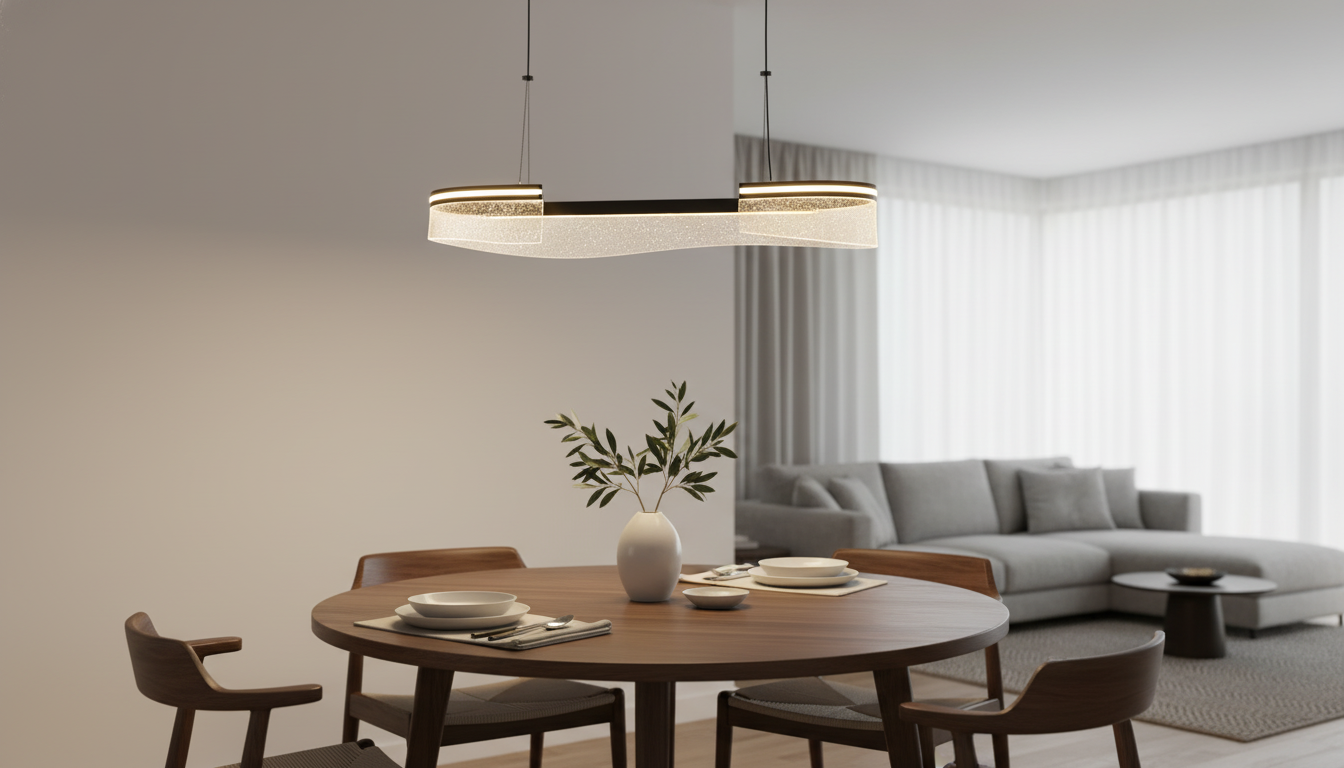
Modern LED Pendant Light for Elegant Living and Dining Spaces
A well-chosen pendant light can define the mood of a room—bright enough for everyday tasks, refined enough to feel intentional. This modern LED pendant light brings a clean silhouette and contemporary glow suited to living rooms, dining areas, and open-plan interiors where lighting needs to look as good as it performs. With the right placement, color temperature, and finish pairing, a pendant becomes more than a ceiling fixture—it becomes the visual “center of gravity” that makes a space feel finished.
What Makes a Pendant Light Feel “Modern” and Elegant
Modern lighting tends to read as calm, confident, and deliberate. Instead of fussy ornamentation, it leans on proportion, material quality, and comfortable illumination to deliver that elevated look.
- Streamlined forms and balanced proportions: A clean outline looks purposeful from across the room and stays timeless as décor evolves.
- Even, comfortable illumination: Well-diffused LED light reduces harsh hotspots, helping faces, food, and finishes look better.
- A complementary finish: The best pendants harmonize with nearby metals—cabinet pulls, chair legs, faucets, picture frames—without competing.
- Composed from multiple viewpoints: In open-concept homes, the fixture is seen from the kitchen, living area, and hallways, so the profile matters at every angle.
Where It Works Best: Living Room vs Dining Room
Living rooms and dining rooms ask different things of overhead lighting. The same pendant can work in either—when it’s planned for the room’s function and sightlines.
- Dining rooms: Prioritize a centered focal point over the table and a warm, flattering ambiance that makes meals feel inviting.
- Living rooms: Emphasize layered lighting. A pendant pairs best with lamps or sconces so the space can shift from bright to relaxed.
- Open-plan spaces: Align the pendant with a key zone (table, seating group, island) to visually “anchor” the layout and reduce visual drift.
- Ceiling height matters: Higher ceilings can support a larger scale or a lower hang without crowding the space; shorter ceilings benefit from more compact forms.
Placement Guide for Comfortable Light and Proportions
| Area | Typical Height Above Surface | Quick Tip |
|---|---|---|
| Dining table | 28–34 in (71–86 cm) | Center the fixture and keep the bottom edge above sightlines when seated |
| Coffee table / seating zone | 78–84 in (198–213 cm) above floor (or higher) | Leave clear headroom and use dimming for movie-night flexibility |
| Kitchen island (if used) | 30–36 in (76–91 cm) | Use multiple smaller pendants or a longer fixture to cover the workspace evenly |
| Entry / open area | Minimum 84 in (213 cm) clearance | Avoid low hangs where people walk through frequently |
Light Quality That Feels Inviting
LED lighting has come a long way, and today’s best fixtures combine efficiency with a warmer, more livable glow. For quick background on LED benefits and performance, see the U.S. Department of Energy’s overview of LED lighting and ENERGY STAR’s guide to LED light bulbs.
- Color temperature: Warm white (around 2700K–3000K) is typically the most flattering for dining and relaxing. 3000K can feel slightly crisper for minimalist, contemporary interiors.
- Brightness: Consider whether the pendant is the main light or part of a layered plan. Larger rooms usually need either more output or multiple light sources.
- Dimming compatibility: A dimmer lets the same pendant shift from bright task lighting to evening ambiance without swapping fixtures.
- Glare control: Designs that diffuse or shield the LED source are easier on the eyes—especially when seated beneath the fixture.
Design Pairings: How to Match Furniture and Finishes
Even a beautifully designed pendant can feel “off” if it fights the room’s materials. A few pairing rules help the fixture look custom rather than accidental.
- Coordinate metals: Match exactly for a seamless look, or mix intentionally (for example, matte black with warm brass accents) so it reads as a decision.
- Balance shapes: Round tables often look best with rounded or softly contoured pendants; long tables typically suit linear forms that echo the tabletop’s geometry.
- Consider textures: Wood grain, stone, velvet, and glass all respond differently to warm vs. cool light. Warm light tends to enrich natural materials and soften high-contrast palettes.
- Keep sightlines clean: In compact dining areas, choose a form that doesn’t visually overcrowd the table—negative space can feel as luxurious as ornament.
Installation Notes to Plan Before Buying
Planning the practical details upfront keeps the final look intentional and avoids last-minute compromises.
Care and Long-Term Upkeep
Shop Lighting Options In Stock
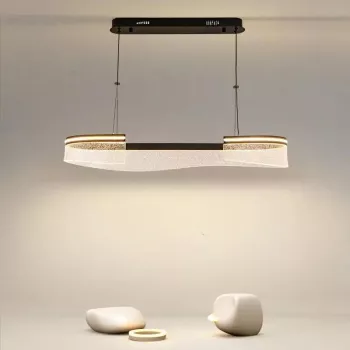
- Modern LED Pendant Light – Elegant Indoor Lighting for Living and Dining Rooms
- Elegant art deco inspired crystal branch chandelier for dining room
A Refined Upgrade Option for More Sparkle
FAQ
How high should a pendant light hang over a dining table?
A common guideline is 28–34 inches above the tabletop, adjusted slightly based on ceiling height and the fixture’s visual size. The goal is comfortable illumination without blocking conversation or sightlines when seated.
What color temperature looks best in living and dining rooms?
Warm white around 2700K–3000K is typically most flattering and relaxing for living and dining spaces. If the room has a crisp modern palette, 3000K can feel clean without turning cold, and a dimmer adds flexibility.
Do LED pendant lights work with dimmer switches?
Many LED pendants can be dimmed when paired with an LED-compatible dimmer and the fixture is rated for dimming. If you notice flicker or limited dimming range, it often indicates the dimmer type and LED driver aren’t well matched.









Leave a comment