



Simplify Your Wardrobe: Core Pieces & Easy Outfit Formulas
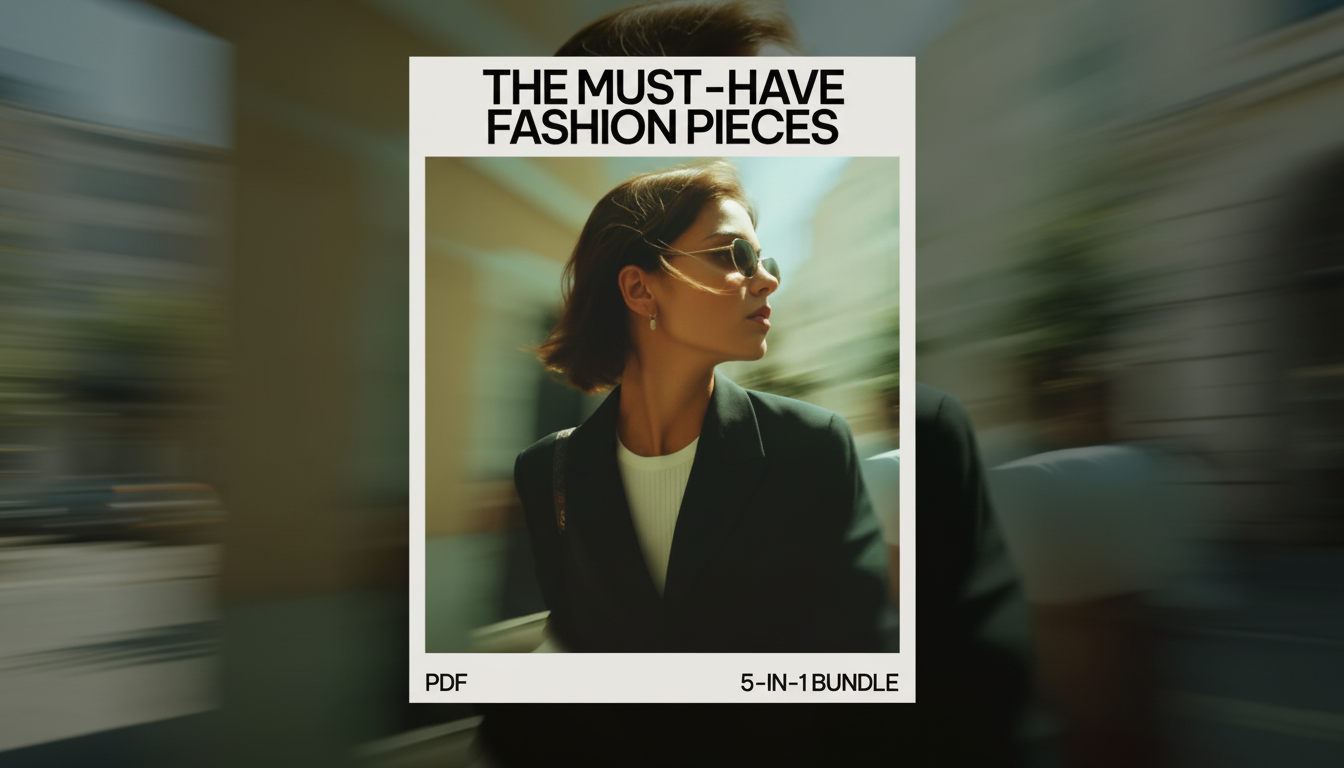
The Must-Have Fashion Pieces Bundle: a simple way to build a wardrobe that works
A streamlined wardrobe makes getting dressed faster, shopping more intentional, and outfits more consistent across seasons. The goal isn’t a “perfect” closet—it’s a functional one: fewer pieces, more outfits, and less second-guessing. If you want clear rules for what to keep, what to buy, and how to style essentials on repeat, The Must-Have Fashion Pieces Bundle: 5 Essential Guides to Simplify Your Wardrobe focuses on foundational items and decision-making shortcuts that keep everyday looks polished without constant trial-and-error.
What “simplify your wardrobe” actually means
Simplifying your wardrobe is less about minimalism as an aesthetic and more about building reliability. When the majority of your closet works together, you stop “saving” clothes for the right moment and start wearing them weekly.
- Build around repeatable outfit formulas (top + bottom + layer + shoe) that fit real life—commuting, errands, school pickup, office days, travel.
- Prioritize versatility: each new item should pair with at least three pieces you already own.
- Reduce decision fatigue by limiting duplicates and sticking to silhouettes you like on your body and feel good wearing for a full day.
- Set a clear baseline: casual, work, and occasion outfits should all be covered, without needing a separate “wardrobe” for each.
What’s inside the bundle and how to use the guides
The fastest results come from using the guides in sequence: assess your closet, define your core pieces, fill only the true gaps, then refine styling and maintenance. Before buying anything, plan one focused 30–45 minute audit session. You’re looking for “hero basics” (worn weekly) and “support basics” (the pieces that finish outfits, like layers and shoes).
Once you’ve identified what you actually wear, make a short shopping list built around replacements and gaps—not random additions. That’s how a simplified wardrobe stays simple.
Simple plan for the first week
| Day | Task | Outcome |
|---|---|---|
| Day 1 | Quick closet audit: keep, tailor, donate, replace | Clear view of what’s working and what’s missing |
| Day 2 | Pick 3 outfit formulas for everyday life | Reliable templates for getting dressed |
| Day 3 | List must-have pieces by category (tops, bottoms, layers, shoes) | Gap list without impulse buys |
| Day 4 | Choose a tight color range and repeatable silhouettes | Easier mixing and matching |
| Day 5 | Shop replacements or key gaps only | Higher wear-per-item and fewer regrets |
The core wardrobe pieces that do the most work
Essentials aren’t boring when they’re chosen well. They’re the “frame” that makes everything else easier to style. Start with pieces that can handle multiple settings and can be dressed up or down with a shoe swap and a layer.
Outfit formulas that reduce morning decision-making
Keep accessories minimal but consistent: one everyday bag shape, one dependable belt, and two or three “uniform” jewelry pieces you don’t overthink. If you want a streamlined approach beyond clothing, Low-Effort Makeup Secrets Pack | Simple Makeup Ideas 4-in-1 Digital Beauty Bundle pairs well with a simplified wardrobe—same idea, fewer steps, more consistency.
Color, fit, and fabric rules that prevent closet clutter
- Choose a base palette (2–3 neutrals) plus a small accent palette (1–2 colors) to multiply outfit combinations.
- Fit rule: if it pulls, gaps, twists, or needs constant adjusting, it won’t become a staple.
- Fabric rule: lean toward materials that hold their shape and recover well, such as structured cotton, quality knits, and wool blends. For broader context on preferred fibers and material impacts, see the Textile Exchange resources.
- Care rule: avoid high-maintenance items unless they genuinely replace multiple easier pieces.
- Tailoring checkpoints: hem length, waist fit, sleeve length—small fixes often create “new favorites.”
Need help narrowing colors so everything mixes effortlessly? Color Theory Seasons Bundle 10-in-1 | Seasonal Color Analysis Guides & Checklists can help you choose shades that look cohesive (and make repeats feel intentional instead of repetitive).
Shopping strategy: buy fewer items, wear them more
Quick checklist before purchasing
| Question | Yes/No | Notes |
|---|---|---|
| Does it work with at least 3 items already owned? | ||
| Can it be worn in at least 2 seasons? | ||
| Is the fit comfortable for a full day? | ||
| Does it match the chosen color range? | ||
| Is care and maintenance realistic? |
Care and maintenance that keeps essentials looking new
- Create an upkeep rhythm: spot-clean when possible, steam for quick refreshes, and rotate shoes to extend lifespan.
- Store with intention: fold knits to prevent stretching; hang structured layers to preserve shape.
- Use gentle washing habits: cold water and minimal heat help reduce shrinking and fading. For practical, reliable laundry guidance, reference the American Cleaning Institute’s laundry basics.
- Schedule seasonal checks: repair buttons, refresh soles, and replace worn-out essentials intentionally (instead of emergency shopping).
If your wardrobe refresh includes reviewing influencer recommendations or product reviews, it’s also worth knowing how endorsements should be presented; the Federal Trade Commission guidance on endorsements is a helpful reference for understanding disclosure expectations.
FAQ
How many pieces are enough for a simplified wardrobe?
A practical range depends on lifestyle, laundry frequency, and how many settings you dress for (work, casual, occasion). Start by identifying a small set of high-rotation essentials you wear weekly, then add only what supports repeatable outfit formulas.
What if personal style changes often?
Keep a stable base of essentials in consistent silhouettes and a tight palette, then experiment with low-commitment accents like tops, accessories, or a seasonal color. This lets you explore new vibes without rebuilding your entire closet each time.
How can essentials work across seasons without overbuying?
Choose layers in multiple weights, stick to a cohesive palette, and rotate footwear by weather rather than buying new outfits per season. Most changes can come from swapping outerwear and a few warm- or hot-weather shoes while keeping the core pieces the same.










Leave a comment