



Wall-Mounted Tankless Electric Heater: LCD + Remote
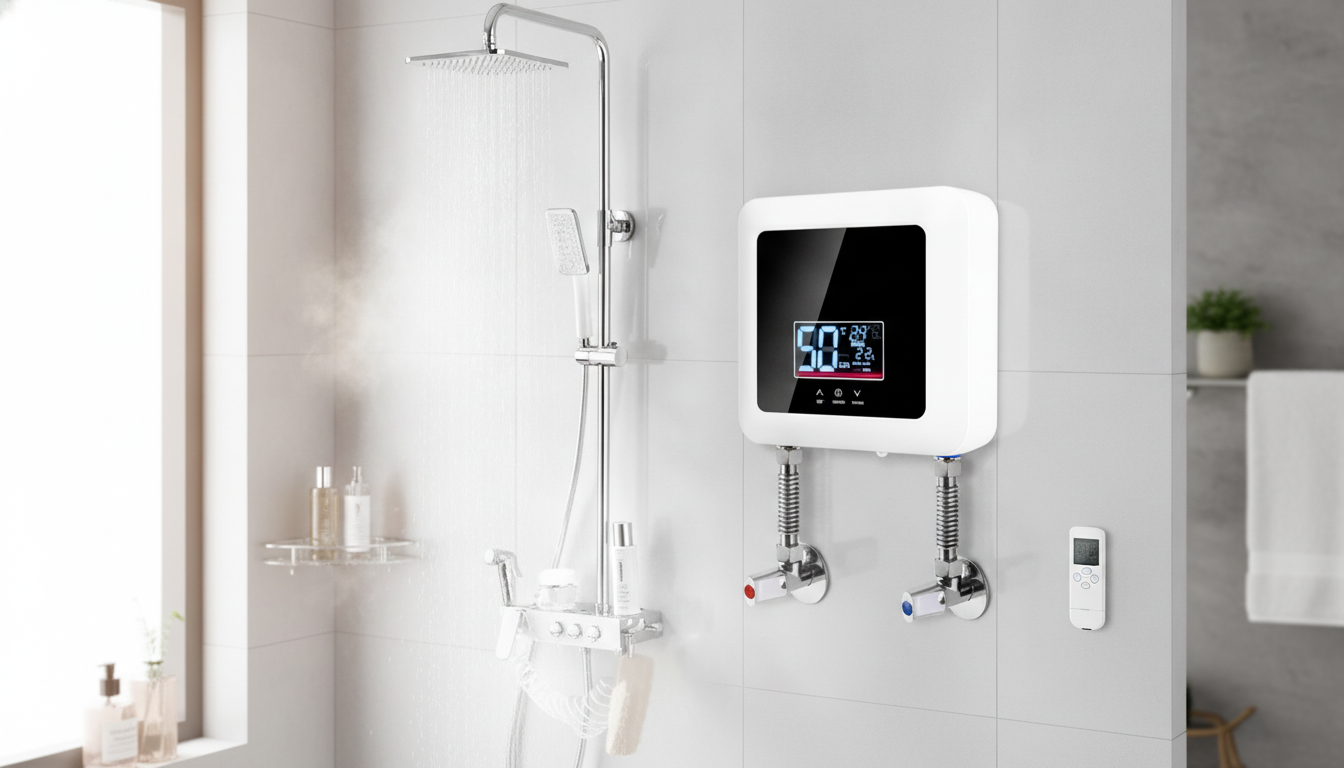
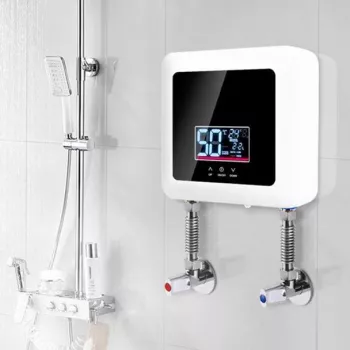
Wall-Mounted Instant Electric Water Heater with LCD Display & Remote Control
A wall-mounted instant electric water heater delivers hot water on demand without a storage tank. With an LCD display and remote control, temperature adjustments can be quick and precise—useful for kitchens, bathrooms, guest suites, and small apartments where space and convenience matter. Because it heats only when you open a tap, it can also help reduce the energy losses associated with storing hot water all day. For a deeper overview of water-heating efficiency concepts, see the U.S. Department of Energy water heating guide.
What Makes an Instant Electric Water Heater Different
Tankless (instant) electric water heaters work in a simple way: water flows through the unit and is heated by electric elements only while a fixture is running. That “on-demand” approach changes how you plan for performance and installation.
- Heats water only when a tap is opened, reducing standby heat loss compared with tank-style units.
- Wall-mounted design helps free up floor space and keeps plumbing runs compact—especially helpful in tight utility rooms, under-stair closets, or small apartments.
- Performance depends on your conditions, including incoming water temperature, the flow rate you want, and the electrical capacity available.
- Common use cases include handwashing sinks, showers in mild climates, point-of-use hot water near kitchens, and supplemental hot water for remote fixtures.
Unlike a storage tank that can “coast” for a few minutes during heavy demand, an instant heater must keep up in real time. That’s why matching the unit to your expected flow and local climate matters so much.
Key Features: LCD Display and Remote Control
Two features can make daily use noticeably easier: a readable LCD display and a remote control for quick adjustments.
- LCD display supports clear temperature readouts and status indicators so you can confirm settings at a glance.
- Remote control convenience allows adjustments without reaching the unit—useful if the heater is mounted higher on a wall or located in a utility nook.
- Fine temperature control can reduce the need to constantly mix hot and cold at the faucet, improving consistency and comfort.
- Preset-style usage can be easier when a household switches between tasks (for example, a slightly cooler setting for handwashing and a warmer setpoint for showering), depending on the unit’s capabilities.
Small changes go a long way. A 1–2 degree adjustment can be enough to improve comfort without causing the “too hot/too cold” back-and-forth at the handle.
At-a-Glance Setup Checklist
Before purchasing or installing a wall-mounted instant electric water heater, confirm the basics that affect safety and performance.
- Confirm electrical service capacity (breaker size, wiring gauge, voltage, and available panel space) before installation.
- Plan the mounting location near fixtures for faster hot water delivery; protect from direct spray and follow clearance guidelines.
- Verify plumbing and code needs such as shutoff valves, any required pressure relief provisions, and filtration if water is hard.
- Route cables and lines safely to avoid sharp edges, heat sources, and areas prone to freezing.
Quick Planning Guide (Fill in Before Installation)
| Item | What to Check | Notes to Record |
|---|---|---|
| Incoming water temperature | Colder water reduces achievable flow at higher temperatures | Typical winter/summer inlet temp |
| Target use | Hand sink vs. shower requires different flow expectations | Primary fixture(s) |
| Electrical capacity | Breaker, wiring, and voltage compatibility | Panel capacity and available slots |
| Mounting spot | Clearances, ventilation, splash protection, accessibility | Wall type and fastener plan |
| Water quality | Hard water may require filtration/descaling routine | Hardness level or filter choice |
Performance Expectations: Temperature and Flow
With instant electric heaters, the key idea is “temperature rise”—how many degrees the unit can raise the water temperature at a given flow. Your home’s electrical supply limits how much heat can be added per second, so performance is a balance between warmth and volume.
- Higher flow usually means a lower temperature rise; if you open the valve wider, water spends less time heating.
- Lower flow allows hotter output, which is why reducing flow slightly can stabilize shower comfort.
- Cold climates demand more power to reach comfortable shower temperatures at typical flow rates.
- Stability beats constant changes; set a target temperature and avoid big swings while the water is running.
If you’re comparing heater types, general efficiency guidance from ENERGY STAR’s water heater resources can help clarify how usage patterns affect savings and comfort.
Installation Notes and Electrical Safety
For electrical code background and safe-installation principles, consult the NFPA National Electrical Code (NEC) information and your local authority having jurisdiction (AHJ).
Daily Use Tips for Comfort and Efficiency
Maintenance and Troubleshooting Basics
Product Options Available Now
- Wall-Mounted Instant Electric Water Heater with LCD Display & Remote Control ($980.99): designed for on-demand hot water with convenient temperature viewing and remote adjustments.
- Step-by-Step Puppy Training Toolkit: A Beginner’s Guide to Dog Training + eBooks & Checklists ($981.99): a separate customer-favorite digital toolkit if you’re also updating household routines.
FAQ
Can an instant electric water heater run a shower and a sink at the same time?
Sometimes, but it depends on the unit’s power rating, the incoming water temperature, and the combined flow rate. If temperature becomes unstable, prioritize one fixture or reduce flow at both to stay within the heater’s heating capacity.
Does a wall-mounted instant heater need a dedicated circuit?
Many units require a dedicated circuit with properly sized breaker and wiring per the manufacturer’s specifications and local electrical code. Professional installation is often recommended because these heaters can draw high current.
Why does the temperature change when the water flow changes?
Instant heaters can only add a fixed amount of heat at a time, so when flow increases the water heats less as it passes through. For steadier output, keep flow consistent and use the setpoint/remote for small adjustments instead of making large faucet changes.










Leave a comment